KYTV Springfield: UC team aids epilepsy patients in transition to adult care

The process of growing up from a teenager to an adult can be stressful, especially for teens with chronic conditions.
KYTV in Springfield, Missouri recently highlighted the Epilepsy Transition Clinic at the University of Cincinnati, which helps guide teenagers with epilepsy from pediatric to adult care.
“It’s a time for high, you know, no-shows, missing visits just because it’s all new to them. That can leave them open to gaps in care and gaps in getting their medications,” said Emily Nurre, MD, assistant professor of neurology and rehabilitation medicine at the UC College of Medicine and a UC Health neurologist.
Nurre and her UC colleagues collaborate with Cincinnati Children's Hospital Medical Center and Epilepsy Alliance of Ohio staff to hold the transition clinic once a month in West Chester, Clifton or Florence locations. One goal is for patients to meet with Epilepsy Alliance social workers at their final pediatric visit and their first visit on the adult side.
“We found that patients really wanted a warm handoff, somebody that they knew and trusted through the process of transitioning,” Nurre said. “We are grateful that the Epilepsy Alliance social workers provide an additional trusted source of information and assistance during transfer from pediatric to adult care.”
Read or watch the KYTV report.
Read more about the Epilepsy and Physical Medicine & Rehabilitation Transition Clinics at UC.
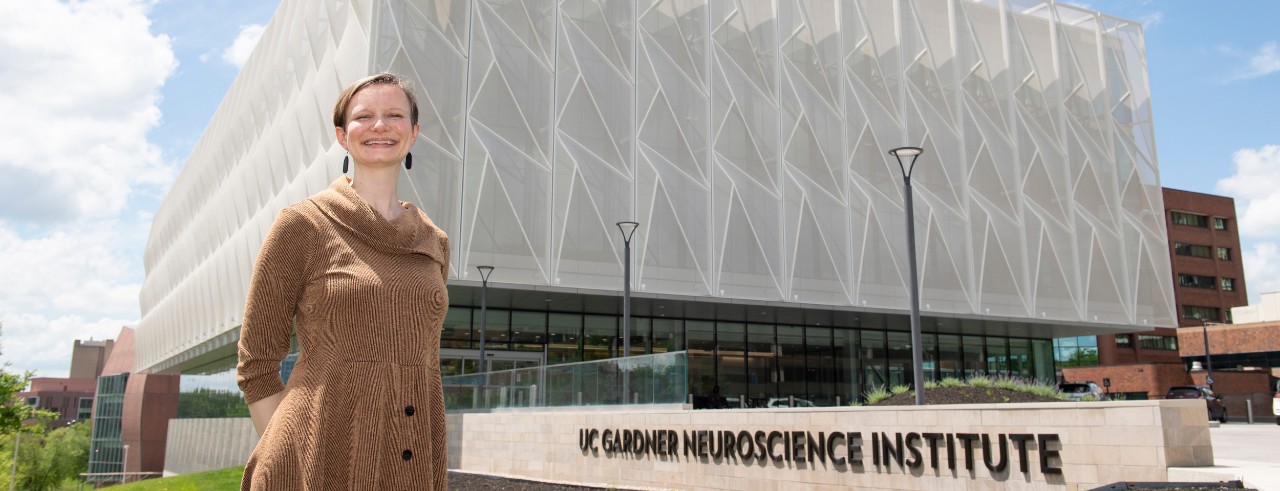
Featured photo of Emily Nurre, MD, outside of the UC Gardner Neuroscience Institute. Credit/Colleen Kelley/UC Marketing + Brand
Related Stories
Cancer Center plays key role in lab research, clinical trials for new pancreatic cancer drug
September 1, 2026

WLWT and WCPO highlighted the contributions of University of Cincinnati Cancer Center researchers that helped lead to the recent FDA approval of daraxonrasib, a new treatment for pancreatic cancer.
An expert pieced together this Roman document like a puzzle
September 1, 2026

National media highlighted a new project by UC Classics Assistant Professor Matthijs Wibier to piece together and translate an ancient Roman text from fragments buried in the desert for more than 1,600 years.
Cancer Center physician receives $150,000 New Investigator Research Grant to study treatment-resistant leukemia
September 1, 2026
The University of Cincinnati Cancer Center’s Sarah Skuli, MD, PhD, received a two‑year, $150,000 Leukemia Research Foundation New Investigator Grant to study TP53‑mutated leukemia, a treatment‑resistant subtype with very poor outcomes.