USA Today: A years-old fight between Trump, House Democrats over a hotel lands at the Supreme Court

A six-year-old dispute between congressional Democrats and former President Donald Trump has come to a head at the Supreme Court. And this case, if taken up by the justices, has the potential to create problems for future presidents says University of Cincinnati College of Law's Professor Brad Mank in the USA Today story.
In 2017 Democrats on the House Oversight Committee demanded the newly elected administration provide records about how Trump obtained the rights to develop a government-owned building near the White House into a hotel. The administration declined to respond to the records request. And the Democratic lawmakers sued.
Now their lawsuit is at the Supreme Court. If the justices agree to rule on it and the Democrats win, it will give congressional minorities significantly more power to probe presidential administrations of the opposite party—even if they don’t have the votes to issue a subpoena.
The Supreme Court will discuss the case, Carnahan v. Maloney, during its closed-door conference this week.
The big picture for some is the impact of this ruling. There is concern that it could cause headaches for future presidents, opening up an administration to more intense scrutiny.
"There would be more members of the opposite party who would file suits," Bradford Mank, a professor at the University of Cincinnati College of Law, said of the potential impact if the lawmakers prevail. "There would be much more danger that ideologues on both sides would...try to use the statute to embarrass a sitting president."
Read the full story: A years-old fight between Trump, House Democrats over a hotel lands at the Supreme Court
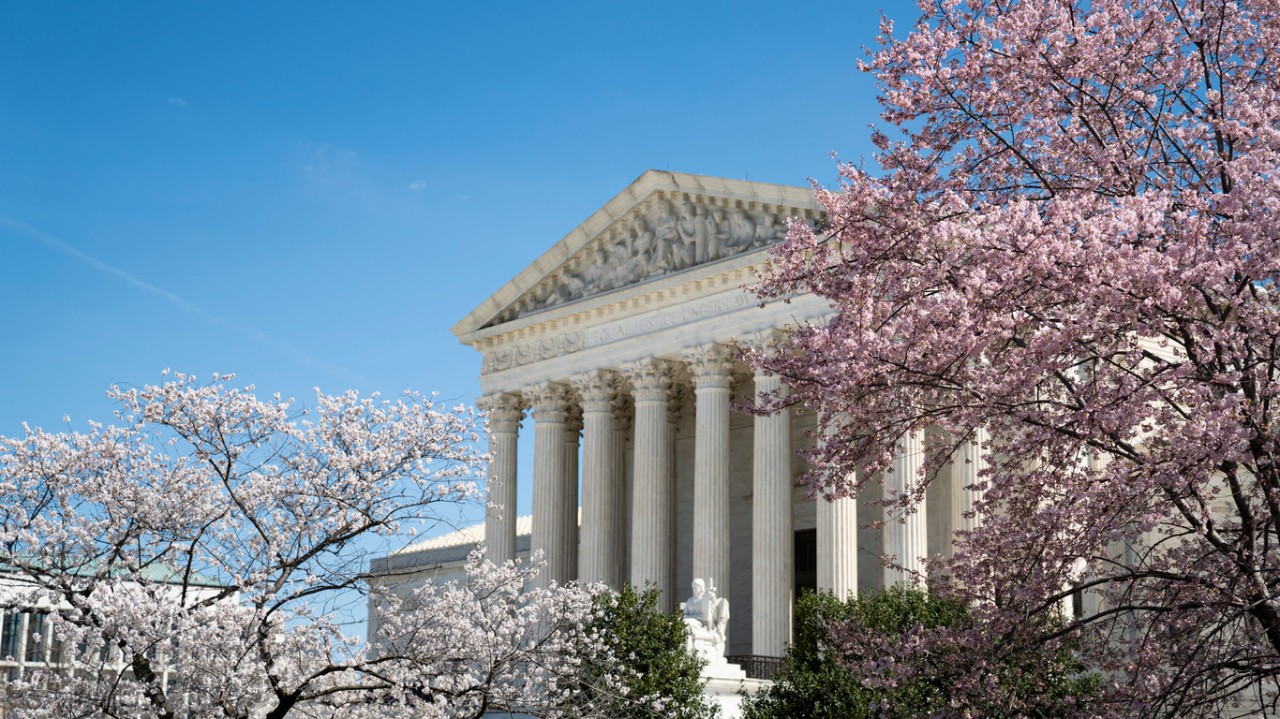
Featured image at top: U.S. Supreme Court building. Photo/ istockphoto.com
Related Stories
Cancer Center plays key role in lab research, clinical trials for new pancreatic cancer drug
September 1, 2026

WLWT and WCPO highlighted the contributions of University of Cincinnati Cancer Center researchers that helped lead to the recent FDA approval of daraxonrasib, a new treatment for pancreatic cancer.
An expert pieced together this Roman document like a puzzle
September 1, 2026

National media highlighted a new project by UC Classics Assistant Professor Matthijs Wibier to piece together and translate an ancient Roman text from fragments buried in the desert for more than 1,600 years.
Cancer Center physician receives $150,000 New Investigator Research Grant to study treatment-resistant leukemia
September 1, 2026
The University of Cincinnati Cancer Center’s Sarah Skuli, MD, PhD, received a two‑year, $150,000 Leukemia Research Foundation New Investigator Grant to study TP53‑mutated leukemia, a treatment‑resistant subtype with very poor outcomes.