55KRC: UP-NEXT study tests ovarian cancer treatment

The University of Cincinnati's Amanda Jackson, MD, recently joined 55KRC's Simply Medicine program to discuss the UP-NEXT ovarian cancer clinical trial. Jackson is the site principal investigator at UC for the UP-NEXT trial that is testing a new treatment for a subset of ovarian cancer patients.
"Patients with ovarian cancer, when they initially get chemotherapy, a good percentage of them will go into remission or not have active cancer," said Jackson, University of Cincinnati Cancer Center physician-researcher and associate professor, division chief and vice chair in the UC College of Medicine’s Department of Obstetrics & Gynecology. "But unfortunately a good percentage of those patients’ cancer will come back and be recurrent cancer."
The trial is testing the effectiveness of an antibody-drug conjugate (upifitamab rilsodotin) that is part of a class of therapeutics that have proven to be successful treatments for other types of cancer. The drug works as a kind of Trojan horse, binding to a specific antigen often found on the surface of ovarian cancer cells.
"This study is looking specifically at figuring out medications that we can give to that group of patients after they finish chemo, after we get their cancer to decrease in size, to keep their cancer at bay, to give them a longer period of time before their cancer would come back," she said.
Learn more about the research.
Listen to the Simply Medicine segment. (Note: Segment begins around 3:00 mark of episode.)
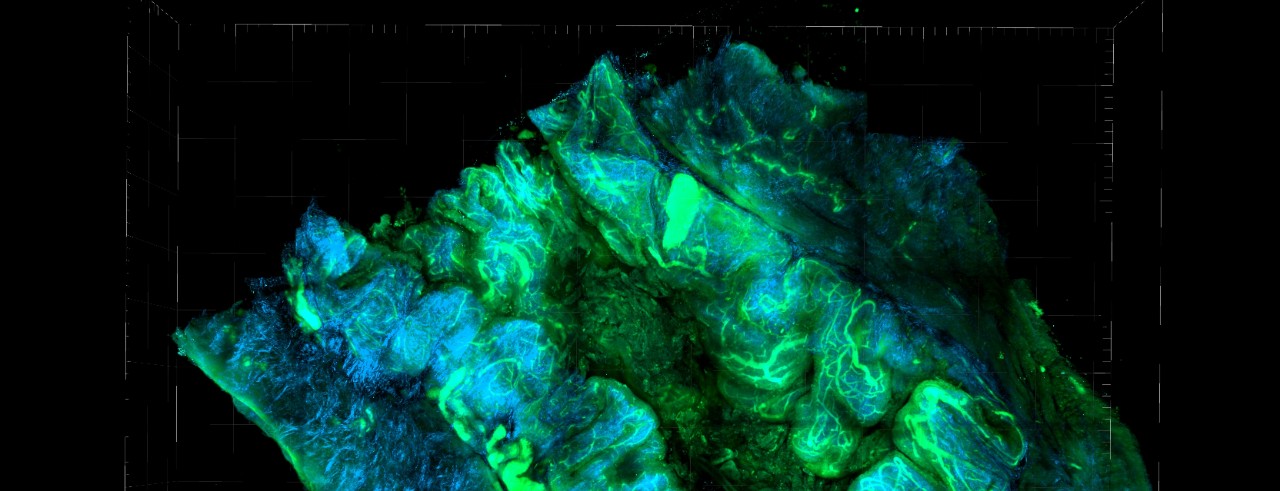
Featured photo at top: ovarian cancer tumor in animal model. Photo/National Cancer Institute.
Related Stories
CCM welcomes new film and media scoring faculty member J.R. Paredes
May 20, 2026
UC College-Conservatory of Music Dean Pete Jutras has announced the appointment of J.R. Paredes as CCM's new Assistant Professor of Film and Media Scoring. His faculty appointment officially begins on Aug. 15, 2026. Paredes is a composer, music producer and audio post-production specialist whose work spans film, television and commercial music. His credits include original scores for feature films and series distributed on platforms such as Apple TV+ and Prime Video, as well as extensive work in sound design and mixing for film and media.
6 ways starting a GLP-1 medication could affect your emotions
May 20, 2026

When patients first start taking a glucagon-like peptide-1 (GLP-1) medication, they probably expect to feel full. But they might not anticipate how it can influence their emotions. The medications act on the stomach and the brain, said Malti Vij, MD, a University of Cincinnati adjunct associate professor in the College of Medicine's Department of Internal Medicine and a diplomate of the American Board of Obesity Medicine.