
Ride Cincinnati kick starts promising cancer research projects
Annual cycling event tops $4M in contributions to research at University of Cincinnati Cancer Center
Chances are you know someone whose life is impacted by cancer. In Greater Cincinnati alone, one in two men and one in three women will receive a cancer diagnosis.
It’s what has fueled grassroots bike tour Ride Cincinnati to give more than $4 million in support of cancer research, education and care at the University of Cincinnati Cancer Center, a collaboration between UC, UC Health and Cincinnati Children’s. Those millions are just the tip of the iceberg, however, with the funds serving as a springboard for researchers to secure additional grants as projects show promise.
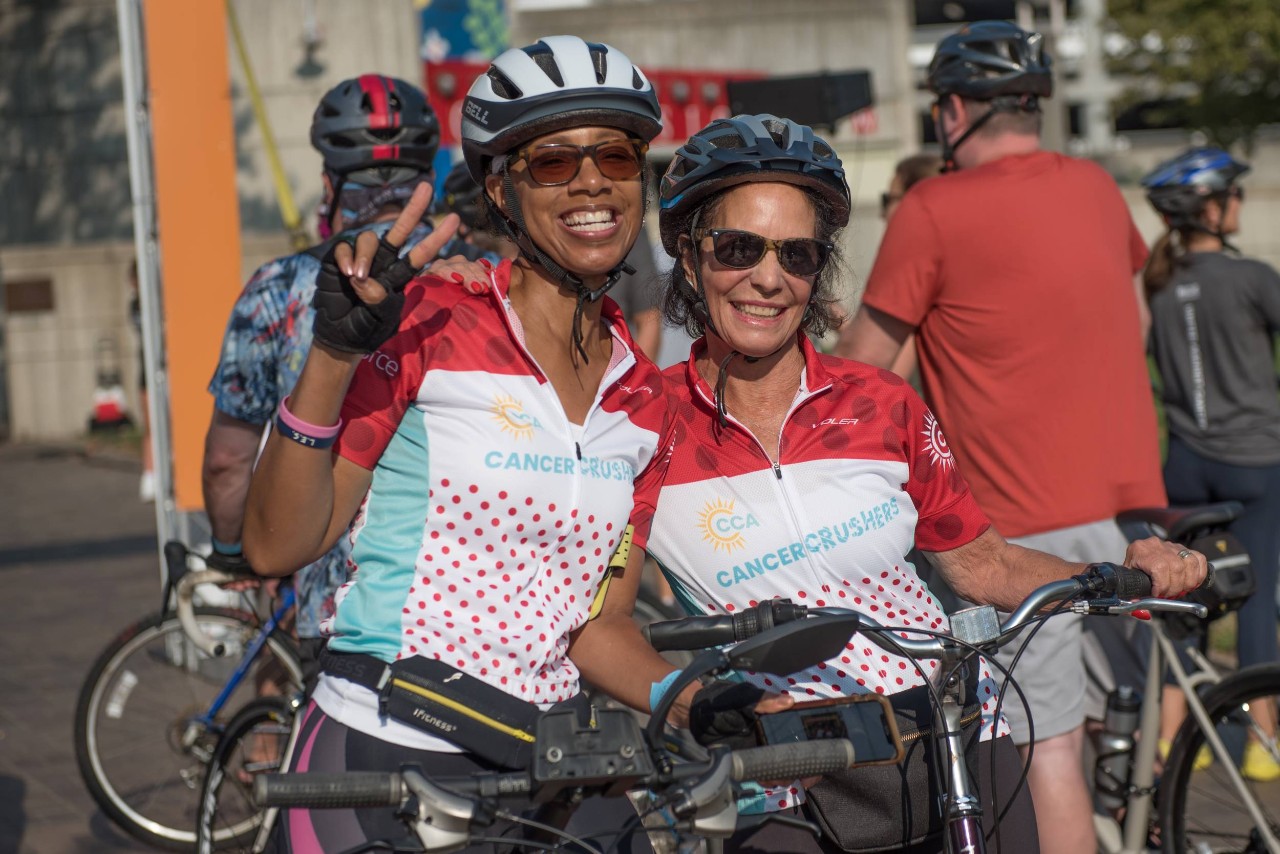
Ride Cincinnati participants.
“These pilot grants can lead to new discoveries on how to prevent cancer in the first place and how to employ the best technology and minds to have the best possible cure rates,” explains William Barrett, MD, co-director of the Cancer Center and medical director of the UC Health Barrett Cancer Center.
It’s why the community has rallied behind Ride Cincinnati with the event gaining steam year-after-year. The 2022 bike tour made the biggest impact yet, resulting in a donation of $923,000 to the Cancer Center’s research efforts.
The noncompetitive cycling event launched in 2007 thanks to the vision and efforts of a Cincinnati dentist, Harvey Harris, and family, after he lost his wife, Marlene Harris, to breast cancer. Dr. Harris, an avid cyclist, sought to raise funds for life-saving cancer treatment and research, but he wanted to do things a bit differently than the traditional fundraising galas and events.
"Ride Cincinnati was established to be inclusive of all those with a passion for fighting cancer. It's why we created a ride, not a race," says Miles McDowell, marketing director for Ride Cincinnati.
These pilot grants can lead to new discoveries on how to prevent cancer in the first place and how to employ the best technology and minds to have the best possible cure rates.
William Barrett, MD co-director of the Cancer Center and medical director of the UC Health Barrett Cancer Center
To date, the annual event has launched nearly 70 research projects at the Cancer Center and positioned researchers to secure an additional $17 million in critical follow-on grants from the National Cancer Institute and other funding sources.
Recent research made possible by Ride Cincinnati has included targeting the genes responsible for aggressive tumor growth in breast cancer, as well as identifying what mutations can block therapies from being effective in fighting cancer.
“The work of our researchers is so crucial, it’s what helps drive the best patient care possible,” says Dr. Barrett. “Through Ride Cincinnati, the community has really embraced the challenge of making Cincinnati a destination for cancer care.”
The 2023 Ride Cincinnati event is scheduled for Sept. 16-17. Those interested in supporting the cause can register to participate or donate at ridecincinnati.org.
Featured image at top: Ride Cincinnati participant. Photo/Provided.
Next, Now
With its focus on innovation and impact, Next, Now: The Campaign for Cincinnati is where ambition meets action. At the University of Cincinnati and UC Health, we’re driven by next; thinking bolder and dreaming bigger to create the tomorrow we envision today. Learn more at nextnow.uc.edu.

Caitlin Whitehurst
For the UC Foundation
Caitlin Whitehurst is a writer living in Columbus, Ohio. She earned her MBA from the Carl H. Lindner College of Business in 2019.
Tags
Related Stories
UC Foundation celebrates 2026 philanthropy winners
October 23, 2026
The University of Cincinnati Foundation recognized its Outstanding Philanthropic Volunteer Award honorees at the George Rieveschl Recognition Dinner on October 22, 2026.
AI breast cancer survival model from Cancer Center could improve accuracy and personalize care
October 23, 2026
UC Cancer Center researchers, including lead author Wedad Alatebi, developed a deep learning survival model for breast cancer that combines detailed clinical and genetic information, potentially offering physicians a more accurate tool to guide treatment decisions.
UC expert explains potential impact of Pennsylvania’s new vape product law
October 22, 2026

UC professor Ashley Merianos speaks to the Pittsburgh Post-Gazette about Pennsylvania’s new vape law, youth vaping prevention, enforcement challenges and possible unintended consequences.