U.S. News: Could gut microbes affect pancreatic cancer survival?

U.S. News and World Report highlighted recent research from the University of Cincinnati Cancer Center that found several enriched species associated with enhanced tumor immune response in the microbiomes of long-term pancreatic cancer survivors.
“Little information exists to help us understand why some patients are cured from pancreatic cancer and unfortunately most are not,” said Jordan Kharofa, MD, University of Cincinnati Cancer Center physician-researcher and associate professor in the UC College of Medicine’s Department of Radiation Oncology. “These species may help to promote immune response to pancreas cancer but this has not yet been proven.
“There is a growing understanding that the microbiome is a part of the normal immune response. The importance of the microbiome in response to immunotherapy drugs in melanoma and other cancer types is well established,” Kharofa continued. “For the first time we are seeing that similar species are enriched in patients cured from pancreas cancer. We’re excited to explore this further and to evaluate if modulating the microbiome can be a therapeutic avenue in these patients.”
Read the U.S. News and World Report story, originally published by HealthDay.
Read coverage of the research from Healio.
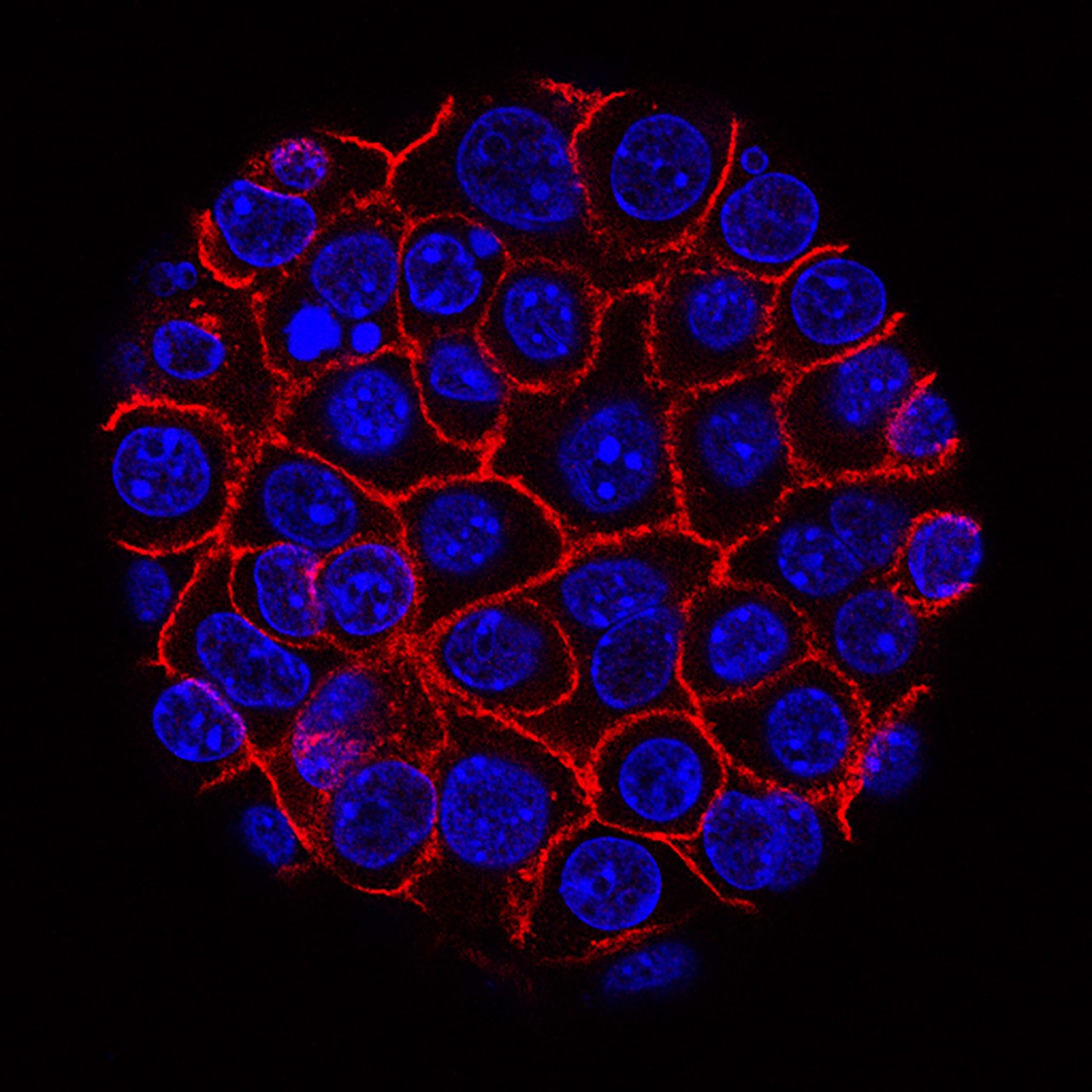
Featured photo at top of pancreatic cancer cell courtesy of the National Cancer Institute.
Related Stories
These teeny spiders are social media stars
August 28, 2026

The New York Times turned to a University of Cincinnati professor to explain the appeal of jumping spiders on social media.
An internal divide among unions on AI impacts the Wisconsin gubernatorial race
August 28, 2026

Anne Lofaso, a professor in the Donald P. Klekamp College of Law at UC, spoke with Wisconsin Public Radio, about the schism among unions over AI and whether it is a plus, a negative, or somewhere in between when looking at job creation.
On-site training in Speech & Hearing Clinic sets UC’s programs apart
August 27, 2026
At the University of Cincinnati’s Speech & Hearing Clinic, Doctor of Audiology and Speech-Language Pathology graduate students gain real-world experience while providing free speech and hearing services to the community.