WVXU: Genetics play a role in opioid addiction. A UC doctor is drilling down on the specifics
Research could lead to the creation of a test for opioid use disorder

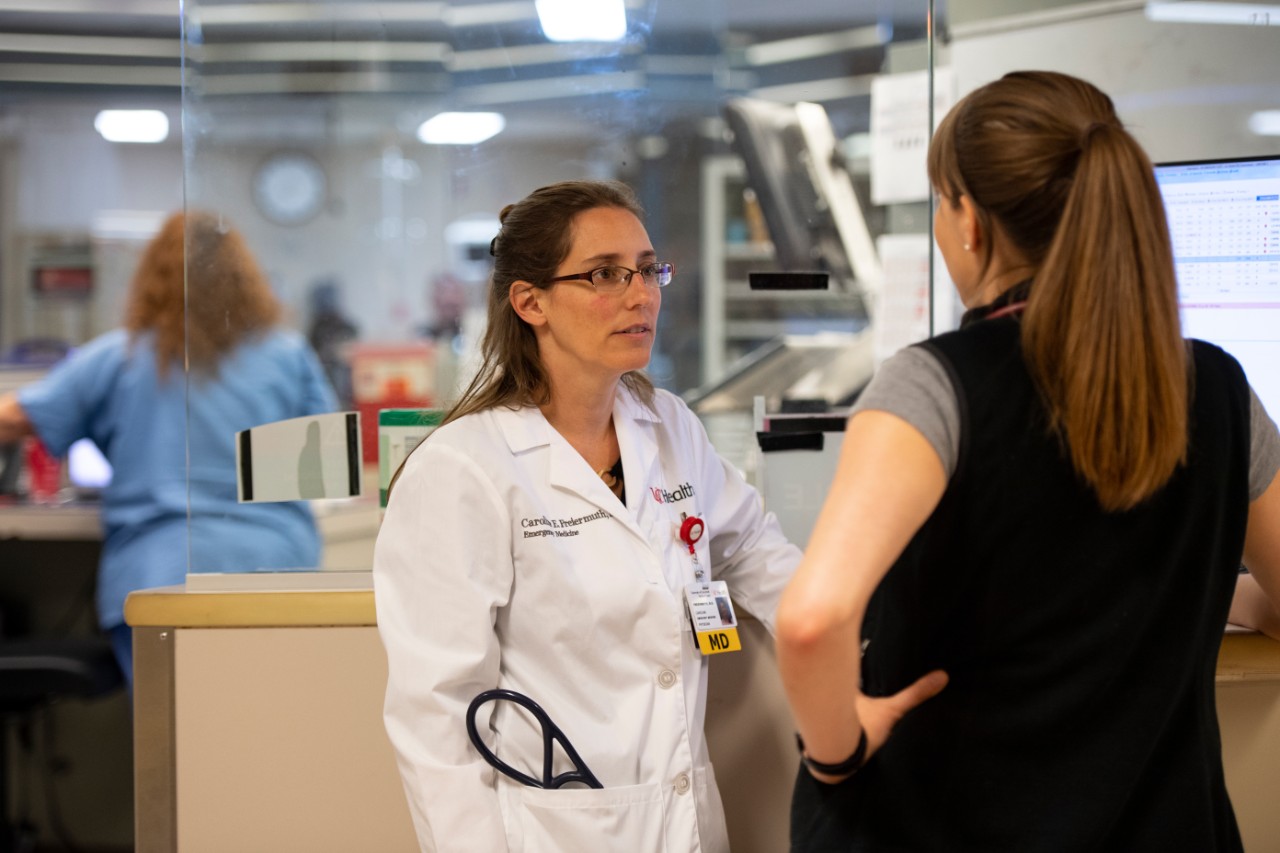
Since 2014, Ohio is in the top five nationwide in opioid deaths. Recently published research from the University of Cincinnati examines the role of genetics in opioid use disorder. WVXU produced a story on the research, interviewing lead researcher, Caroline Freiermuth, MD, of the Department of Emergency Medicine at the UC College of Medicine. She and her team screened over 1,300 patients at three Ohio urban emergency rooms and found 20% had opioid use disorder.
The patients studied were at the ER for a variety of reasons. Some were already addicted to opioids, some had never taken them, and others were using them to manage acute pain. All of them were asked to be part of the study.
WVXU reported the 20% of people who had opioid use disorder is higher than what was previously thought — 2% in the general population and 7-15% in emergency room settings.
"This is still a hidden disease," Freiermuth says. "People are afraid to talk about it and we really do need to do a better job of screening so that we can identify the people who have already developed this disorder and really get them into the treatment they need."
For genetics, she looked at the dopamine reward pathway and the metabolism of opioids for the study.
Using artificial intelligence, her team is analyzing the entire data set, including things like the environment, mental health disorders, and past experiences to see what role they play.
"The biggest takeaway is this adds to the body of research that says there is really a genetic component," Freiermuth says. "We're starting to hone down what the genetic component is and we could get to a point in the future when we could run tests and if you have opioid use disorder, we could run the test on you and we could run it on your children so that we could counsel people in the future that they may also be at risk."
Read more about the research here.
Lead photo of Caroline Freiermuth, MD/Colleen Kelley/UC Marketing + Brand
Next Lives Here
The University of Cincinnati is classified as a Research 1 institution by the Carnegie Commission and is ranked in the National Science Foundation's Top-35 public research universities. UC's graduate students and faculty investigate problems and innovate solutions with real-world impact. Next Lives Here.
Related Stories
Heavy social media use linked to depression
August 31, 2026

U.S. News and World Report, Yahoo! News, MSN, USA Today and other national media highlight a new study by the University of Cincinnati and Northwestern University that found a correlation between heavy social media use and depression in adults.
These teeny spiders are social media stars
August 28, 2026

The New York Times turned to a University of Cincinnati professor to explain the appeal of jumping spiders on social media.
An internal divide among unions on AI impacts the Wisconsin gubernatorial race
August 28, 2026

Anne Lofaso, a professor in the Donald P. Klekamp College of Law at UC, spoke with Wisconsin Public Radio, about the schism among unions over AI and whether it is a plus, a negative, or somewhere in between when looking at job creation.