WDTN: How rare are earthquakes in Ohio?
UC geologist puts recent temblor into perspective

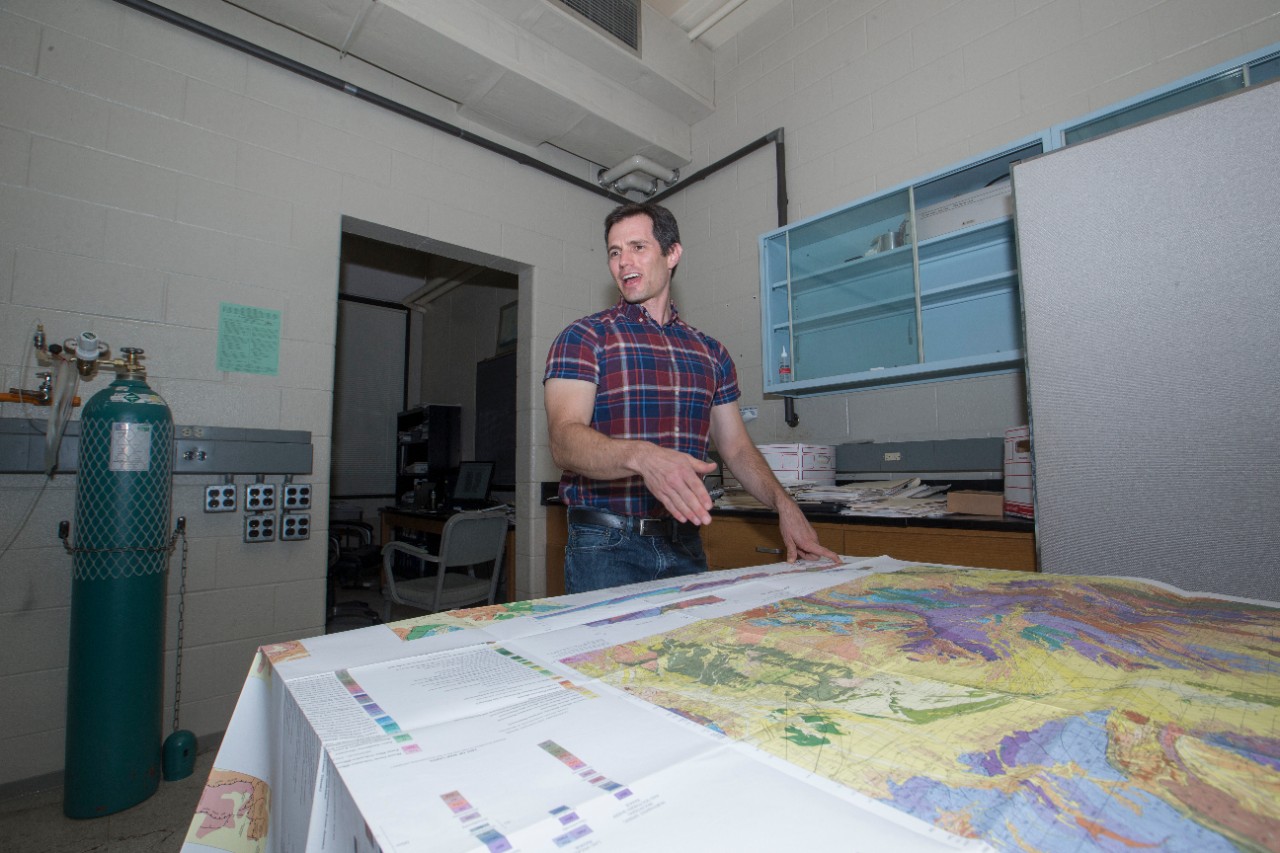
University of Cincinnati geologist Daniel Sturmer helped WDTN-2 News put a recent earthquake in Ohio into historical perspective.
The U.S. Geological Survey confirmed that a magnitude 3.6 earthquake was detected at 11 p.m. Sunday in Lake County, Ohio, just northeast of Cleveland. An aftershock caused tremors about 15 minutes later.
The tremors were enough to rattle windows and shake traffic cameras, WDTN reported.
Ohio's faults are buried deep beneath glacial till and sedimentary rock, seismologist Jeff Fox told WDTN. A relatively small earthquake in Ohio can often be felt in neighboring states, said Sturmer, an associate professor of geoscience in UC's College of Arts and Sciences.
“Those waves kind of have more juice,” Sturmer said. “They travel a little farther in Ohio because there are fewer faults and because the crust is cooler. You have an equivalent earthquake in Los Angeles and it wouldn’t be felt across L.A., probably.”
Earthquakes are are relatively rare in Ohio. Dayton has had just three reported quakes since the 1700s, WDTN reported.
Related Stories
2026 Cincinnati Business Courier's '40 Under 40' includes nine UC alumni
August 3, 2026
Nine remarkable University of Cincinnati alumni have been named by the Cincinnati Business Courier to its annual “40 Under 40” Class for 2026.
As Crosley Tower comes down, UC looks to STEM
July 30, 2026
With demolition of Crosley Tower more than halfway complete, the University of Cincinnati is preparing a, 200,000-square-foot STEM Academic Facility on its Uptown campus, transforming the north side of campus with new classrooms and labs.
Donor support of UC and UC Health reaches historic level
July 30, 2026
This summer, every law student at the Donald P. Klekamp College of Law who applied for a Summer Public Interest fellowship will receive a fully funded real-world learning experience, expanding opportunities for University of Cincinnati students wishing to pursue real-world experience in public service. This 30% increase in fully funded fellowship participation is a direct result of transformative philanthropy.