WDTN: How rare are earthquakes in Ohio?
UC geologist puts recent temblor into perspective

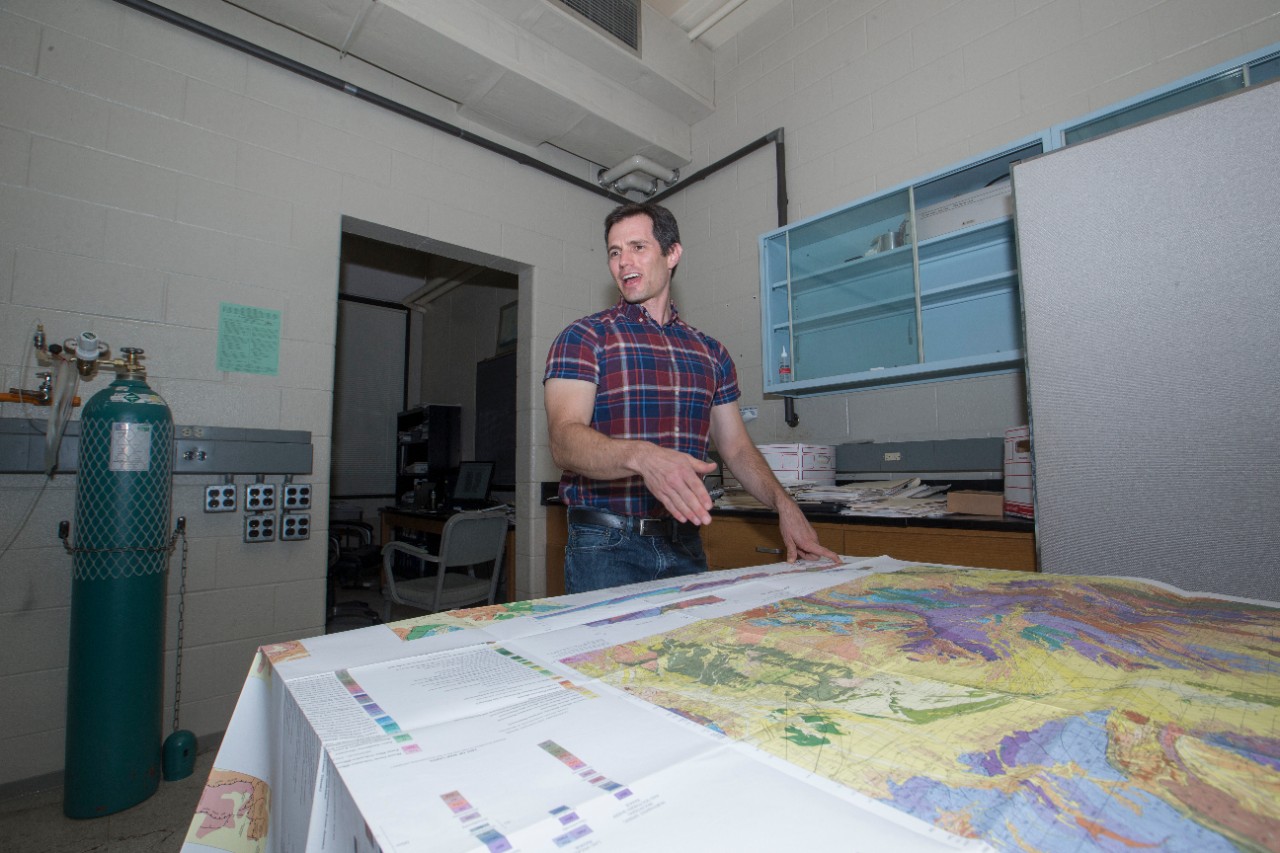
University of Cincinnati geologist Daniel Sturmer helped WDTN-2 News put a recent earthquake in Ohio into historical perspective.
The U.S. Geological Survey confirmed that a magnitude 3.6 earthquake was detected at 11 p.m. Sunday in Lake County, Ohio, just northeast of Cleveland. An aftershock caused tremors about 15 minutes later.
The tremors were enough to rattle windows and shake traffic cameras, WDTN reported.
Ohio's faults are buried deep beneath glacial till and sedimentary rock, seismologist Jeff Fox told WDTN. A relatively small earthquake in Ohio can often be felt in neighboring states, said Sturmer, an associate professor of geoscience in UC's College of Arts and Sciences.
“Those waves kind of have more juice,” Sturmer said. “They travel a little farther in Ohio because there are fewer faults and because the crust is cooler. You have an equivalent earthquake in Los Angeles and it wouldn’t be felt across L.A., probably.”
Earthquakes are are relatively rare in Ohio. Dayton has had just three reported quakes since the 1700s, WDTN reported.
Related Stories
Decade of discovery
July 27, 2026
Every summer, UHP Discover has connected undergraduate students in the University Honors Program (UHP) to a unique array of opportunities in original interdisciplinary research. This year, the program celebrates its 10th anniversary.
The subtle changes in hearing you should never ignore
July 24, 2026

It’s easy to dismiss changes in hearing as minor. But as The Washington Post recently reported, these symptoms could also signal a medical emergency that many people don’t recognize — known as sudden sensorineural hearing loss, a rapid decline in hearing that occurs suddenly or over a few days.
UC experts say proper produce washing is key defense against Cyclospora
July 24, 2026

Hamilton County Public Health reports confirmed cases of cyclosporiasis, as concerns persist. Cyclospora is a parasite that can cause a stomach illness lasting days — sometimes even weeks. University of Cincinnati medical experts say it is usually linked to contaminated water or food, often fresh produce.