BBC News Brazil: Vending machines provide overdose antidotes on U.S. streets
UC expert says Cincinnati program has reversed 2,500 overdoses since 2021

A program run by Cincinnati nonprofit Caracole in partnership with the University of Cincinnati launched one of the first harm reduction vending machines in the United States in 2021, and now the idea is continuing to spread across the country.
Harm reduction does not support or enable drug use, but instead aims to empathetically meet people where they are in the course of their drug use and help empower them to take steps which minimize the potential hazards associated with its use. The vending machine located outside of Caracole's Hamilton Avenue building features harm reduction supplies including naloxone, the drug that reverses the effects of an opioid overdose, clean syringes and pipe kits, fentanyl test strips, pregnancy tests and more.
BBC News Brazil recently highlighted the success of the Cincinnati program while reporting on the introduction of seven harm reduction vending machines in Washington, D.C.
Daniel Arendt, Doctor of Pharmacy, assistant professor in UC’s James L. Winkle College of Pharmacy and co-chair of the pain stewardship committee for UC Health, reported naloxone accessed through the Caracole vending machine has been used to reverse 2,500 overdoses since its launch in February 2021.
Test strips have detected fentanyl in users' drug supply on 5,500 occasions, and users changed their behavior (discarding the drugs or using a smaller amount) in 2,900 of these situations, Arendt reported.
“While nationally the number of overdoses increased by 15% in the first year of operation of the machine, here in Hamilton County, where we are, we reduced the number of deaths by about 10%," Arendt told BBC News Brazil.
“In terms of cost-benefit, it is much cheaper to replace the machine’s items and keep it running than to employ an educator or social worker for 40 hours a week,” said Suzanne Bachmeyer, Caracole's director of prevention.
Read the BBC News Brazil story translated into English.
Read the story in its original Portugese.
Arendt was also featured in an Investigate TV story about harm reduction vending machines. Watch the Investigate TV story.
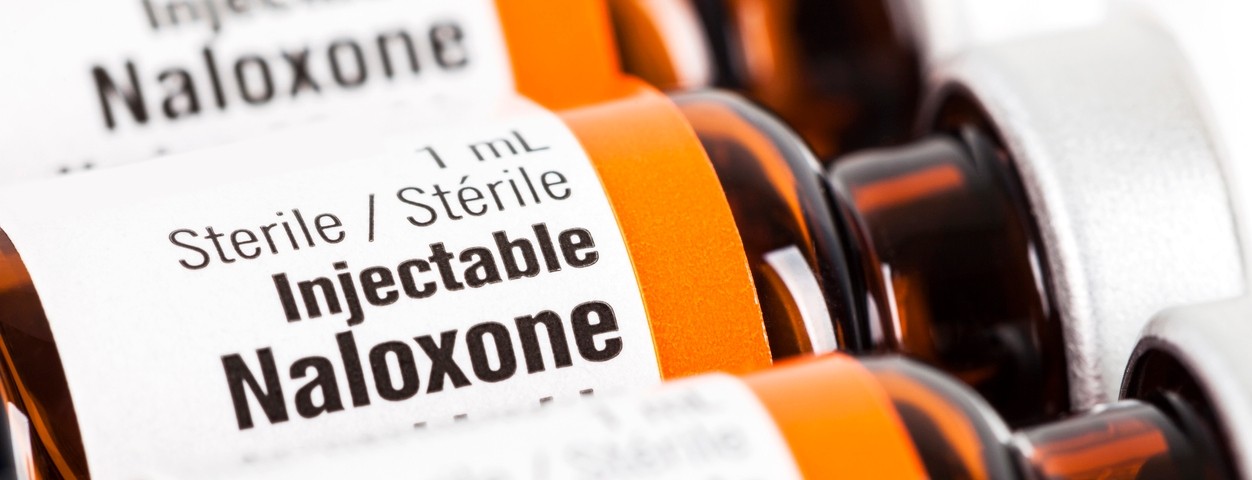
Featured photo at top of bottles of injectable naloxone. Photo/iStock/PowerofForever.
Related Stories
These teeny spiders are social media stars
August 28, 2026

The New York Times turned to a University of Cincinnati professor to explain the appeal of jumping spiders on social media.
An internal divide among unions on AI impacts the Wisconsin gubernatorial race
August 28, 2026

Anne Lofaso, a professor in the Donald P. Klekamp College of Law at UC, spoke with Wisconsin Public Radio, about the schism among unions over AI and whether it is a plus, a negative, or somewhere in between when looking at job creation.
On-site training in Speech & Hearing Clinic sets UC’s programs apart
August 27, 2026
At the University of Cincinnati’s Speech & Hearing Clinic, Doctor of Audiology and Speech-Language Pathology graduate students gain real-world experience while providing free speech and hearing services to the community.