
Yahoo News: Is COVID now endemic? Here's what experts say.
UC expert says he expects it to continue to evolve into new strains

In May 2023, the director-general of the World Health Organization, Tedros Adhanom Ghebreyesus, said that COVID-19 was no longer a health emergency, but rather an ongoing health issue. This could be an indication that the virus is transitioning from the pandemic stage to the endemic stage.
A pandemic is a disease outbreak, or epidemic, that is typically widespread — meaning, affecting multiple countries across the world — and is spreading among people. A disease becomes endemic when it still exists within a population but isn’t spreading uncontrollably and has a high degree of predictability, according to a story published by Yahoo! News, which cited several expert sources. One of those was Carl Fichtenbaum, MD, of the Division of Infectious Diseases at the UC College of Medicine.
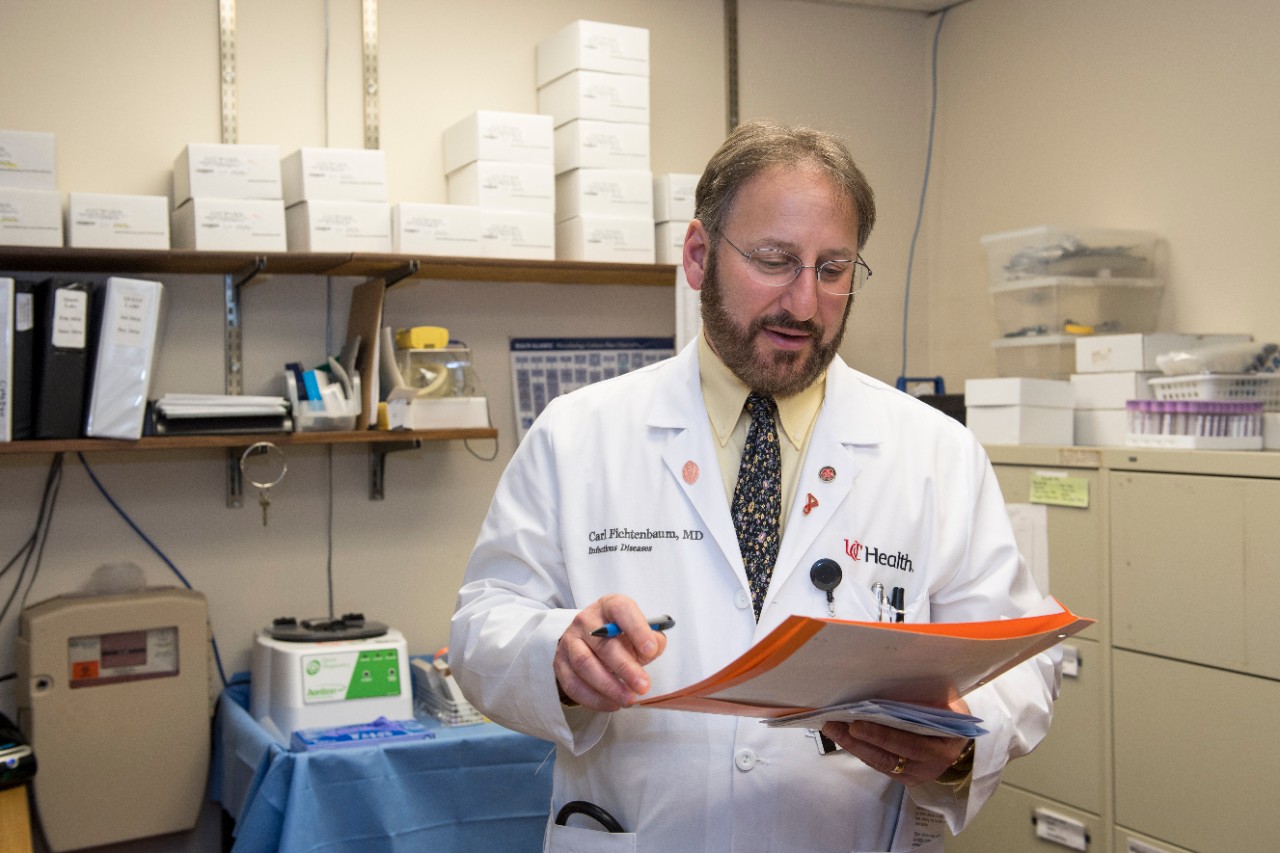
Carl Fichtenbaum, MD, of the Division of Infectious Diseases at the UC College of Medicine/Photo/Colleen Kelley/UC Marketing + Brand
"Yes, we are moving to the endemic stage where COVID will be active with seasonal peaks in different countries," Fichtenbaum said. "And it is likely to continue to evolve new strains as the virus tries to spread to the most people.”
Experts still recommend taking precautions to avoid getting infected, including frequent handwashing, wearing a mask in a crowd, getting vaccinated and getting tested for COVID and isolating early.
Fichtenbaum says that people above age 65 and those with existing health conditions have a higher risk of severe illness from COVID. For most people, he says, “This will feel like a bad cold or flu. They may be sick for two to four days and then gradually get better. But if it feels worse and you find it hard to breathe, move or speak, seek expert care promptly.”
Lead image at top/peterschreibermedia.com/iStock
Next Lives Here
The University of Cincinnati is classified as a Research 1 institution by the Carnegie Commission and is ranked in the National Science Foundation's Top-35 public research universities. UC's graduate students and faculty investigate problems and innovate solutions with real-world impact. Next Lives Here.
Related Stories
Cincinnati STRIDE helps kids who stutter connect and build confidence
October 19, 2026
Cincinnati STRIDE, formerly Fluency Friday, is a one-day workshop co-led by UC and Cincinnati Children’s that supports students who stutter and their families, while giving speech-language pathology graduate students hands-on experience.
How can Cincinnati provide more affordable housing? This new lab aims to find out
October 16, 2026

The University of Cincinnati Real Estate Center helped launch a new regional research and development initiative designed to identify, test and scale solutions to the region’s housing challenges called the Housing Innovation Lab. The project is built around a simple idea: What if communities approached housing challenges the way leading companies approach innovation?
Collaboration over consultation
October 16, 2026
New University of Cincinnati research published in the journal Health Expectations found stroke survivors participating in rehab research desire an approach that prioritizes shared decision-making, peer relationships and a focus on what they can accomplish rather than their deficits.