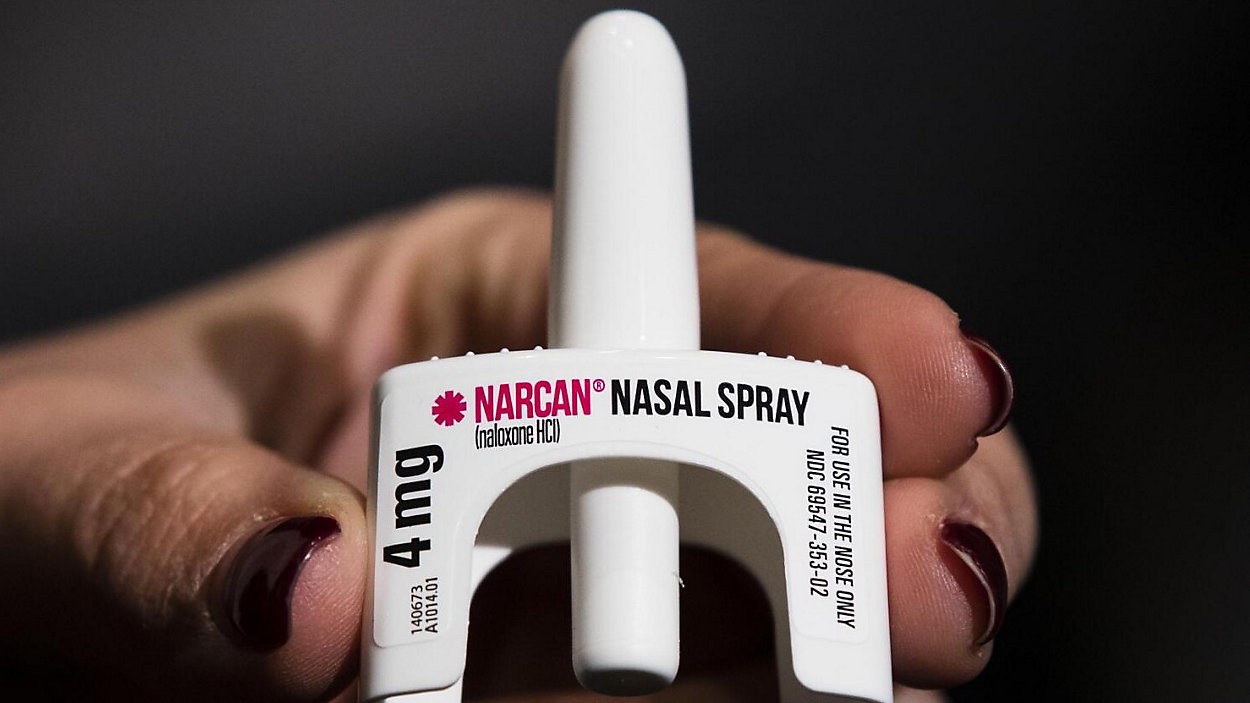
Spectrum News: University of Cincinnati study looks at impact of Narcan distribution
Study also reported on by Local 12

Research from the University of Cincinnati investigates the impact of a community naloxone distribution collaborative in Hamilton County from the end of 2017 until the end of 2019. The study, published in PLOS One, shows that widespread community distribution of naloxone did not significantly impact the median monthly opioid overdose rates.
Spectrum News reported on the research, interviewing lead researcher, Caroline Freiermuth, MD, of the Department of Emergency Medicine in the UC College of Medicine.

Caroline Freiermuth, MD, of the Department of Emergency Medicine in the UC College of Medicine/Photo/Colleen Kelley/UC Marketing + Brand
“We found that over the course of the two-year project where we were trying to distribute naloxone to as many communities possible, the overdose death rate really did not change," said Freiermuth. "However, we did some modeling and we would have expected to see the opioid overdose death rate go up. And so we like to think that handing out the naloxone actually kept that at a steady rate.”
Freiermuth told Spectrum News that one thing the study demonstrates is that much work needs to be done in this area.
"We need to make sure that everyone has access to this medication, knows how to use this medication, realizes how easy and impactful it is," she said. "This is such a safe medication. It’s very easy to administer. It works within seconds and really can help bring people back from death.”
Local 12 also reported on the research. See that coverage here.
Read more about the study here.
Lead photo/Mark Schiefelbein/AP photo
Next Lives Here
The University of Cincinnati is classified as a Research 1 institution by the Carnegie Commission and is ranked in the National Science Foundation's Top-35 public research universities. UC's graduate students and faculty investigate problems and innovate solutions with real-world impact. Next Lives Here.
Related Stories
Her book drive is changing literacy in Cincinnati
August 31, 2026

WCPO highlights a nonprofit dedicated to childhood literacy that has offers co-op positions to UC students.
Heavy social media use linked to depression
August 31, 2026

U.S. News and World Report, Yahoo! News, MSN, USA Today and other national media highlight a new study by the University of Cincinnati and Northwestern University that found a correlation between heavy social media use and depression in adults.
These teeny spiders are social media stars
August 28, 2026

The New York Times turned to a University of Cincinnati professor to explain the appeal of jumping spiders on social media.