
UC Clermont professor, alum receive patent for breakthrough chemotherapy technology
Research could lead to more effective drug delivery for cancer patients

For decades, Clifford Larrabee pursued a lofty goal: to cure cancer. This summer, with a patent secured for a ground-breaking cancer drug delivery system, Larrabee and his co-inventor have left their mark in the ongoing fight against the disease.
“I don’t know anyone who hasn’t been affected by cancer,” said Larrabee, professor emeritus in chemistry at the University of Cincinnati Clermont College. “And for the students working with me in the lab, their research has contributed directly to a potential cancer treatment.”
In 2019, Larrabee submitted a patent with co-inventor and former UC Clermont student Mary Warmin, who also served as a senior chemistry lab associate and adjunct instructor at the college while earning her PhD from UC. The patent is for a new nanocarrier targeted drug delivery system based on undecylenic acid — i.e., a more effective method of delivering chemotherapy drugs to cancer patients.
“It is gratifying to have our work recognized as novel, and I am thrilled to see this project cross a major milestone,” said Warmin, who completed her chemistry PhD in April. “My hope is that our drug delivery system will someday improve quality of life and outcomes for patients.”
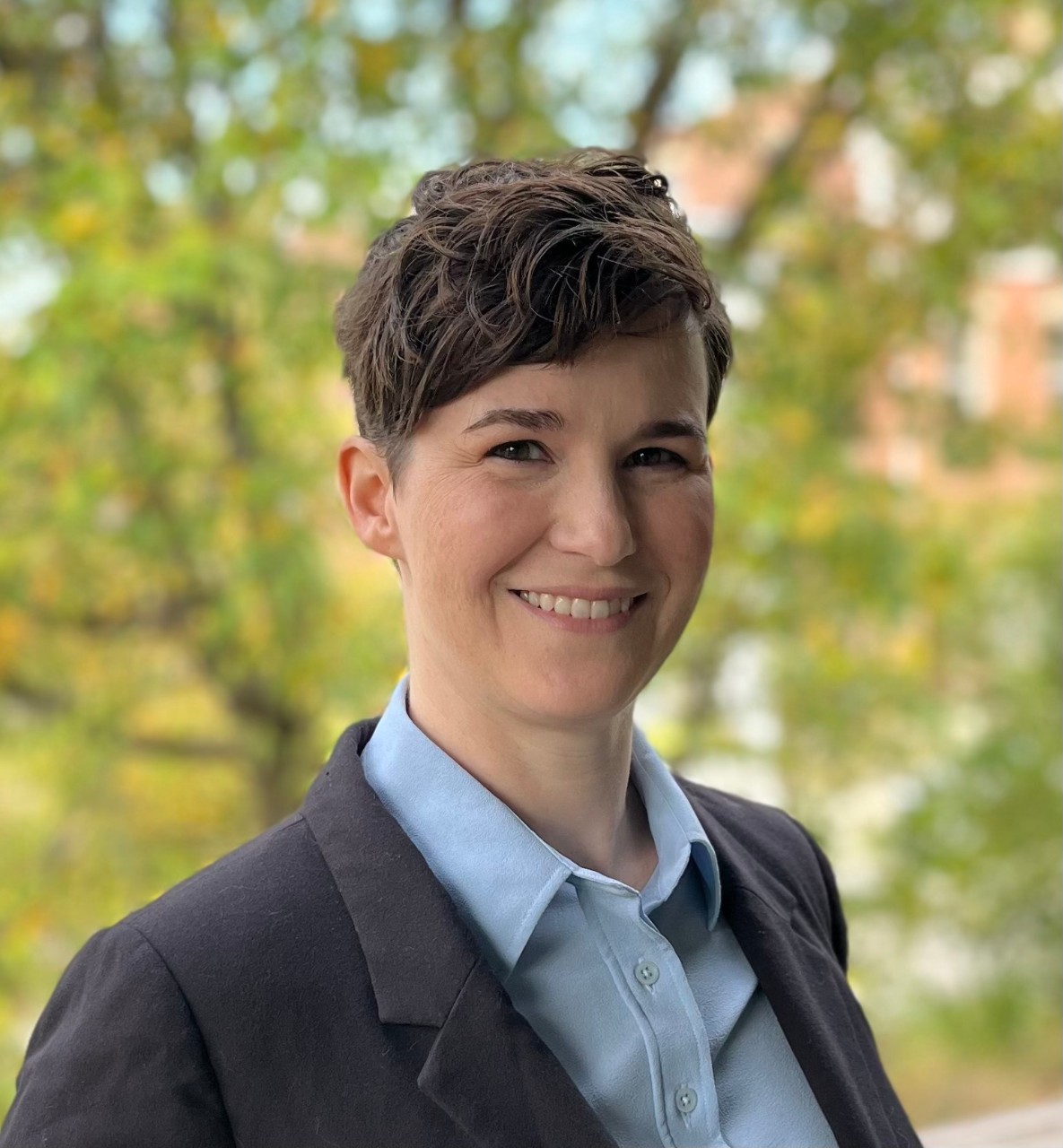
Mary Warmin
Nanocarriers are even smaller than cells and help drugs dissolve in the blood while protecting them from the body’s defense mechanisms. Larrabee first wrote about the potential usage of nanocarriers to deliver drugs in his PhD dissertation in 1980. He started conducting nanocarrier research with students through UC’s Women in Science and Engineering program in the late 2000s.
After one student presentation, former UC College of Arts & Sciences Associate Professor and chemist Eddie Merino approached Larrabee. Merino had received a patent for a new cancer therapy, but in trials, the drug sustained too much damage to be effective before reaching tumors. Larrabee’s nanocarrier offered the perfect solution.
“A nanocarrier protects the drug from interactions that damage it until it reaches the tumor where it needs to work,” Larrabee said. “The nanocarriers also protect the chemo from enzymes in the bloodstream that try to kill it, which leads to fewer side effects.”
My hope is that our drug delivery system will someday improve quality of life and outcomes for patients.
Mary Warmin UC Clermont alum and patent co-inventor
Four versions of Larrabee’s nanocarrier capable of delivering the cancer therapy created by Merino are included in the patent, which covers 18 nanocarrier/chemotherapy combinations for breast, ovarian, prostate, lung, melanoma and acute myeloid leukemia cancers. The patent was submitted through UC’s Office of Innovation.
“I would like to see cancer cured or at least tamed,” Larrabee said. “This patent is a step in that direction and the result of many years of hard work in UC Clermont’s labs and by our students.”
UC’s WISE initiative, the university’s Office of Research and the UC Clermont donor-sourced Sophia Fund for Innovation have all provided support for cancer research at the college. In 2022, Jill Shirokawa, assistant professor of chemistry, received a $100,000 grant from the PhRMA Foundation to build on Larrabee’s work; she is working to identify antibiotics that can attack cancer stem cells. Those drugs also could be delivered via Larrabee’s nanocarriers.
“You can kill cancer stem cells with antibiotics,” Larrabee said. “And if you can kill them before they differentiate, maybe you can prevent metastasis.”
Larrabee officially retired in 2020 but has remained involved in UC Clermont’s labs. For the son of two chemists — Larrabee’s father helped create the popular drugs tetracycline and doxycycline — the patent represents the culmination of a life’s work.
“As a scientist, you don’t just teach; you do science,” Larrabee said. “I was in a place where I had student involvement and supportive leadership, and it was the best job in the world. The patent is validation that this wasn’t just a pipe dream — it was the real thing.”
Featured image at top: Clifford Larrabee, retired UC Clermont chemistry professor and researcher, who has received a patent for his novel cancer drug delivery system. Photo/Danny Kidd
About UC Clermont
UC Clermont College is in Clermont County on 91 beautifully wooded acres in Batavia Township. The college is an accredited, open-access college offering more than 60 associate degrees, certificates and bachelor’s degrees. UC Clermont is part of the nationally recognized University of Cincinnati. For more information, call 513-556-5400 or visit www.ucclermont.edu.
Related Stories
UC aerospace engineer leads global computational fluid dynamics taskforce
October 21, 2026
The American Institute of Aeronautics and Astronautics' CFD 2030 Integration Committee has announced the formation of the Computational Fluid Dynamics (CFD) Vision 2045 Team, a multi-institution working group tasked with defining where the field of computational fluid dynamics should be by 2045 to align with the changing and evolving needs of the aerospace industry. The University of Cincinnati's Prashant Khare, Bradley Jones professor and head of the Department of Aerospace Engineering, is leading this specialized group.
Still the top ‘cat
October 20, 2026

The University of Cincinnati Bearcat mascot was voted Cincinnati’s favorite mascot in a Cincinnati Enquirer reader poll, earning 45.1% of the vote and topping other local favorites.
Researchers test gene therapy as less invasive treatment for hydrocephalus
October 20, 2026

Researchers at the University of Cincinnati College of Medicine say an experimental gene therapy could eventually lead to a less invasive treatment for hydrocephalus, a condition in which excess fluid accumulates in the brain. The early-stage study, led by Agnes (Yu) Luo, PhD, professor and vice chair for research, was published in the journal Fluids and Barriers of the CNS. Yahoo! News recently featured it.