Popular Science: This 'blue dragon' sliced through ancient Pacific
UC College of Arts and Sciences paleontologist describes a mosasaur found in Japan

Popular Science highlighted a study by the University of Cincinnati describing a mosasaur new to science discovered in Japan.
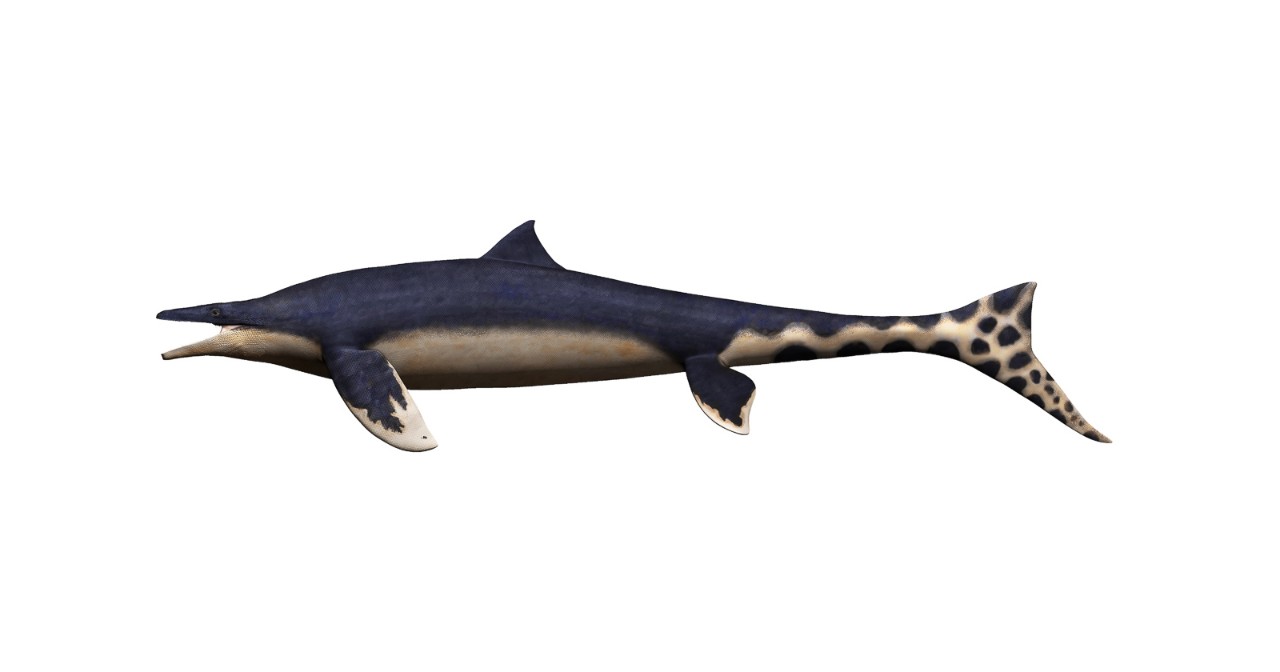
The Wakayama Soryu or “blue dragon” hunted waters off what is now Japan, according to the paper published in the Journal of Systematic Palaeontology.
The mosasaur was the size of a great white shark. But it had unusual features for mosasaurs, including a relatively shorter set of jaws, longer flippers and a dorsal fin based on the orientation of neural spines that resemble those of harbor porpoises.
“It’s still hypothetical and speculative to some extent, but that distinct change in neural spine orientation behind a presumed center of gravity is consistent with today’s toothed whales that have dorsal fins, like dolphins and porpoises,” Konishi said.
Read the Popular Science story.
Featured image at top: University of Cincinnati Associate Professor Takuya Konishi describes a mosasaur from Japan called the Wakayama Soryu. Illustration/Takumi
Related Stories
Parakeet males, females equally likely to fight
September 14, 2026
Researchers from the University of Cincinnati and Duke University studied captive monk parakeets and found that sex has little effect on who starts fights, who is targeted or who rises in the dominance hierarchy, as reported in Integrative & Comparative Biology.
UC researchers seek to combat youth weight gain from bipolar medication
September 14, 2026

Cleveland.com highlighted a University of Cincinnati initiative approved for funding by the Patient-Centered Outcomes Research Institute (PCORI) to expand the implementation of healthy lifestyle interventions and metformin prescription to help manage weight gain in overweight or obese youth taking second-generation antipsychotic medications.
UC part of $18 million statewide initiative to expand behavioral health workforce
September 14, 2026
The University of Cincinnati is part of Ohio’s $18 million Behavioral Health Scholarship Program, offering full in-state tuition to eligible social work, mental health counseling and clinical psychology graduate students who commit to serving underserved Ohio communities after graduation.