
Leading the way
Cleopatra Kum, PhD '22

Cleopatra Kum’s culture emphasizes caregiving, especially for elderly community members.
Kum, PhD, lived in Cameroon, Africa, until about a decade ago when she emigrated to the U.S. to earn a Bachelor of Science in Nursing. She quickly saw an opportunity, or perhaps a necessity, for a nurse to build a better home health care model for older adults. So, she did.
“I did home health care nursing for other agencies, and I learned the people in charge were businesspeople and not nurses,” she says. “I wanted to create a family-centered model that worked for the good of the patient.” In 2016, Kum founded Family Support Care LLC, a Medicare-accredited home health agency that provides skilled and non-skilled, in-home nursing care to patients in Southwestern Ohio. The agency now employs 18 health care workers and hopes to expand. Rather than focus on the bottom line only, as she observed while working for other home health care providers, Kum’s agency strikes a balance between profit and people.
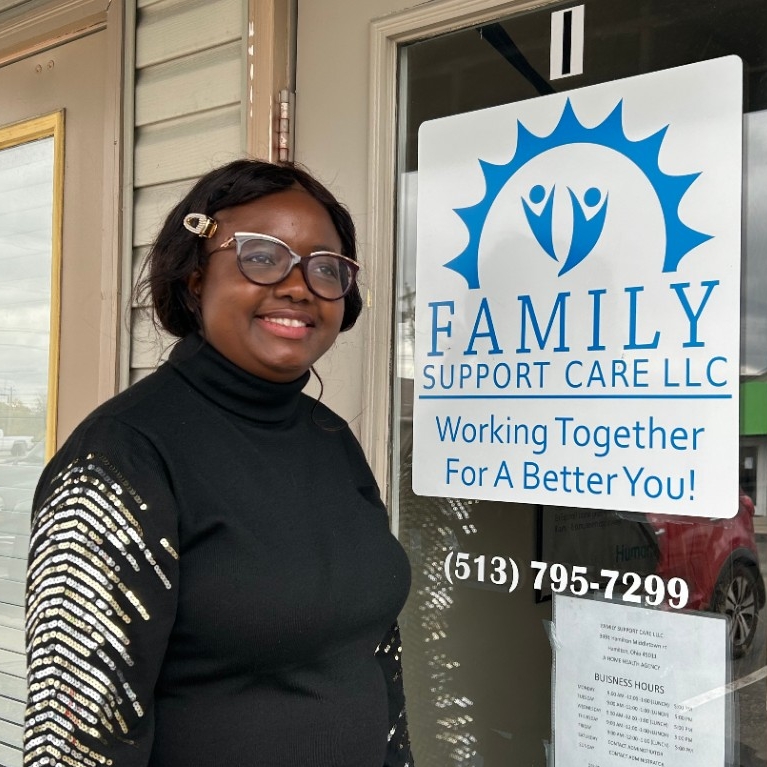
“Every member of the team understands that what matters is better outcomes for the patient and making sure patients get to the highest level of comfort in their homes,” she says.
Along with the typical hurdles to starting a business — securing financing, meeting legal obligations and understanding operational needs — as an immigrant, Kum also had to learn how U.S. systems function and build a personal network from the ground up. But her background is not a barrier. It is blessing, she says.
“It was a blessing because I’m from a culture of caregiving. We take care of our elders. We respect white hair. People age in place. And I brought that perspective to health care.”
Kum, who earned her PhD in 2022 from the University of Cincinnati and now serves as an assistant professor, hopes to build awareness around entrepreneurship in nursing and to health care as a career for immigrants and minorities.
Related Stories
Simple ways to find a deeper sense of happiness and well being
October 8, 2026

UC assistant professor Suzie White, featured in an AARP story on practical ways to live a happier, healthier life, shared research-backed strategies for increasing well-being through gratitude and service to others. White teaches Happiness in Action, a course that helps students apply the science of happiness in everyday life.
New vending machine helps people with addiction
October 8, 2026

The University of Cincinnati's Daniel Arendt was featured in a Spectrum News report on a new harm reduction vending machine installed at the IPM Food Pantry in partnership with the Hamilton County Mental Health and Recovery Services Board.
UC study correlates increased physical activity with slower Parkinson’s progression
October 7, 2026
Higher levels of physical activity were associated with slower declines in thinking and memory as well as slower worsening of movement symptoms for people with Parkinson’s disease, according to a new study led by University of Cincinnati researchers published Oct. 7, 2026, in Neurology.