U.S News. & World Report: Is it allergies or sinusitis? Many folks are misdiagnosed
UC research offers hope for more accurate diagnoses and more effective treatment

New research out of UC examines the incidence of people who are being treated for allergies when they actually have chronic rhinosinusitis (CRS), and the medicines they are taking for their allergy symptoms have little effect. U.S. News & World Report published a report on the research, interviewing the lead author Ahmad Sedaghat, MD, PhD, of the UC College of Medicine.
“We have seen so many patients suffer for so long due to the confusion between allergies and CRS,” said Sedaghat. “I’ve had patients who tell me that they have been treated with allergy shots for 10, 20 or more years without relief of their symptoms but who after we discovered they had CRS and we started them on appropriate treatment, achieved relief within a few months."

Ahmad Sedaghat, MD, PhD, professor of Otolaryngology, Head & Neck Surgery at the UC College of Medicine/Photo/Colleen Kelley/UC Marketing + Brand
CRS affects almost 15% of Americans, according to Sedaghat. The condition is typically treated with antibiotics.
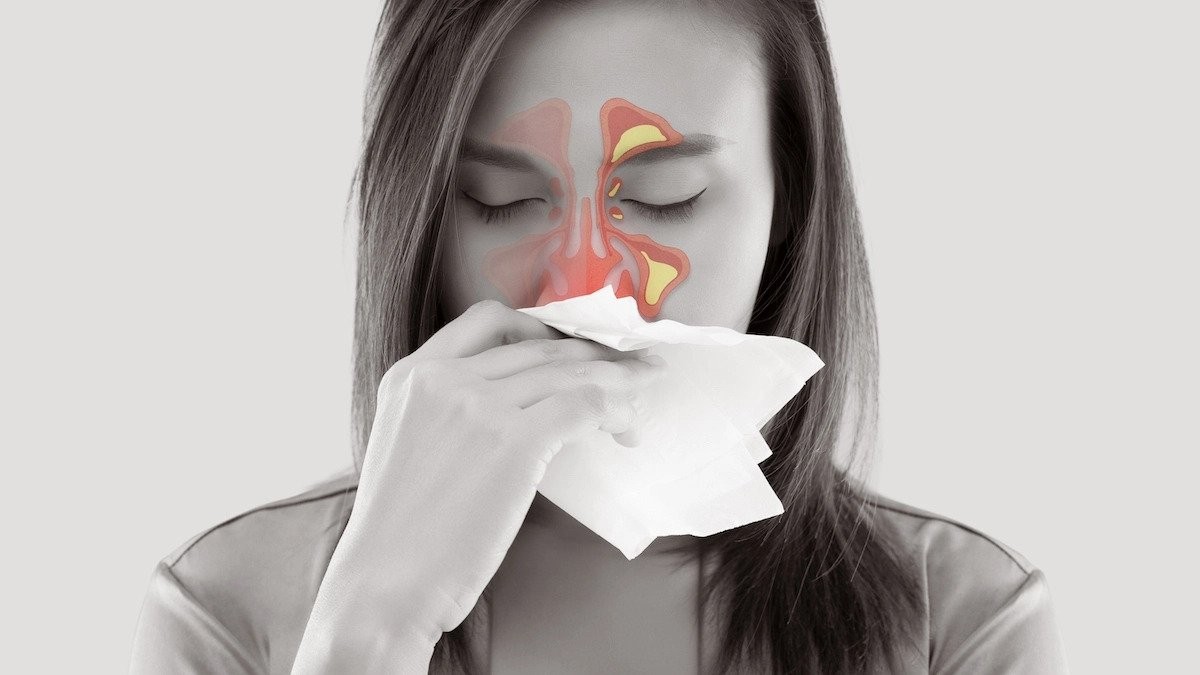
The trouble is, the outward signs of sinusitis can mimic those of a nasal allergy.
“As someone who grew up in [the Midwest], I can attest to how commonly we tend to attribute sinus and nasal symptoms to ‘allergies,'" Sedaghat said. "But the reason for this is that nasal allergies [allergic rhinitis] and CRS have overlapping symptomatology, often characterized by nasal blockage and nasal drainage. Both can also cause sinus pressure."
The treatment for CRS and nasal allergies is very different, however, which means that misdiagnosis can lead to months or years of needless misery.
The new study involved 219 people who'd been thought to have nasal allergies. Each underwent nasal endoscopy and testing to gauge the severity and type of their sinus/nasal symptoms.
“We specifically used this questionnaire to study our patients’ symptoms because we could simultaneously measure symptoms of CRS and allergic rhinitis without having to use different questionnaires,” Sedaghat explained.
A majority (91.5%) did have some form of environmental allergy, testing revealed.
Sedaghat also spoke with Healio about this research. Read the Healio article.
Read more about Sedaghat's research here.
Lead photo/iStock
Next Lives Here
The University of Cincinnati is classified as a Research 1 institution by the Carnegie Commission and is ranked in the National Science Foundation's Top-35 public research universities. UC's graduate students and faculty investigate problems and innovate solutions with real-world impact. Next Lives Here.
Related Stories
UC hematology researcher to study bone complications in sickle cell disease
September 25, 2026
University of Cincinnati hematology researcher Jahnavi Gollamudi, MD, has received new grant funding to study how inflammation predicts bone complications in people with sickle cell disease, offering new hope for treatment.
UC partners join communitywide effort to improve outcomes for children and families
September 24, 2026

WLWT Channel 5 covered a signing agreement ceremony for the newly formed Hamilton County Child & Family Systems Partner Collaborative dedicated to working more efficiently together to reduce barriers for families, connect them with support early on and improve delivery of services. UC Corrections Institute and the Donald P. Klekamp College of Law are among the organizations part of the collaborative.
More young adults are having strokes than three decades ago
September 23, 2026
A University of Cincinnati-led study published in the journal Neurology found that strokes among adults ages 20 to 54 nearly doubled over almost three decades, even as short-term survival after stroke improved.