Regional media highlights UC pancreatic cancer vaccine trial

Regional media highlighted the University of Cincinnati Cancer Center being the first site in the Midwest enrolling patients in a new Phase 2 clinical trial testing a vaccine to treat pancreatic cancer.
Davendra Sohal, MD, site principal investigator, said this trial builds on the same mRNA technology that was used to develop vaccines for COVID-19.
"In addition to the standard surgery and chemotherapy, they also get this very personalized vaccine created using their own tumor profile,” Sohal, associate director for clinical research at the Cancer Center and professor of internal medicine in UC’s College of Medicine, told Local 12.
The vaccine is developed in about four to six weeks while patients are recovering from surgery, and patients are then given six weekly injections of the vaccine. Following six months of standard chemotherapy, patients then receive six more vaccine injections as boosters.
In the Phase 1 trial, Sohal said eight out of 32 patients were completely cured of their cancer.
Watch or read the Local 12 story.
Read the Becker's Hospital Review story.
Read the WDRB Louisville story.
For more information on the trial, please call 513-584-7698 or email cancer@uchealth.com.
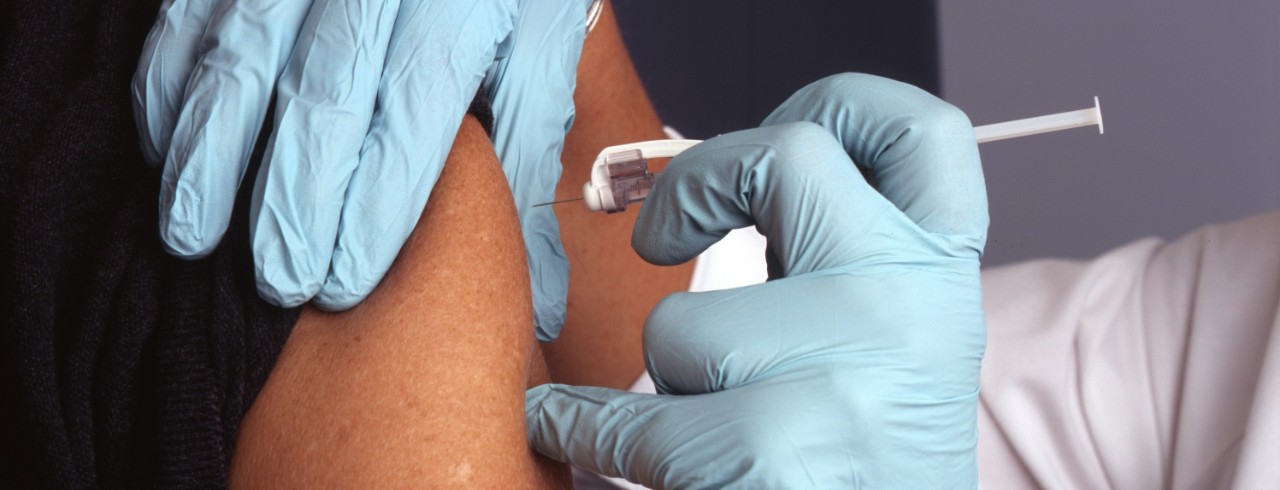
Featured photo at top of a vaccine being administered. Photo/National Cancer Institute/Unsplash.
Related Stories
These teeny spiders are social media stars
August 28, 2026

The New York Times turned to a University of Cincinnati professor to explain the appeal of jumping spiders on social media.
An internal divide among unions on AI impacts the Wisconsin gubernatorial race
August 28, 2026

Anne Lofaso, a professor in the Donald P. Klekamp College of Law at UC, spoke with Wisconsin Public Radio, about the schism among unions over AI and whether it is a plus, a negative, or somewhere in between when looking at job creation.
On-site training in Speech & Hearing Clinic sets UC’s programs apart
August 27, 2026
At the University of Cincinnati’s Speech & Hearing Clinic, Doctor of Audiology and Speech-Language Pathology graduate students gain real-world experience while providing free speech and hearing services to the community.