The Cut: Can my acne products cause cancer?

The University of Cincinnati's Kelly Dobos spoke with The Cut about the risk of benzene exposure in common acne products.
Recently, an independent laboratory filed a petition with the Food and Drug Administration requesting the recall of products that contain an over-the-counter acne-treating drug called benzoyl peroxide due to elevated levels of the carcinogen benzene.
“Unless someone is keeping their acne treatment in a car during the hottest days of summer, it’s incredibly unlikely your product will experience that kind of condition" of increased benzene exposure, Dobos, a cosmetic chemist and adjunct instructor in UC's Cosmetic Science Program in the James L. Winkle College of Pharmacy, told The Cut.
Dobos noted most people are exposed to at least some level of benzene every day, regardless of the acne products they use. People can experience elevated levels when cooking over a gas flame, putting fuel in your car or sitting next to a person who is vaping or smoking.
“According to information from the World Health Organization, outdoor air has a background benzene level ranging from 0.31 parts per billion in rural areas to 1.5 to 2.3 parts per billion in suburbs and cities," she said.
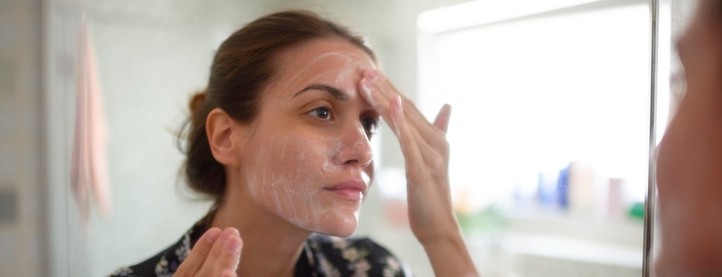
Featured photo at top of a woman washing her face. Photo/Extreme Photographer/iStock.
Related Stories
These teeny spiders are social media stars
August 28, 2026

The New York Times turned to a University of Cincinnati professor to explain the appeal of jumping spiders on social media.
An internal divide among unions on AI impacts the Wisconsin gubernatorial race
August 28, 2026

Anne Lofaso, a professor in the Donald P. Klekamp College of Law at UC, spoke with Wisconsin Public Radio, about the schism among unions over AI and whether it is a plus, a negative, or somewhere in between when looking at job creation.
On-site training in Speech & Hearing Clinic sets UC’s programs apart
August 27, 2026
At the University of Cincinnati’s Speech & Hearing Clinic, Doctor of Audiology and Speech-Language Pathology graduate students gain real-world experience while providing free speech and hearing services to the community.