WDTN Dayton news: FDA approves first melanoma cellular therapy

The University of Cincinnati's Trisha Wise-Draper, MD, PhD, spoke with WDTN Dayton to discuss the approval of Amtagvi, the first cellular therapy for metastatic or unresectable melanoma, a harmful skin cancer.
“It’s actually a cellular therapy but its very different than the cellular therapies that are currently available for a lot of the hematologic malignancies,” said Wise-Draper, a University of Cincinnati Cancer Center member, section head of Medical Oncology and professor in the Division of Hematology/Oncology in UC’s College of Medicine.
The new therapy is for patients who have exhausted all other options.
“Because of the complicated nature of it, not everyone should get the therapy,” Wise-Draper said. “But for those that are fit and able to undergo the multiple treatments, cause it does require a very large multidisciplinary team.”
Wise-Draper said the Cancer Center's team of multidisciplinary experts will evaluate each patient to see if they are a fit for Amtagvi, since it is extensive.
“It’s really important that we evaluate the patient for feasibility upfront,” she said, “and make sure that’s something they’ll be able to undergo.”
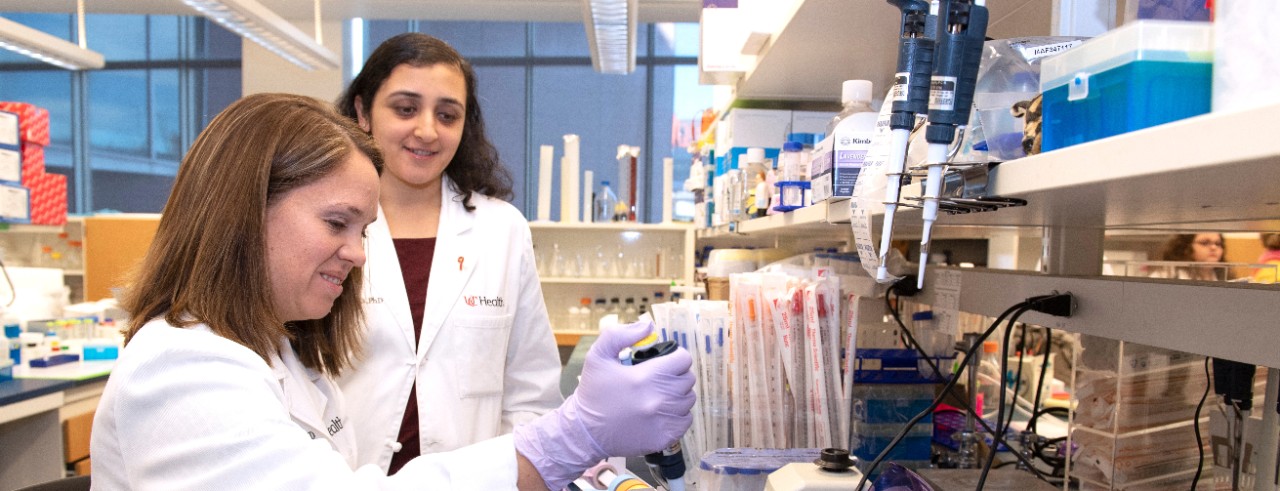
Featured photo at top of Wise-Draper, left, and Vinita Takiar in their research laboratory. Photo/Colleen Kelley/UC Marketing + Brand
Related Stories
Her book drive is changing literacy in Cincinnati
August 31, 2026

WCPO highlights a nonprofit dedicated to childhood literacy that has offers co-op positions to UC students.
Heavy social media use linked to depression
August 31, 2026

U.S. News and World Report, Yahoo! News, MSN, USA Today and other national media highlight a new study by the University of Cincinnati and Northwestern University that found a correlation between heavy social media use and depression in adults.
These teeny spiders are social media stars
August 28, 2026

The New York Times turned to a University of Cincinnati professor to explain the appeal of jumping spiders on social media.