WLWT: Beautiful pear tree causes ugly invasive problem
UC biologist suggests homeowners consider replacing tree with native alternatives

WLWT spoke to a biologist with the University of Cincinnati about a pretty but invasive ornamental tree that is in bloom now across Ohio.
UC College of Arts and Sciences Professor Theresa Culley, head of UC's Department of Biological Sciences, told WLWT that the Bradford or Callery pear tree was sterile when growers introduced it to neighborhoods across the Midwest in the 1960s.

Theresa Culley. Photo/Joseph Fuqua II/UC
But this tree from Asia tended to split at its trunk, so growers introduced other varieties that cross-pollinated with Bradford pear trees and began producing seed-bearing fruit.
Soon, the pear trees were showing up in disturbed patches of forest and along highway edges in Ohio and other states.
An Ohio law went into effect last year making the selling, growing or planting of Callery pears illegal statewide.
Culley said homeowners might consider replacing pear trees in their yards with native plants.
"A lot of people really love their tree," she said.
One alternative is to spray the tree with plant-growth regulator treatments available at home and garden shops that inhibit a tree's development of fruit, she said.
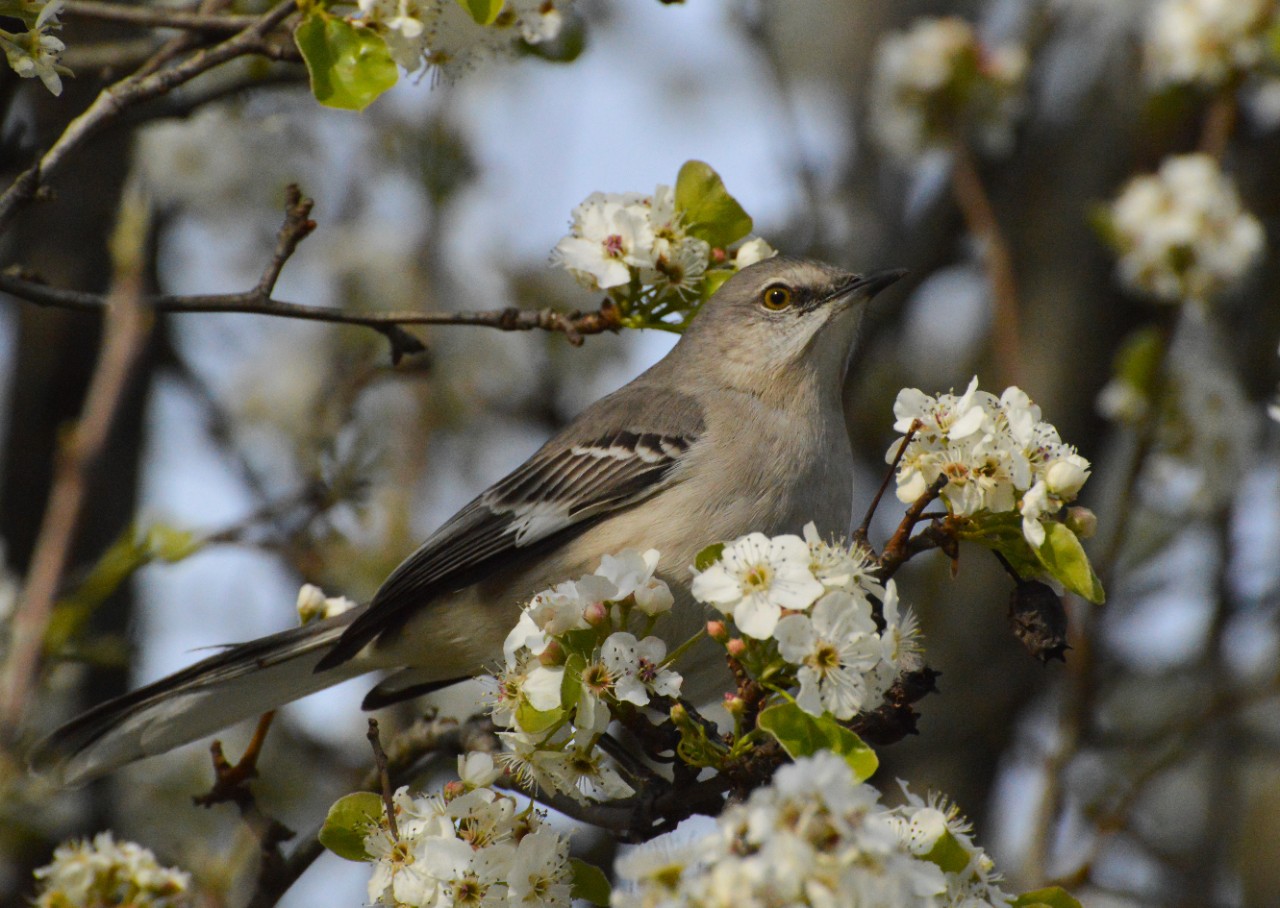
Featured image at top: A mockingbird perches in a Callery pear tree. Photo/Michael Miller
Related Stories
2026 Cincinnati Business Courier's '40 Under 40' includes nine UC alumni
August 3, 2026
Nine remarkable University of Cincinnati alumni have been named by the Cincinnati Business Courier to its annual “40 Under 40” Class for 2026.
As Crosley Tower comes down, UC looks to STEM
July 30, 2026
With demolition of Crosley Tower more than halfway complete, the University of Cincinnati is preparing a, 200,000-square-foot STEM Academic Facility on its Uptown campus, transforming the north side of campus with new classrooms and labs.
Donor support of UC and UC Health reaches historic level
July 30, 2026
This summer, every law student at the Donald P. Klekamp College of Law who applied for a Summer Public Interest fellowship will receive a fully funded real-world learning experience, expanding opportunities for University of Cincinnati students wishing to pursue real-world experience in public service. This 30% increase in fully funded fellowship participation is a direct result of transformative philanthropy.