Alabama.com: How a new self-test for HPV could be a game changer

The University of Cincinnati's Leeya Pinder was featured in an Alabama.com article about how self-testing for HPV could make preventative care more accessible to those facing the most barriers.
To help close the gap in access to screening for cervical cancer, the National Cancer Institute has launched the Cervical Cancer ‘Last Mile’ Initiative, a public-private partnership working to provide evidence on the effectiveness and accuracy of self-testing for HPV.
Part of this initiative is the SHIP trial (Self-collection for HPV testing to Improve Cervical Cancer Prevention). The University of Cincinnati Cancer Center is one of 25 SHIP trial sites across the country testing whether samples self-collected by patients for HPV testing are as accurate and effective as clinic-collected samples.
“It really gives people the opportunity to just do a vaginal swab or a cervico-vaginal swab so that they can get tested for high-risk HPV, which is usually the driver of cervical precancer and cervical cancer,” said Pinder, MD, a University of Cincinnati Cancer Center member and associate professor in the UC College of Medicine Department of Obstetrics and Gynecology, Division of Gynecologic Oncology. “What we’ve been trying to do over the last several years is prove that women can actually do HPV testing on their own.”
Previous research has shown self-testing methods are effective, especially for certain underscreened populations.
“Those populations include those who sometimes struggle with substance abuse, sometimes have a history of trauma or other kinds of abuse, those that are concerned about their immigration status or actually, many things,” she said. “These are reaching the people who for whatever reason do not have great access to a health care provider to get their cervical cancer screening.”
Read the Alabama.com story, originally published on Reckon.
Read more about the SHIP trial.
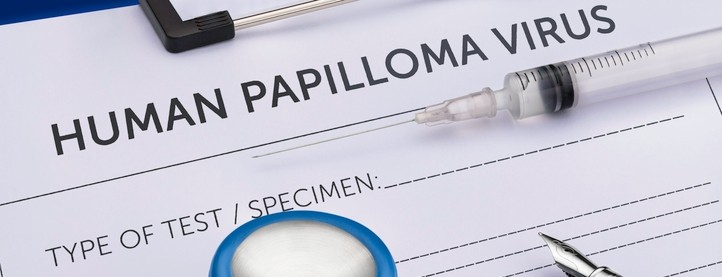
Featured photo at top of HPV test form. Photo/iStock/Sefa Ozel.
Related Stories
UC expert offers advice to Cincinnati on climate change
August 14, 2026

In an op-ed, UC Associate Professor Bob Hyland talks about ways Cincinnati can become more resilient in face of climate change.
UC named a best employer in Ohio by Forbes
August 14, 2026

Forbes ranks the University of Cincinnati No. 24 on its 2026 America’s Best Employers By State list for Ohio, recognizing UC’s strong workplace culture and employee experience.
Mistakes to avoid when shopping for a product dupe
August 13, 2026

The University of Cincinnati’s Kelly Dobos was featured in an AARP article discussing ways to determine if “dupe” cosmetic products really are comparable to the more expensive name brand.