Hoxworth Blood Center urges summer blood donations
Donate blood or platelets in June and receive a special thank you gift


Donors in June will receive this floppy summer hat.
Hoxworth Blood Center, University of Cincinnati, is celebrating and thanking blood donors this June with a special thank you gift.
All blood and platelet donors who donate at any of Hoxworth’s seven Neighborhood Donor Centers or select mobile blood drives will receive an exclusive Hoxworth floppy sun hat!
“It’s that time of the year where summer vacations and activities are in full swing, and unfortunately we tend to see a drop in donor turnout because of that,” says Jackie Marschall, Hoxworth spokesperson. “The need for blood doesn’t take a vacation, which makes it the perfect time to carve out one hour of your week to make an impact that can change someone’s life for the better.”
Hoxworth needs at least 500 donors each day, including 80 platelet donors, to meet the demand of local hospitals, and that’s without any unexpected procedures.
Hoxworth operates seven Neighborhood Donor Centers across the Tri-State with appointments available each day of the week. Appointments are highly encouraged and can be made at Hoxworth.org, by calling 513-451-0910, or by downloading the new Hoxworth Blood Donor app.
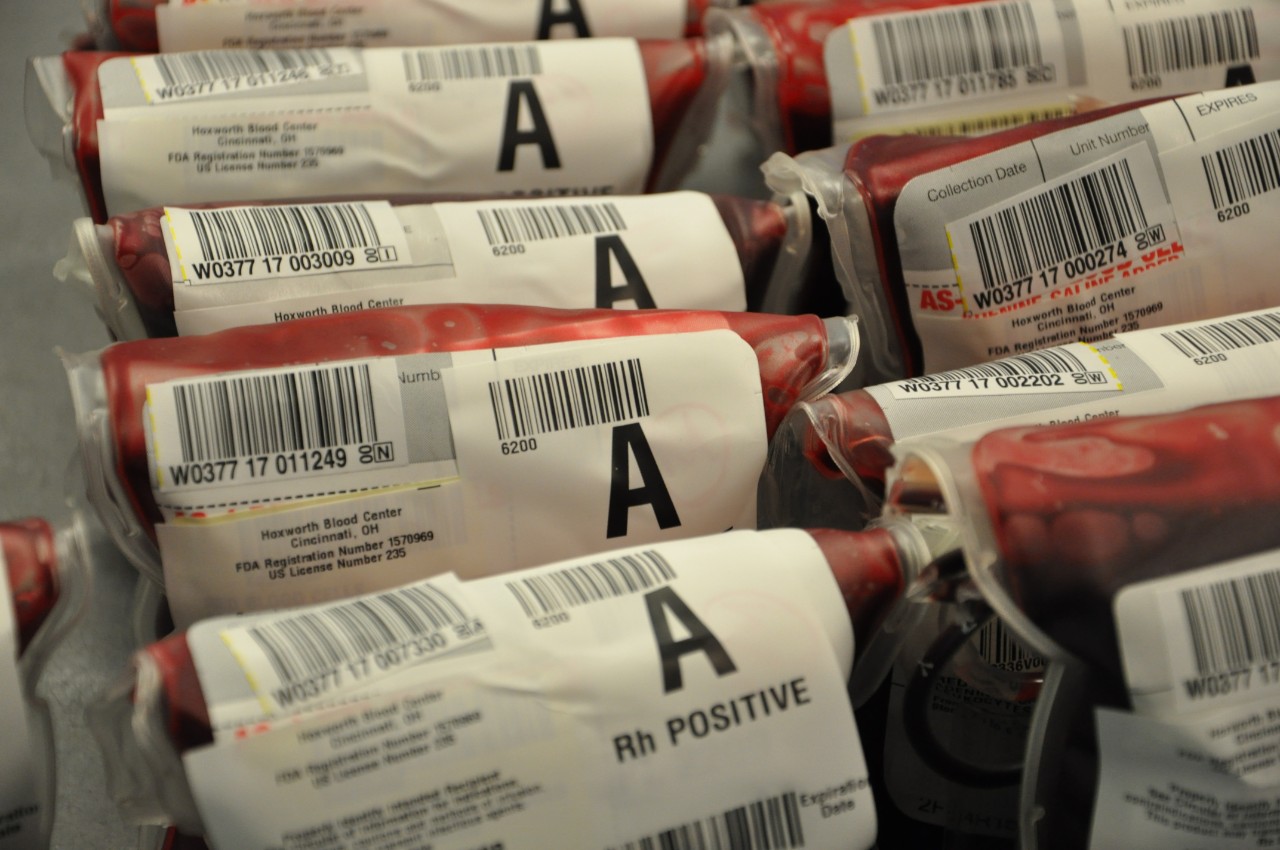
Featured photo at top of donated blood. Photo/University of Cincinnati.
About Hoxworth:
Hoxworth Blood Center, University of Cincinnati, was founded in 1938 and serves more than 30 hospitals in 18 counties in Southwestern Ohio, Northern Kentucky, and Southeastern Indiana. Annually, Hoxworth collects more than 100,000 units of blood from local donors to help save the lives of patients in area hospitals. Hoxworth Blood Center: Saving Lives Close to Home.
Related Stories
Designing with cancer patients' needs in focus
August 27, 2026
Kristina Shin is designing garments that prioritize the comfort, function and confidence of breast cancer patients, addressing a need often overlooked by traditional fashion.
UC, NKU renew longstanding partnership supporting Army ROTC cadets
August 26, 2026
The University of Cincinnati Army ROTC and Northern Kentucky University (NKU) have renewed a longstanding partnership that supports students preparing to become Army officers and leaders in their communities. The universities formalized the renewed agreement during a signing event Aug. 11 at NKU.
Funding expands UC research into weight gain side effects of bipolar medication
August 26, 2026
University of Cincinnati researchers have been approved for funding by the Patient-Centered Outcomes Research Institute (PCORI) to expand the implementation of healthy lifestyle interventions and metformin prescription to help manage weight gain in overweight or obese youth taking second-generation antipsychotic medications.