South Bend, Indiana news: Stopping migraines before they start

Migraines affect millions of people in the United States, but a recent study from the American Academy of Neurology found people who suffer migraines might be able to predict when one is coming hours before symptoms even start.
Vince Martin, MD, professor in the Department of Internal Medicine in UC's College of Medicine and director of the Headache and Facial Pain Center at the University of Cincinnati Gardner Neuroscience Institute, was not involved in the research but commented on it to South Bend, Indiana television station WNDU. He said migraines are some of the most common conditions treated in his practice.
Migraines occur in about 16 to 18% of women and 5% of men, Martin said, or 12% of the total population. They can last from four to 72 hours, causing moderate to severe pain.
“Usually, the pain is on one side, but occasionally it can be two-sided,” Martin said. “And they get a variety of different symptoms such as nausea, and vomiting, and sometimes sensitivity to light and noise as well.”
The recent study found circadian rhythms play a huge role in migraines. Study participants who experienced poor sleep quality and low energy had a higher chance of a migraine the next morning. For people who had higher energy and higher stress levels, a migraine also typically followed the next day — but in the afternoon or evening.
Doctors say recognizing specific triggers means a migraine could be predicted and prevented with medication before it even starts.
“We use some of the (medications) that stay in the body a little bit longer shortly before a trigger and during the trigger, and then sometimes that can kind of ward it off," Martin said.
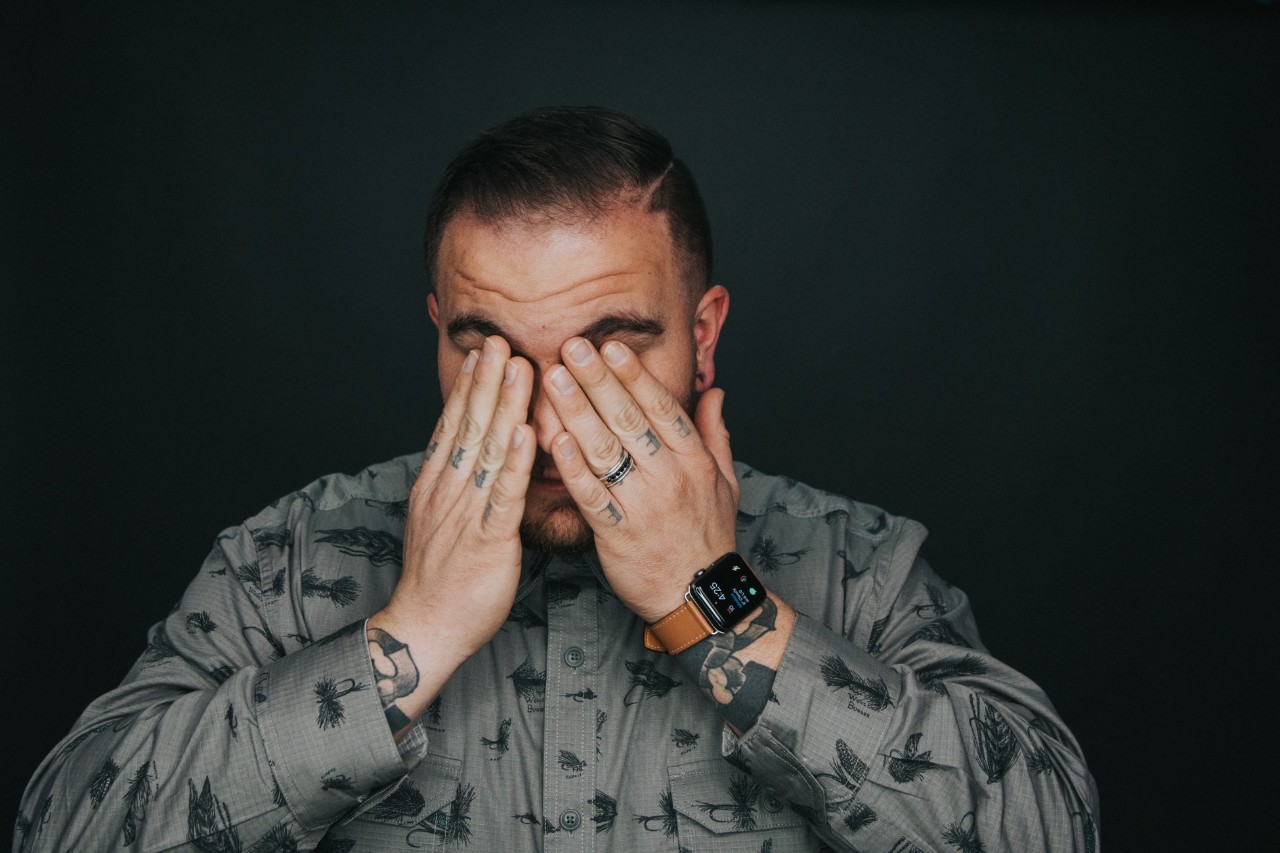
Featured photo at top of a man with migraine symptoms.
Related Stories
These teeny spiders are social media stars
August 28, 2026

The New York Times turned to a University of Cincinnati professor to explain the appeal of jumping spiders on social media.
An internal divide among unions on AI impacts the Wisconsin gubernatorial race
August 28, 2026

Anne Lofaso, a professor in the Donald P. Klekamp College of Law at UC, spoke with Wisconsin Public Radio, about the schism among unions over AI and whether it is a plus, a negative, or somewhere in between when looking at job creation.
On-site training in Speech & Hearing Clinic sets UC’s programs apart
August 27, 2026
At the University of Cincinnati’s Speech & Hearing Clinic, Doctor of Audiology and Speech-Language Pathology graduate students gain real-world experience while providing free speech and hearing services to the community.