
Animal behavior's biggest taboo is softening
UC behavioral ecologist talks to the Atlantic about anthropomorphism in science

The Atlantic reached out to a behavioral ecologist at the University of Cincinnati to learn more about attitudes scientists have about anthropomorphism in animal science.
Anthropomorphism is the tendency to attribute human emotions, motivations or characteristics onto animals. Generations of scientists have discouraged this natural inclination to see a bit of themselves in the animals they study.
But scientists told the Atlantic this impulse sometimes can be useful.

UC Assistant Professor Elizabeth Hobson holds a monk parakeet. She and her students study animal societies. Photo/Provided
Hobson studies animals such as monk parakeets in UC's College of Arts and Sciences.
Her studies have found that when a high-ranking parakeet has an extended absence from the colony, it typically gets bullied by the other members upon its return.
Bullying is a concept commonly used to describe human behavior, but it also made for relevant shorthand to describe the bird behavior they were documenting, Hobson told the Atlantic.
“We’re just careful to define exactly what we mean,” she said: “an increase in aggression towards a specific individual from all the other birds in the group.”
Hobson said scientists should use care in making inferences or drawing conclusions through the prism of anthropomorphism.
“We need to be really careful when engaging in any kind of anthropomorphism so that we are not inferring the root cause of a behavior in animals as human-like without evidence and data to back it up,” she said.
“I think it's fine and sometimes helpful to use anthropomorphism as an analogy or a 'what if animals behaved in this situation as a human would' kind of approach. But then as scientists, it's critical to go out and collect data and evidence if we want to explain a behavior in a way that we usually think of as human.”
Likewise, Hobson said, researchers need to be aware of our inclination to anthropomorphize to prevent bias from creeping into data collection or analysis.
Featured image at top: Scientists discuss the risks and benefits of anthropomorphism. Photo/Andre Mouton/Unsplash
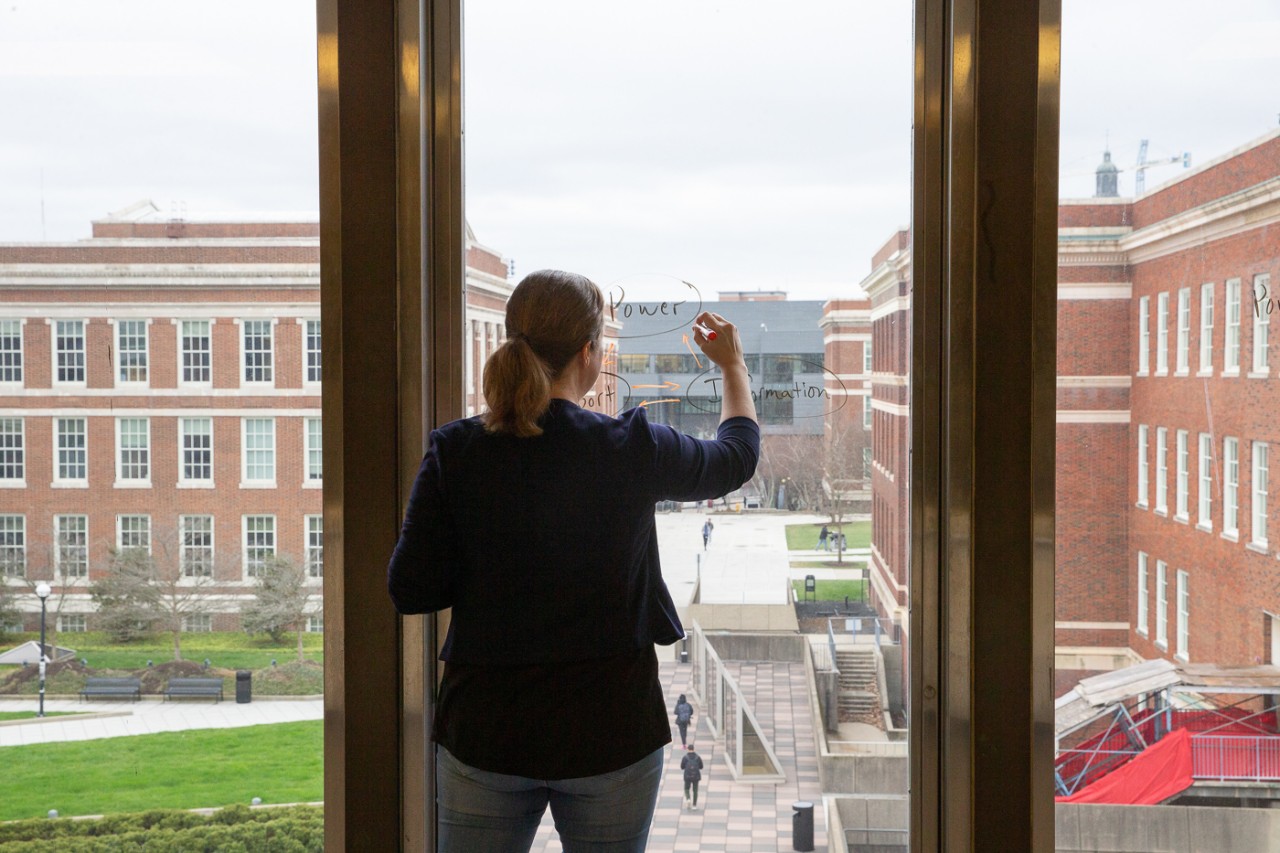
UC Assistant Professor Elizaeth Hobson studies animal behavior in her biology lab. Photo/Andrew Higley/UC Marketing + Brand
Related Stories
How can Cincinnati provide more affordable housing? This new lab aims to find out
October 16, 2026

The University of Cincinnati Real Estate Center helped launch a new regional research and development initiative designed to identify, test and scale solutions to the region’s housing challenges called the Housing Innovation Lab. The project is built around a simple idea: What if communities approached housing challenges the way leading companies approach innovation?
Cincinnati Spotlight features CCM's new Conservatory Series concerts
October 15, 2026

Cincinnati Public Radio features CCM's new Conservatory Series in its latest "Cincinnati Spotlight." The series launches on Wednesday, Oct. 21 with its inaugural "Grand Tradition" concert featuring a variety of CCM's distinguished faculty artists.
Medical devices exec touts UC co-op
October 15, 2026

UC College of Engineering and Applied Science alumnus Adam Hauke talks to Medium about the speed of innovation in developing new medical devices. Hauke is global director of product strategy & innovation at Gentherm Medical. He earned a doctorate and bachelor's degree in biomedical engineering from UC.