Hospital violence intervention program set to begin helping patients in August
WLWT highlights UC, Cincinnati Children's collaboration

A joint pediatric and adult hospital violence intervention program led by the University of Cincinnati, UC Health and Cincinnati Children's will launch this August, funded by a $600,000 grant from the city of Cincinnati.
“We've done a great job historically at providing medical care for victims of gun violence, but we needed to do more to provide the necessary support for not only the patients but their families,” Amy Makley, MD, associate professor and associate director of the general surgery residency program in UC's College of Medicine and trauma medical director at UC Medical Center, told WLWT.
The program will hire violence prevention professionals to help victims of gun violence and their families. The program will provide them with resources with links to community-based organizations that provide mental health, housing, employment and food insecurity assistance.
“Unfortunately, for a city of our size, we see too high a number of victims of violence,” Makley said. “Between our two institutions, we see about 500 victims a year."
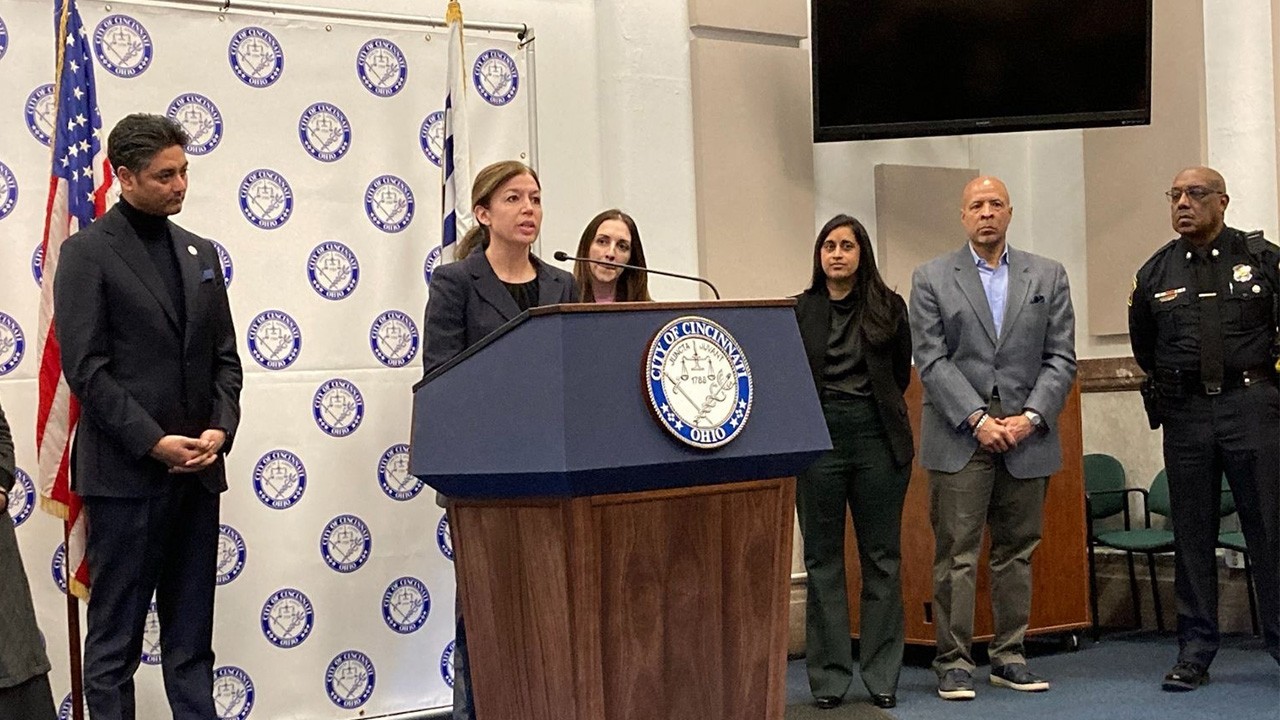
Featured photo at top: Amy Makley speaks at a press conference announcing the program. Photo/UC Health.
Related Stories
Is Cincinnati building new homes fast enough?
September 22, 2026

Gary Painter, professor and academic director of the Real Estate Center at UC's Lindner College of Business, offers comments on affordability issues in Cincinnati.
'Discovery, mentorship, momentum': UC College of Medicine's graduate programs celebrate year of success
September 22, 2026
From new mentorship honors to a growing research pipeline, see how the University of Cincinnati College of Medicine's graduate programs made this a standout year.
Tina Cheng, MD, receives American Academy of Pediatrics’ highest honor
September 22, 2026
UC Pediatrics chair Tina Cheng, MD, has received the American Academy of Pediatrics' highest honor for her decades of advancing child health.