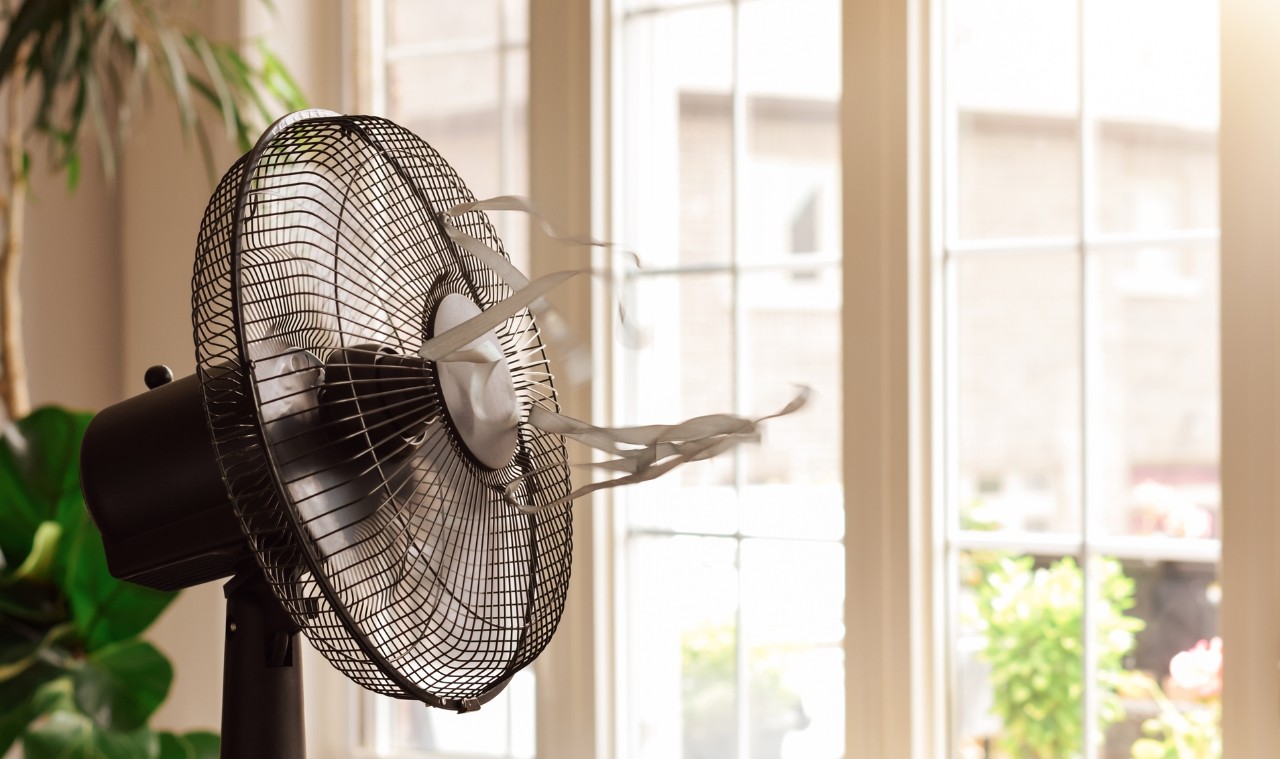
How to properly cool your home with a fan
DAAP Professor Pravin Bhiwapurkar contributes to TIME article on the use of fans in hot weather

Before the advent of air conditioning, the fan was a good way to lower room temperatures; and it still is, as fans require much less electricity as they move air across the body to keep you cool, say experts in a TIME magazine article.
One of those experts is Pravin Bhiwapurkar, on faculty at the University of Cincinnati’s College of Design, Architecture, Art and Planning.
Bhiwapurkar, an associate professor in School of Architecture and Interior Design, is a trusted media resource and is a prolific researcher in the area of heat islands: urban areas where tall buildings and the lack of vegetation impact temperatures.
The article covers all types of fans — tabletop, standing, window — and the best use, even in coordination with air conditioning. Bhiwapurkar’s contribution to the article focuses on the use of window fans and placement.
Consider timing when you use a window fan, he says. “You want to window fan when it’s cooler outside the home than inside, typically overnight or early morning,” and “direction is also key: the fan should face inward, so it draws the cooler air into your abode and blows it in your direction.”
Feature image at top: iStock/JulieAlexK
Impact Lives Here
The University of Cincinnati is leading public urban universities into a new era of innovation and impact. Our faculty, staff and students are saving lives, changing outcomes and bending the future in our city's direction. Next Lives Here.
Related Stories
Cancer Center plays key role in lab research, clinical trials for new pancreatic cancer drug
September 1, 2026

WLWT and WCPO highlighted the contributions of University of Cincinnati Cancer Center researchers that helped lead to the recent FDA approval of daraxonrasib, a new treatment for pancreatic cancer.
An expert pieced together this Roman document like a puzzle
September 1, 2026

National media highlighted a new project by UC Classics Assistant Professor Matthijs Wibier to piece together and translate an ancient Roman text from fragments buried in the desert for more than 1,600 years.
Cancer Center physician receives $150,000 New Investigator Research Grant to study treatment-resistant leukemia
September 1, 2026
The University of Cincinnati Cancer Center’s Sarah Skuli, MD, PhD, received a two‑year, $150,000 Leukemia Research Foundation New Investigator Grant to study TP53‑mutated leukemia, a treatment‑resistant subtype with very poor outcomes.