
UC workshop shows AI alone cannot best human input
DAAP and private industry agree that AI needs the creative disciplines for responsible applications

There’s a line in multiple “Spider-Man” movies that information technologists like to quote when referring to artificial intelligence (AI): “With great power comes great responsibility.”
On Sept. 5, industry leaders and academics focused on the future and power of AI in the creative disciplines — with the underpinnings of human creativity in mind — at a workshop, “Creativity and AI,” held at the University of Cincinnati’s College of Design, Architecture, Art, and Planning (DAAP).
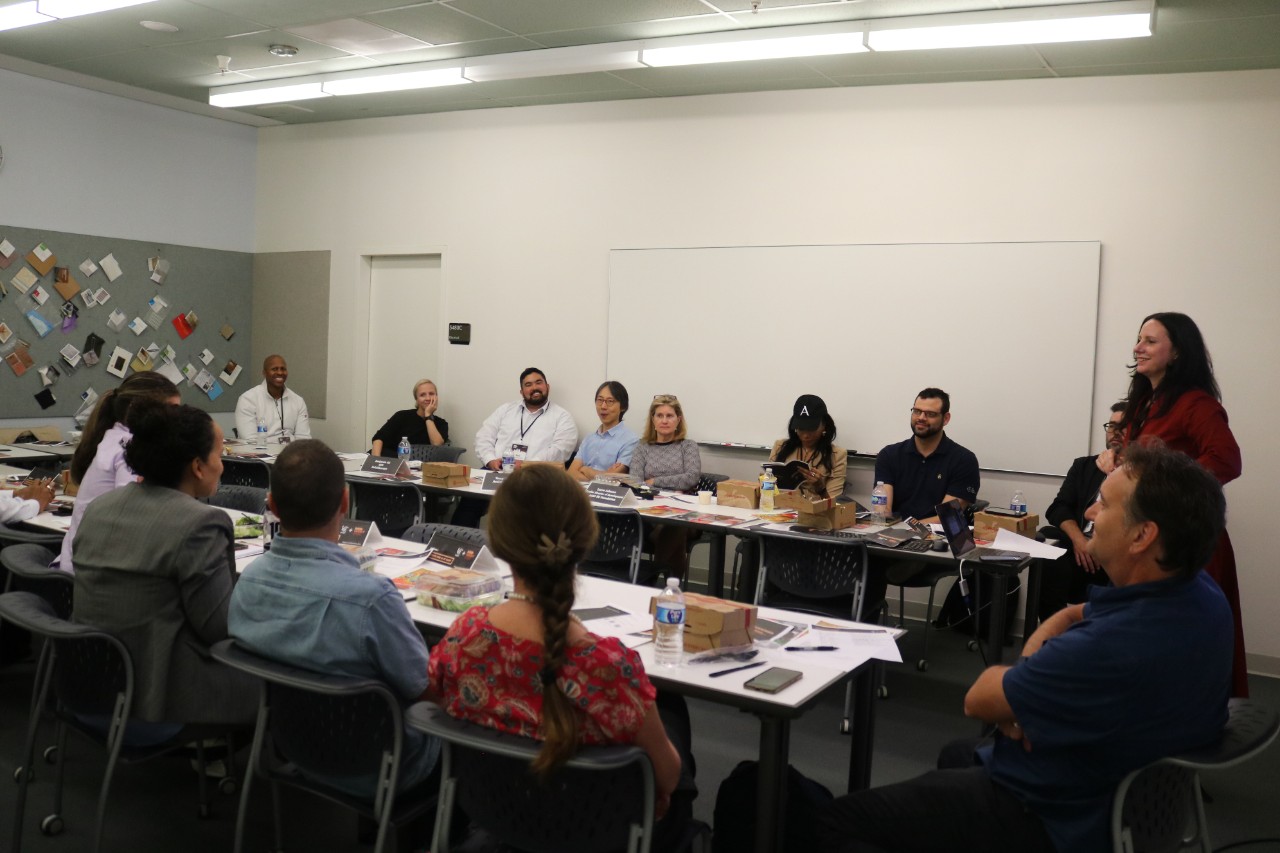
The "Creativity and AI" workshop being led by Claudia Rebola, UC professor and DAAP’s associate dean for research and graduate programs. Photo/Delfina Lassalle, DAAP graduate student
The workshop was an extension of MidwestCon 2024, a tech expo and hackathon hosted by the UC Crypto Club, in collaboration with Rob Richardson, founder of Disrupt Now, chief curator of MidwestCon and a startup partner at the UC 1819 Innovation Hub.
“AI technology is a tool to help augment [creativity] but it's not a replacement for creativity,” Richardson stated to open the workshop, which was organized and led by Claudia Rebola, UC professor and DAAP’s associate dean for research and graduate programs.
Rebola’s intent was to bring industry professionals and academics together to learn, connect, innovate and strategize the future of AI as it relates to design, architecture, art and planning — the four schools within DAAP.
“We at DAAP are having critical conversations about AI, engaging in intentional conversations to shape the future of AI in the creative disciplines and preparing our students to be responsible agents of change in industry.”
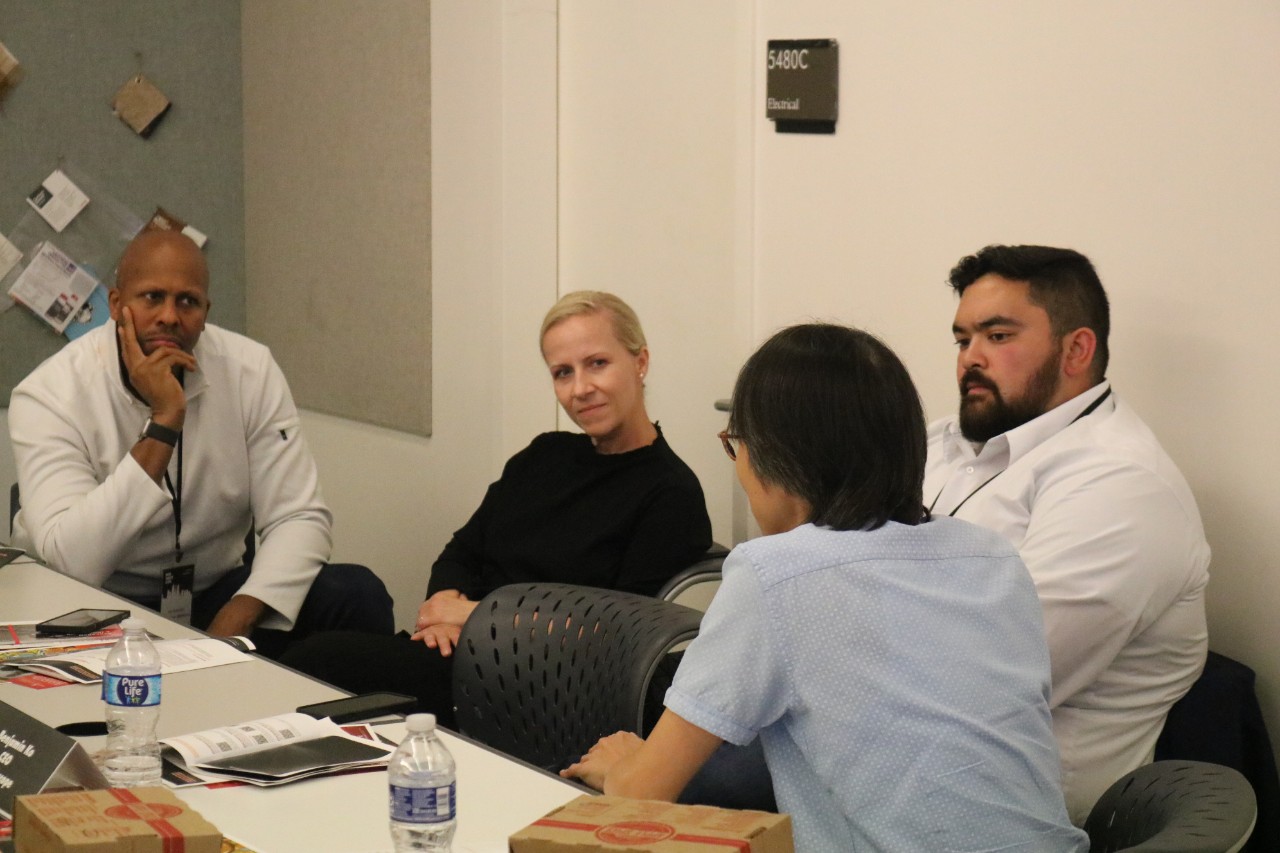
Small group breakout session for "Creativity and AI". Photo/Delfina Lassalle, DAAP graduate student.
Attendees brainstormed after breaking into groups focused on technical skills, creative skills, theoretical skills and business skills. The consensus in all areas was that AI is a tool, a medium that cannot be used in place of critical thinking or human interaction.
“AI can get us part way there,” by modeling the probable based on the AI data collected, but a balance of human input is necessary, said Benjamin Ko, CEO of Kaleidoscope Innovation, a Cincinnati-based product design and development firm.
An example of the limitations of AI, Ko explained, would be to ask AI to model the experiences of a supermarket shopper to determine a marketing/advertising strategy. The AI data, he said, will be lacking because, “AI cannot give you a true lived experience.”
In this scenario, Rebola later commented, the balance of AI data with the nuance of human thinking would be particularly important to DAAP students, who design logos, products, services and environments from user input.
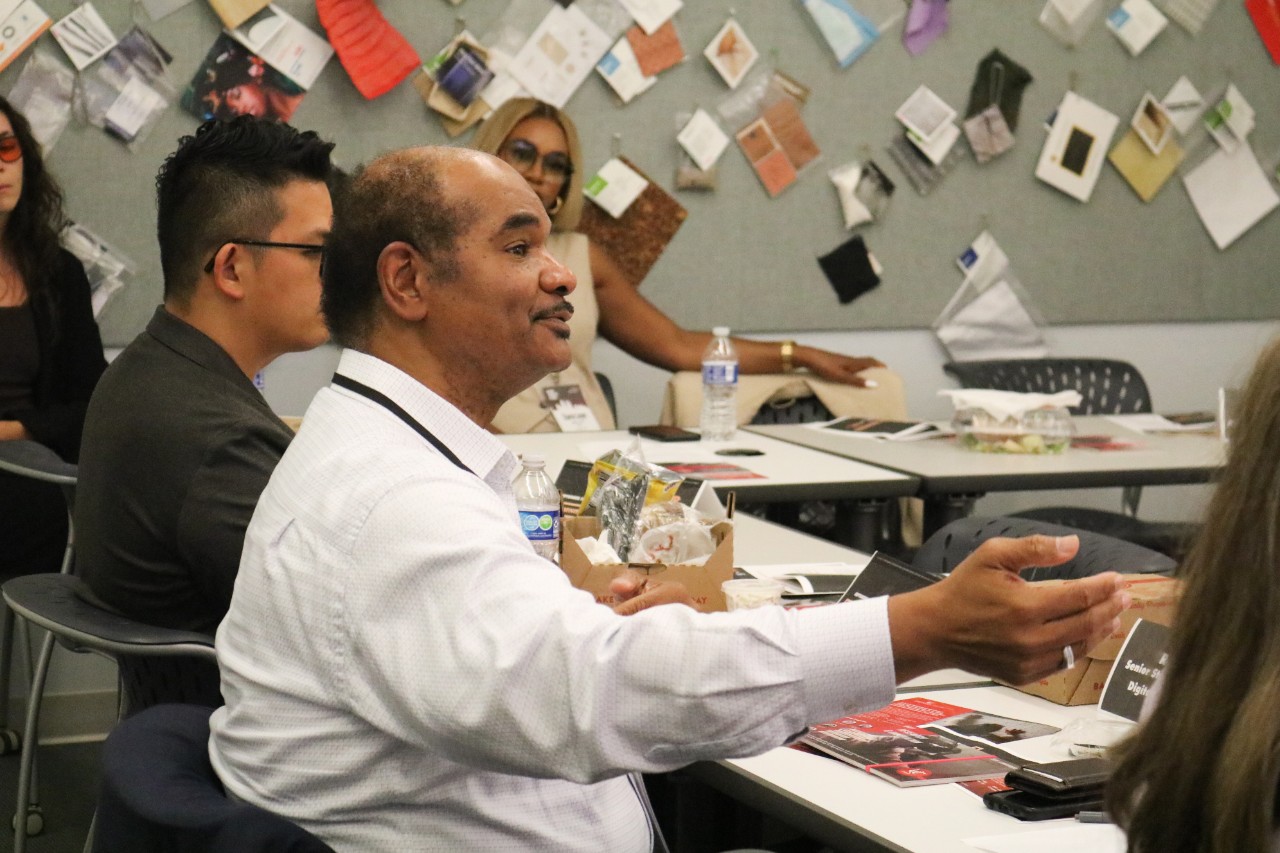
Robert Gordon, senior strategic leader for AI and digital innovation at DSS, Inc. Photo/Delfina Lassalle, DAAP graduate student
“In order to effectively use AI as a student, and later in the workforce, you can't just take everything that you get from these machines at face value,” she said.
The workshop ended with the concurrence that the creative disciplines are necessary to keep AI from churning out a rote, unimaginative product. It was determined that in these disciplines, AI is merely a tool much like the pencil and protractor evolved into computer design programs. The creative disciplines with its user-centered methods can help steer AI in ethical, empathic and responsible futures.
“In my view, creatives will be essential to how society now takes hold of this new technology and makes it into something that is meaningful and move society forward,” remarked attendee Robert Gordon, senior strategic leader for AI and digital innovation at DSS, Inc., a leading provider of health information technology solutions for federal, private and public health care organizations.
Featured image by Delfina Lassalle/DAAP graduate student.
Impact Lives Here
The University of Cincinnati is leading public urban universities into a new era of innovation and impact. Our faculty, staff and students are saving lives, changing outcomes and bending the future in our city's direction. Next Lives Here.
Related Stories
Dylan Mulvaney visits CCM, where she got 'the best degree in the world'
October 6, 2026

UC College-Conservatory of Music alumna Dylan Mulvaney (BFA Musical Theatre, '19) visited campus to meet with current students on Friday, Oct. 2. During the 2.5 hour Q & A session, Dylan talked about her career, shared advice and answered questions from CCM's current Musical Theatre students.
UC Clermont's Valentine Johns expands student support through AI
October 6, 2026
Valentine Johns, PhD, associate director of the UC Clermont College Learning Commons, was inspired to champion artificial intelligence through its potential to make academic support more accessible and responsive to students’ needs.
Grad Career Week to Help Graduate Students Prepare for What’s Next
October 6, 2026
Grad Career Week is a week-long professional development series designed to help graduate students build the skills, confidence and connections they need to navigate their careers and prepare for the job search.