Creating an artistic buzz
UC urban design researcher Hyesun Jeong’s research noted in the New York Times

In the past, the public was given access to art in the form of oil paintings hanging on museum walls or marble statues in courthouse halls. Today, however, public art is extended to commercial foyers and the outdoors.
In a New York Times article, the publication states that public art commissions in 2023 totaled $4.4 billion from corporations, cities, airports, hospitals, churches and other organizations.
“Public art has emerged as a key component of urban revitalization,” says Hyesun Jeong, a University of Cincinnati assistant professor of urban design whose public art research study was mentioned in the NYT article.
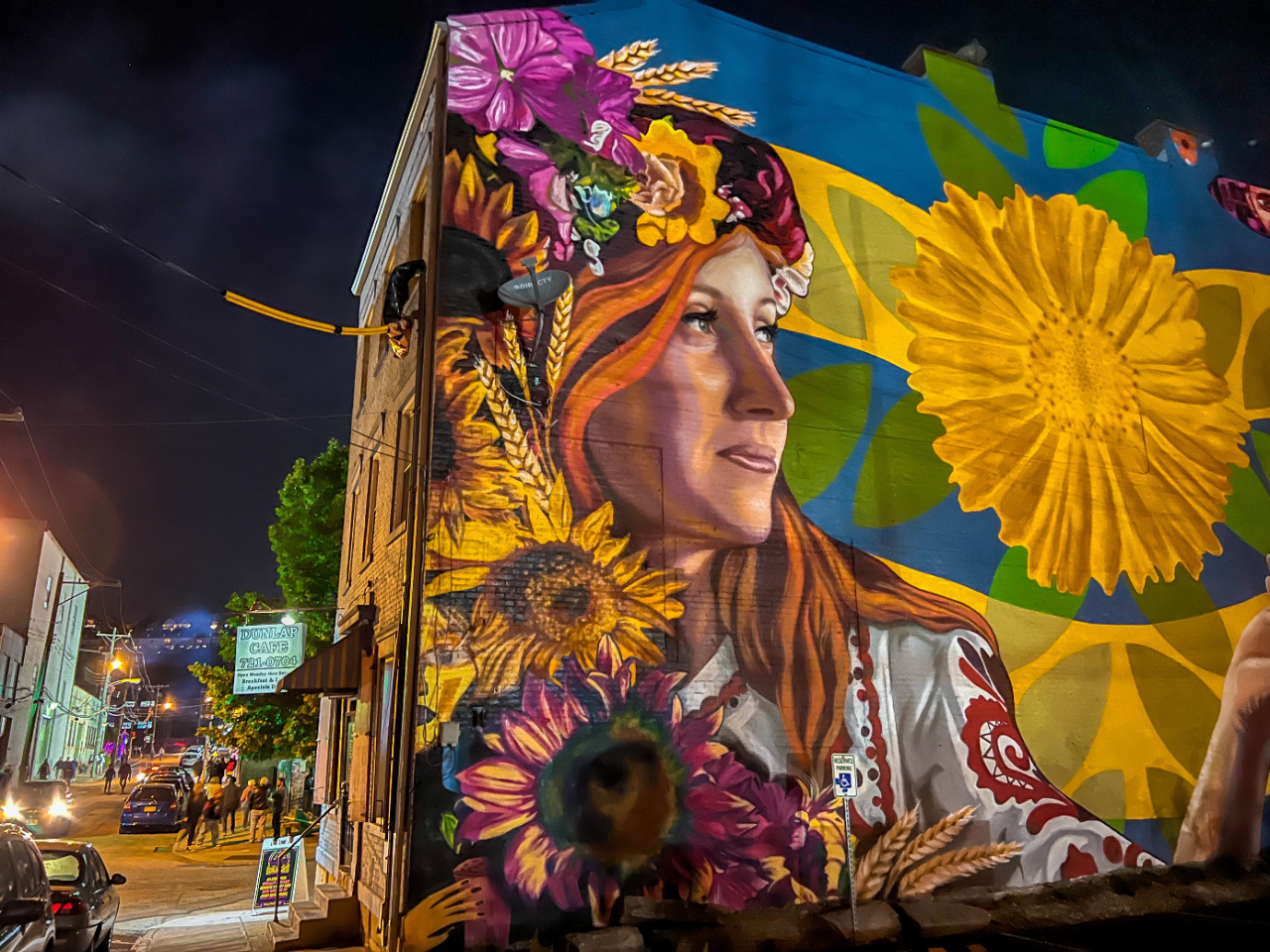
Jeong recently received a National Endowment for the Arts (NEA) grant to expound on a research project she undertook that was specific to Cincinnati. This research indicates that foot traffic in areas with murals is three times greater than in other areas. She also found that public art in proximity to local commerce and mixed land use is significantly associated with a decrease in violent crime over the long term.
The NEA funded research examines the impact of public murals on street vitality, investigating their associations with foot traffic, crime, and commerce in Cincinnati and other U.S. metropolitan areas.
Featured image of mural in downtown Cincinnati by Jenny Ustick/UC Marketing + Brand.
Impact Lives Here
The University of Cincinnati is leading public urban universities into a new era of innovation and impact. Our faculty, staff and students are saving lives, changing outcomes and bending the future in our city's direction. Next Lives Here.
Related Stories
Cancer Center plays key role in lab research, clinical trials for new pancreatic cancer drug
September 1, 2026

WLWT and WCPO highlighted the contributions of University of Cincinnati Cancer Center researchers that helped lead to the recent FDA approval of daraxonrasib, a new treatment for pancreatic cancer.
An expert pieced together this Roman document like a puzzle
September 1, 2026

National media highlighted a new project by UC Classics Assistant Professor Matthijs Wibier to piece together and translate an ancient Roman text from fragments buried in the desert for more than 1,600 years.
Cancer Center physician receives $150,000 New Investigator Research Grant to study treatment-resistant leukemia
September 1, 2026
The University of Cincinnati Cancer Center’s Sarah Skuli, MD, PhD, received a two‑year, $150,000 Leukemia Research Foundation New Investigator Grant to study TP53‑mutated leukemia, a treatment‑resistant subtype with very poor outcomes.