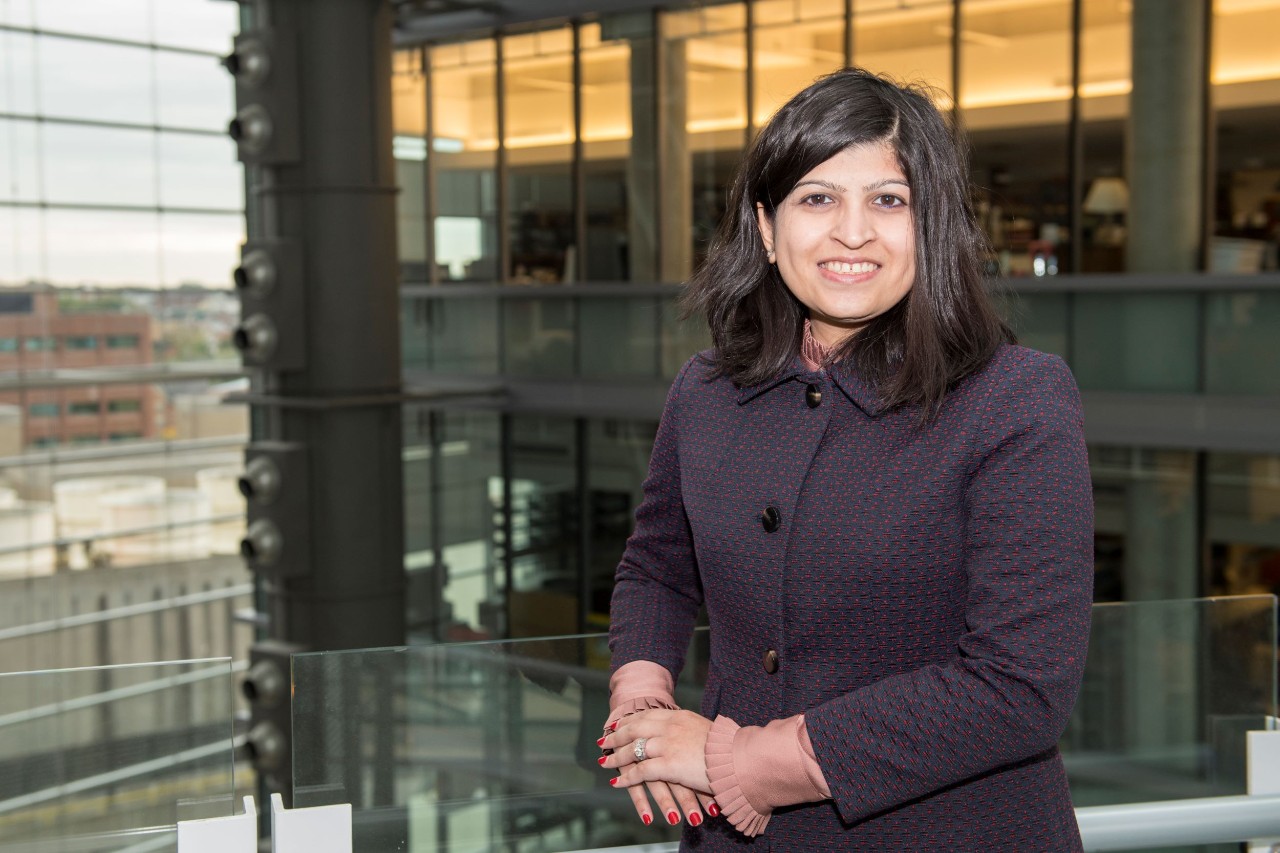
UC physician studies which dialysis may work better at home
Silvi Shah, MD, speaks with Local 12 news about her latest dialysis research

Globally, more than 2 million people undergo dialysis each year, and about 550,000 undergo the procedure in the United States. These patients may benefit from the latest research findings from Silvi Shah, MD, associate professor in the UC College of Medicine.
She led a team of researchers who found that dialysis patients using a more traditional home hemodialysis procedure have lower incidence of cardiovascular disease than patients using a less invasive peritoneal catheter for dialysis at home.
"Cardiovascular disease is the leading cause of death in patients who have kidney failure and who are on dialysis," Shah told Local 12 News for a recent segment featuring her research.
Shah studied the medical outcomes of thousands of patients who used home hemodialysis and peritoneal dialysis. The findings were published in Kidney360, an open access journal of the American Society of Nephrology, and showed that patients on home hemodialysis had a 42% lower risk of stroke, 17% lower risk of acute coronary syndrome, 22% lower risk of cardiovascular death and 8% lower risk of death.
Knowing the health outcomes can help patients determine their options if they have the choice of home hemodialysis or peritoneal dialysis. Patients also consider lifestyle choices when deciding on dialysis options. Petritoneal dialysis can be done at night while the patient is sleeping.
View the Local 12 News segment featuring Dr. Shah’s research.
Learn more about Dr. Shah’s work online.
Related Stories
Cancer Center plays key role in lab research, clinical trials for new pancreatic cancer drug
September 1, 2026

WLWT and WCPO highlighted the contributions of University of Cincinnati Cancer Center researchers that helped lead to the recent FDA approval of daraxonrasib, a new treatment for pancreatic cancer.
An expert pieced together this Roman document like a puzzle
September 1, 2026

National media highlighted a new project by UC Classics Assistant Professor Matthijs Wibier to piece together and translate an ancient Roman text from fragments buried in the desert for more than 1,600 years.
Cancer Center physician receives $150,000 New Investigator Research Grant to study treatment-resistant leukemia
September 1, 2026
The University of Cincinnati Cancer Center’s Sarah Skuli, MD, PhD, received a two‑year, $150,000 Leukemia Research Foundation New Investigator Grant to study TP53‑mutated leukemia, a treatment‑resistant subtype with very poor outcomes.