
UC students study political violence in America
Prosecution Project database examines felony cases

For years, researchers looking to understand violent crimes motivated by ideology had to turn to data compiled by individual victim advocacy groups.
Now students at the University of Cincinnati are helping Assistant Professor Michael Loadenthal compile the largest database of its kind on political violence in the United States using records from state courts and the U.S. Department of Justice.
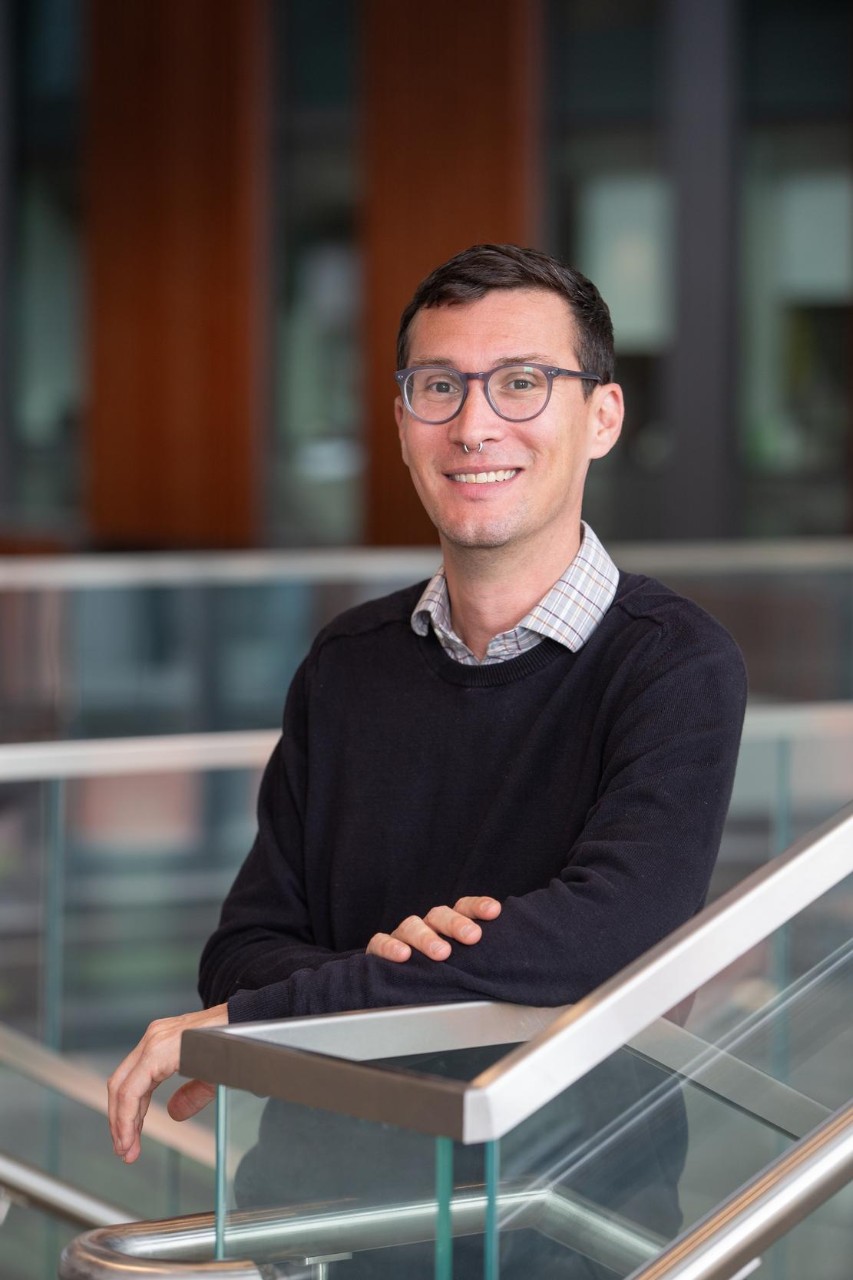
Assistant Professor Michael Loadenthal created the Prosecution Project to examine felony criminal cases related to political violence in the United States. Photo/Andrew Higley/UC Marketing + Brand
It’s a project Loadenthal created in 2017 while teaching a class on political violence at Miami University of Ohio. His students were looking to compare the sentences of white nationalists with left-wing defendants charged around the same time.
“Methodologically, the students weren’t able to find data that exists to make comparisons. Rather than continue to look for something that didn’t exist, we started constructing the data,” he said.
The idea, Loadenthal said, was to work on the data for a year and publish a paper on the numbers, but the project was so popular with students that they continued it.
Today, the database is called the Prosecution Project, a detailed collection of nearly 10,000 cases of felony criminal cases dating back to 1990 spurred by motives that span the political and ideological spectrum.
Loadenthal said the database is helping researchers, politicians and even government agencies better understand the people who engage in political violence, the crimes they commit and the ways society punishes offenders.
On request, Loadenthal submitted expert testimony from the database to the U.S. House Select Committee Investigating the Jan. 6 attack on the U.S. Capitol and shared the data set at political science conferences for the general public’s use.
Nobody wants to live in a violent place. Political violence has no place in America.
Madison Brown, UC College of Arts and Sciences student
The database has helped journalists put political events into historic and legal context, Loadenthal said. Some cable-television commentators have suggested that state and federal authorities ignored political violence spurred by the 2020 murder of George Floyd.
“When I hear that I want to throw the TV through the wall,” Loadenthal said.
His database shows that more than 1,700 defendants in those protests and riots have been charged with felonies. And that’s just the start of what can be gleaned from the database.
Most Americans no doubt recall the bombing of the USS Cole, the 1993 bombing of the World Trade Center and, of course, the 9/11 terror attacks on Washington and New York by al-Qaida. But the database identifies hundreds of other al-Qaida defendants convicted of unrelated criminal conspiracies and plots to harm Americans over the last 30 years.
The database also identifies defendants connected to hate groups, ecoterrorists, anti-fascists and abortion opponents charged with violent crimes.
The data isn’t predictive, Loadenthal said, but it is informative. Many criminal cases involve threats of harm to others, he said.
Students who take part on the project learn the ins and outs of courthouse databases to find information contained in criminal complaints, indictments, jury verdicts, plea deals and sentencings along with the skills needed to manage huge amounts of digital information.
Dozens of students scour court web portals such as Public Access to Court Electronic Records, or PACER, for relevant cases. Others upload data, while still others conduct audits of existing data to ensure accuracy, Loadenthal said.
Political science student Madison Brown began working on the database for her Honors Program research project. Now she volunteers to add trial updates gleaned from the court docket.
“I was a PACER newbie. I had never used it before, but I’m a master now,” she said. “I definitely think the Prosecution Project has taught me how to do valid research.”
Brown said she was surprised by how long it takes criminal cases to wind through state and federal courts. But she thinks the database provides invaluable context to understand political violence.
“Nobody wants to live in a violent place. Political violence has no place in America. But as long as the crimes happen, we’ll continue to track the cases,” Brown said.
Featured image at top: The Jan. 6th Committee takes testimony on the 2020 attack on the U.S. Capitol. UC students have helped assemble a national database on felony criminal cases of political violence. Photo/House Select Committee
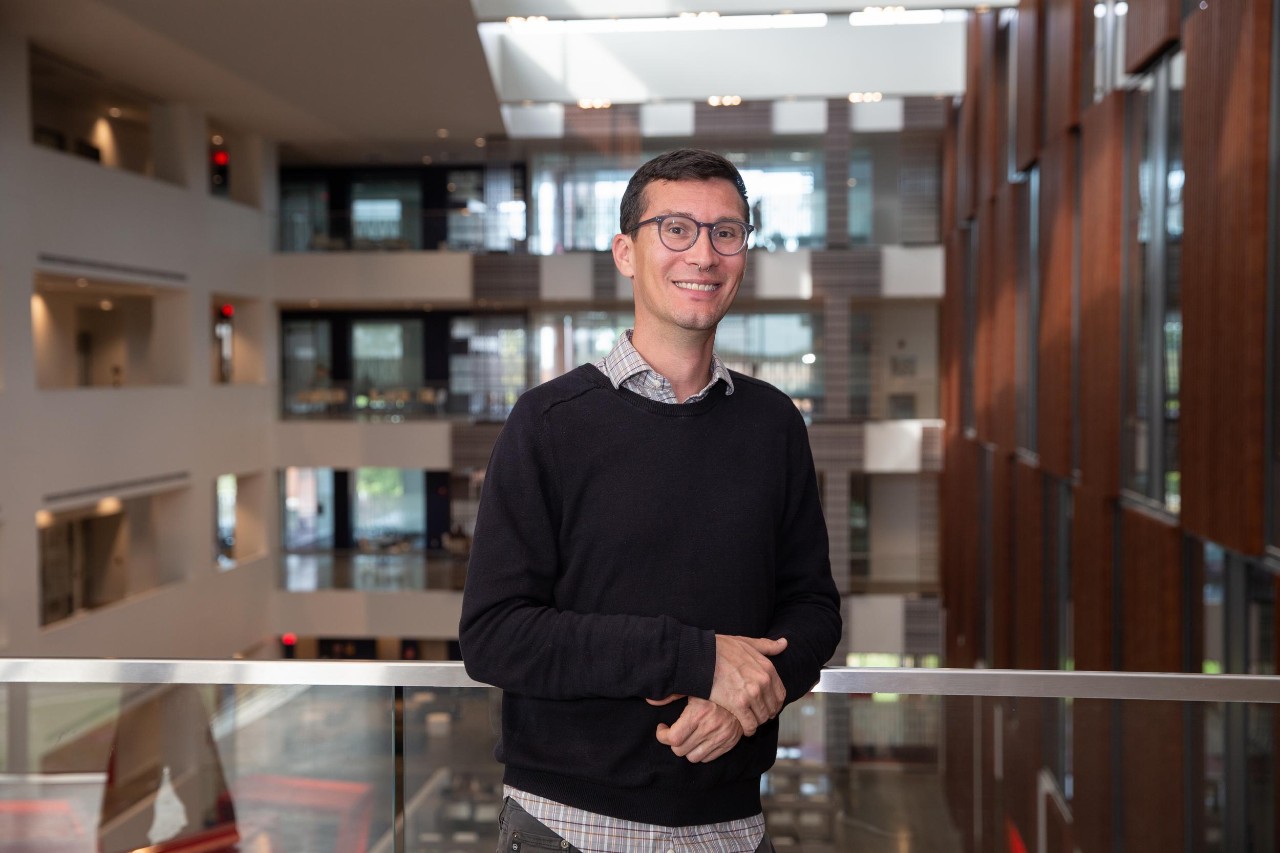
UC Assistant Professor Michael Loadenthal teaches political science in UC's School of Public and International Affairs. Photo/Andrew Higley/UC Marketing + Brand
Next Lives Here
The University of Cincinnati is leading public urban universities into a new era of innovation and impact. Our faculty, staff and students are saving lives, changing outcomes and bending the future in our city's direction. Next Lives Here.
Related Stories
UC Biomedical Engineering student launches mobile healthcare platform
October 22, 2026
As a fifth-year biomedical engineering student at the University of Cincinnati College of Engineering and Applied Science, Amelia Wares has been a trailblazer in nearly every area imaginable — and this is only the beginning of her journey.
UC aerospace engineer leads global computational fluid dynamics taskforce
October 21, 2026
The American Institute of Aeronautics and Astronautics' CFD 2030 Integration Committee has announced the formation of the Computational Fluid Dynamics (CFD) Vision 2045 Team, a multi-institution working group tasked with defining where the field of computational fluid dynamics should be by 2045 to align with the changing and evolving needs of the aerospace industry. The University of Cincinnati's Prashant Khare, Bradley Jones professor and head of the Department of Aerospace Engineering, is leading this specialized group.
UC Blue Ash Career Champions make career development part of the everyday experience
October 21, 2026
The University of Cincinnati Blue Ash College is bringing career development into students' everyday experiences through its Career Champions program.