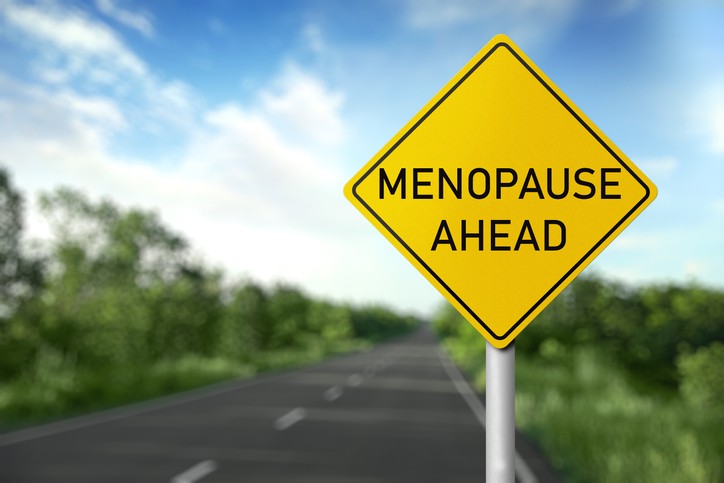
9 Things OB/GYNs want women to know about early menopause
UC College of Medicine expert featured on wellness site

Menopause doesn't typically happen until women reach their late 40s or 50s, but some experience early onset menopause. So, Well+Good put together nine things experts want women to know about why early menopause happens, if the treatment options are any different from regular menopause, and how it affects overall health.
Michael Thomas, MD, department chair and OB/GYN at the University of Cincinnati College of Medicine, offered his expertise for the article.
Early onset menopause is when the transition arrives ahead of schedule.
"Any menopause symptoms before 40 is considered premature menopause," said Thomas. He added that when menopause happens in your early 40s, it's considered menopause — but not premature.
It's important to differentiate the two because it helps providers order proper tests and provide the right treatment.
Both early onset menopause and menopause are preceded by something called perimenopause. Studies say this phase usually lasts about four years, but Thomas noted that sometimes, perimenopause might be shorter for those with early onset menopause.
There are a lot of myths surrounding what causes it to happen early — including stress, unhealthy diet, birth control etc. But the truth is the cause of early onset menopause is often unknown. There may be some specific conditions to blame.
“However, most of the time, no one knows why it happens,” said Thomas. He adds that it's important to run additional tests and rule out any potential causes before labeling early menopause as one of those things that "just happens."
He added, "Birth control pills don't stop future cycles or cause early menopause. It's been shown that on or off birth control pills, your average age to menopause is still the same."
Medical researchers can't say for sure that early menopause is 100 percent genetic, though there does seem to be a genetic component.
"If your mom went into menopause at age 38, there's a good chance you may go into menopause around that age, too," said Thomas. The same goes for older siblings and other maternal relatives.
Thomas explained that more time with low estrogen levels can lead to lower bone density and a higher risk of osteoporosis. He recommends starting bone density scans at an earlier age for those in early menopause.
Read about treatment options and when to see a health care provider.
Featured image at top: istock/Luidmila Chernetska.
Related Stories
These teeny spiders are social media stars
August 28, 2026

The New York Times turned to a University of Cincinnati professor to explain the appeal of jumping spiders on social media.
An internal divide among unions on AI impacts the Wisconsin gubernatorial race
August 28, 2026

Anne Lofaso, a professor in the Donald P. Klekamp College of Law at UC, spoke with Wisconsin Public Radio, about the schism among unions over AI and whether it is a plus, a negative, or somewhere in between when looking at job creation.
On-site training in Speech & Hearing Clinic sets UC’s programs apart
August 27, 2026
At the University of Cincinnati’s Speech & Hearing Clinic, Doctor of Audiology and Speech-Language Pathology graduate students gain real-world experience while providing free speech and hearing services to the community.