Why is Facebook abandoning fact-checking?
UC journalism professor talks to France TV Washington about new policy

France TV Washington, a French-language news service, turned to a University of Cincinnati journalism professor to examine Facebook's announced decision to abandon fact-checking in public posts in favor of community notes similar to those used by the social media site X.
UC College of Arts and Sciences Professor Jeffrey Blevins is co-author of the 2024 book “Social Media and Digital Politics: Networked Reason in an Age of Digital Emotion.”
Blevins said the change is likely a response to last year's election of Donald Trump, who has threatened to jail journalists who will not disclose confidential sources and to strip broadcasting licenses from TV and radio news stations he deems critical of his administration.
“Trump has often said there will be retaliation for his political opponents, including within the judicial system. His message is clear. He does not want to be fact-checked,“ Blevins told France TV.
Blevins said Facebook's policy has changed dramatically from its stance in 2021 when widespread misinformation about the 2020 election on social media was blamed in part on the violent attack on the U.S. Capitol.
“This is a 180-degree change in policy since Jan. 6, 2021, when the nation and the world witnessed the kind of damage that mis- and disinformation can cause,“ Blevins said. “In the aftermath of Jan. 6, social media platforms made a more concerted effort to self-regulate this kind of content. I seriously doubt Meta would have made this decision if Trump had not been elected.“
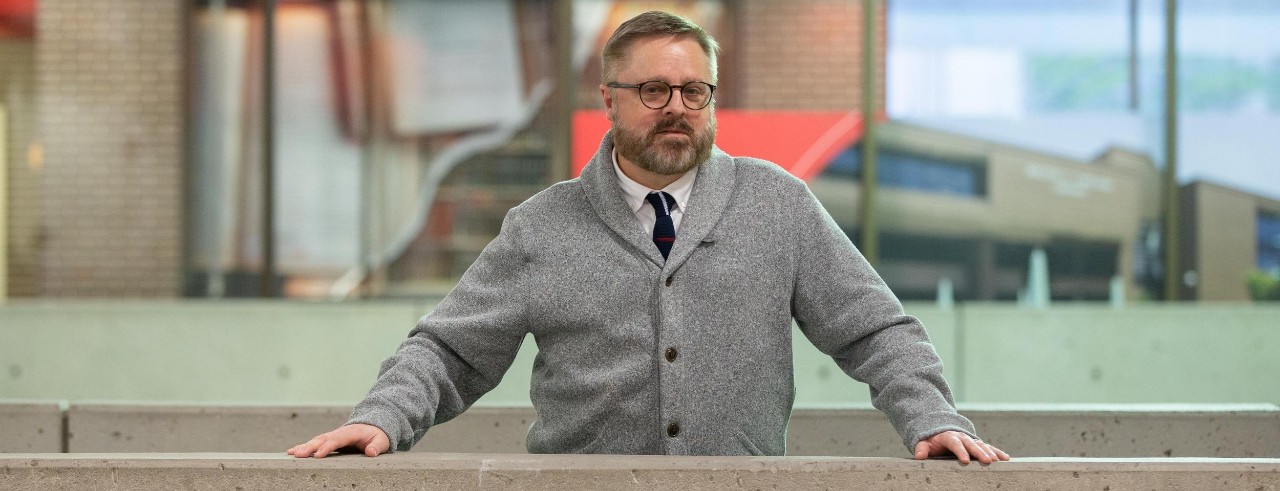
Featured image at top: UC College of Arts and Sciences Professor Jeffrey Blevins teaches in UC's Department of Journalism and the School of Public and International Affairs. Photo/Andrew Higley/UC Marketing + Brand
Related Stories
UC 1819 Innovation Hub ranked No. 23 in Top 100 Best Workplaces for Innovators by Fast Company
September 10, 2026
UC 1819 Innovation Hub is nationally ranked as one of the top 100 Best Workplaces for Innovators.
Could a whale really swallow a person whole?
September 10, 2026

Science News turns to a University of Cincinnati biologist to learn about animals that can swallow people whole as Hollywood gives moviegoers another reason to stay out of the water with the release next month of "Whalefall."
UC student ties his own world record in competitive speedcubing
September 10, 2026

Speedcuber's Digest highlighted University of Cincinnati computer science student's two-time 2x2 speedcubing world recor.d At a recent competition in Mississippi, Sujan Feist recorded a 0.86 second average, tying the previous world record, which he set.