
Drug deaths are down in one Ohio county and much of the US
UC College of Nursing professor discusses the impact of fentanyl

The Washington Post recently published a story discussing Hamilton County’s successes in battling the opioid crisis. That journey in many ways parallels the nation’s experience at the start of 2025.
The Post reports that drug deaths fueled primarily by illicit fentanyl reached staggering heights by 2023, topping 100,000 for the third straight year. But in the 12-month period ending in August, deaths had decreased by more than 20 percent from the same period the previous year, according to provisional state data published by the Centers for Disease Control and Prevention. Although the CDC won’t publish 2024 estimates for several months, experts say there could be more than 20,000 fewer deaths than the year before.
The newspaper spoke with families who lost loved ones and others who survived opioid addiction along with first-responders and community agencies that were among the first line of defense. Tasha Turner-Bicknell, an associate professor of nursing at UC, and a board member of Harm Reduction Ohio also weighed in on the discussion and spoke with the Post. Harm Reduction Ohio supplies free naloxone to a network of distributors on the streets.
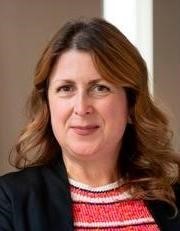
Tasha Turner-Bicknell, associate professor at the UC College of Nursing
“I would add that these numbers are encouraging and demonstrate that harm reduction saves lives,” says Turner-Bicknell, who is also director of advanced public health nursing DNP and certificate programs at UC. “We still have a lot of work to do. We need to continue to strengthen and expand harm reduction programs to meet people where they are and offer them the support services they need.”
The Post reports that government officials, researchers and public health organizations have puzzled over the reasons but speculate a decline in deaths represents a confluence of factors that vary regionally. The Biden administration made Narcan, a nasal spray version of the overdose-reversal medication naloxone, available without a prescription and broadened access to medications to treat opioid addiction. Officials touted crackdowns on Mexican criminal groups that manufacture fentanyl and Chinese companies that supply them with chemicals needed to make the opioid.
Read the full story in The Washington Post online.
Learn more about Tasha Turner-Bicknell online.
Related Stories
Connecting through alternative communication
October 5, 2026
As a professional cheerleader and second-year student working toward a master’s in speech-language pathology at the University of Cincinnati, Grace Harahan shares what drives her to explore and advocate for alternative communication methods.
Digging into the bedrock of Cincinnati
October 5, 2026

Cincinnati magazine turns to University of Cincinnati Professor Carlton Brett to explain what Cincinnati was like as a shallow sea during the Ordovician period.
UC research examines role of spinal cord neural pathways in depression
October 5, 2026
Ongoing University of Cincinnati research led by Francisco Romo-Nava is contributing a more comprehensive understanding of the effect of spinal cord neural pathways on major depressive disorders and making a stronger case for new therapeutic targets that take brain-body connections into account.