
When can police arrest demonstrators?
UC Law professor discusses legal precedence and hateful speech

Ryan Thoreson, an assistant professor at the University of Cincinnati College of Law, spoke with CityBeat and Cincinnati Edition on WVXU about recent demonstrators rallying in Lincoln Heights and the response from local police.
Evendale Police responded to an incident on Feb. 7 at the Vision Way overpass over I-75 in which masked demonstrators lined the overpass sidewalk waving large antisemitic flags.
Nearby residents chased the demonstrators off of the overpass, and Evendale Police said they could charge the protestors with a misdemeanor traffic charge, but the response has caused tension.
Thoreson says precedent from U.S. Supreme Court rulings on hateful speech might be instructive.
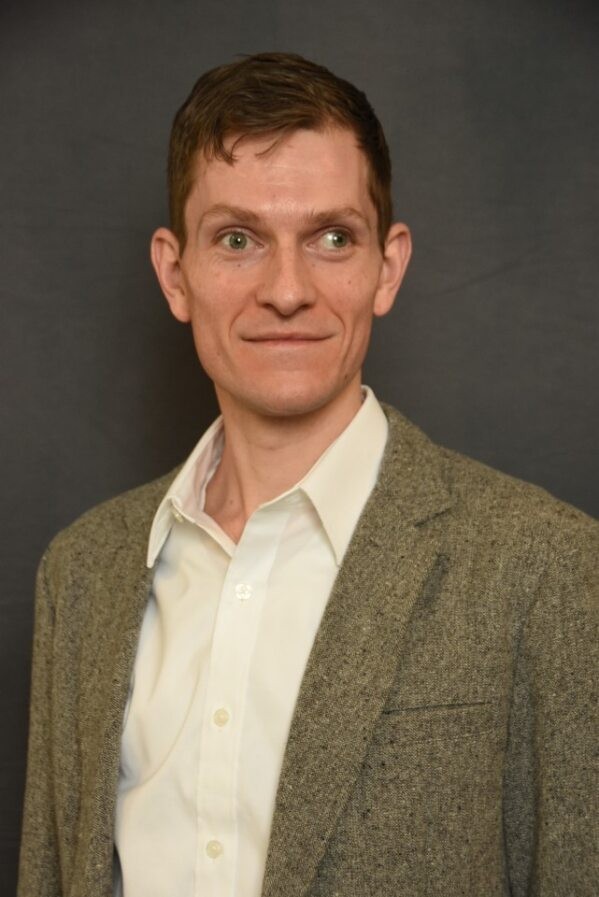
Ryan Thoreson is an assistant professor at UC Law. Photo provided.
“A lot of the Supreme Court's jurisprudence has been particularly wary of what it calls a heckler's veto, this idea that if an audience strongly disagrees with a message, that they should be able to override the speaker's right to convey that message, and that applies even when the speech is particularly upsetting to the audience who hears it,” says Thoreson.
But Thoreson said there are some free speech exceptions.
Read the full story in CityBeat online.
Thoreson also spoke to WVXU's Cincinnati Edition on this issue.
Learn more about UC Law’s Ryan Thoreson online.
Image of the U.S. Supreme Court courtesy of Istock.
Related Stories
From hobbyist photographer to professional educator
October 9, 2026

DAAP alum and photographer HATSUE studied communication design after a pivot in high school from a track toward veterinary school. Today, they teach photography at 1001 Colors white working as an artist and curator in Cincinnati.
UC researcher to launch national study with $2.5 million NIH grant
October 9, 2026

A University of Cincinnati researcher has received a $2.5 million National Institutes of Health grant to conduct research during the next five years. Natalie Kreitzer, MD, a University of Cincinnati College of Medicine physician-researcher, received an R01 independent research grant from the NIH's Eunice Kennedy Shriver National Institute of Child Health and Human Development. The funding will support a test program for caregivers of patients with traumatic brain injury, as reported by the Cincinnati Business Courier.
Simple ways to find a deeper sense of happiness and well being
October 8, 2026

UC assistant professor Suzie White, featured in an AARP story on practical ways to live a happier, healthier life, shared research-backed strategies for increasing well-being through gratitude and service to others. White teaches Happiness in Action, a course that helps students apply the science of happiness in everyday life.