
Volcanic ash buried huge herd of Nebraskan rhinos
UC researchers discover prehistoric rhinos lived in super-herds

Discover magazine highlighted research by the University of Cincinnati that found prehistoric rhinos lived in super-herds 12 million years ago.
Researchers studied the isotopes of rhino teeth found in what is now northeast Nebraska. Here, more than 100 rhinos at a single water hole died and were entombed in ash from an eruption of the Yellowstone supervolcano.
Since the discovery of rhinos at Nebraska’s Ashfall Fossil Beds State Historical Park in 1971, researchers have wondered what drew so many animals together in the same place. Did they converge from far away, perhaps to seek shelter from the unfolding natural disaster of the volcanic eruption with its choking ash?
“We found they didn’t move very much,” lead author and UC graduate Clark Ward said. “We didn’t find evidence for seasonal migration or any evidence of a response to the disaster.”
Read the Discover magazine story.
Featured image at top: Visitors listen to a docent at Nebraska's Ashfall Fossil Beds State Historical Park. Photo/John Haxby/The University of Nebraska State Museum
More UC Geosciences in the news
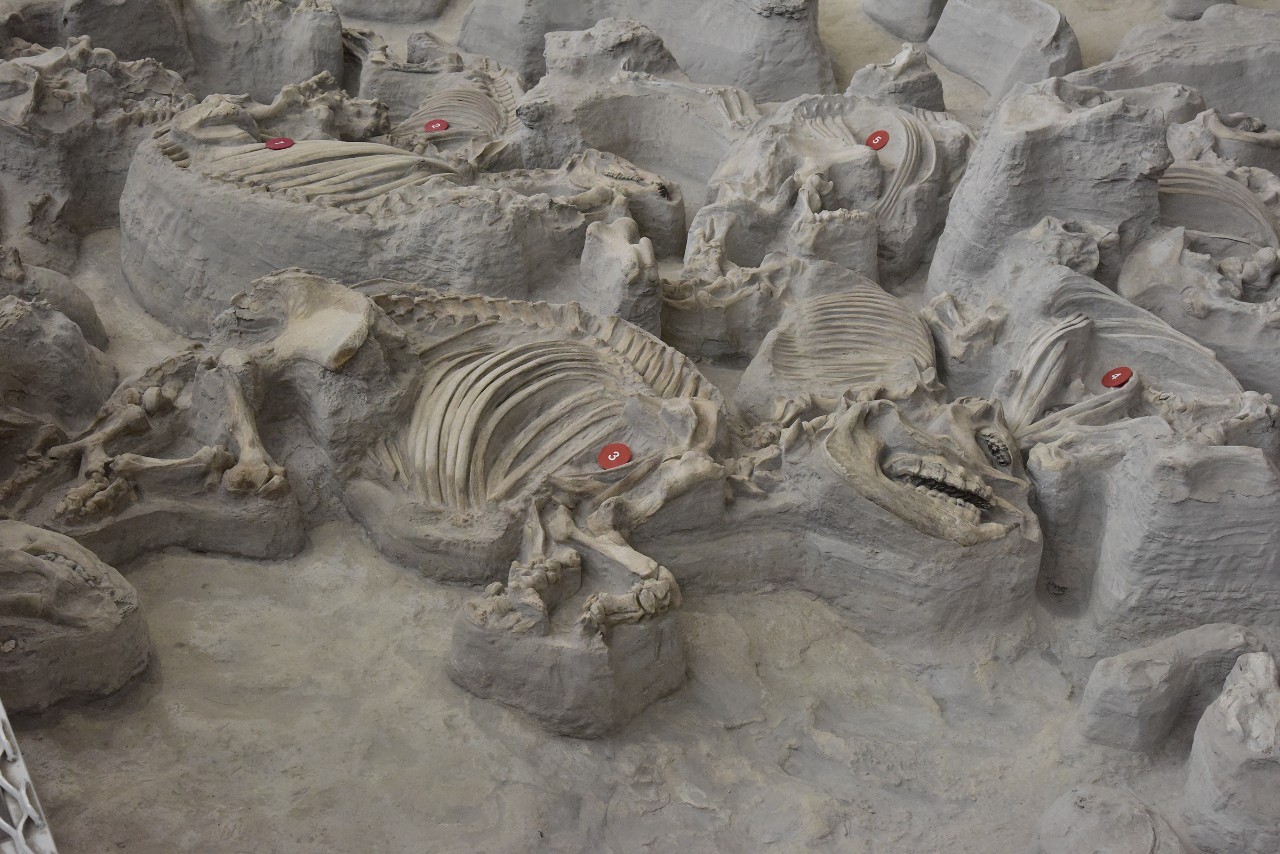
Ashfall Fossil Beds State Historical Park features more than 100 specimens of prehistoric rhino. Photo/John Haxby/The University of Nebraska State Museum
- BBC Wildlife Magazine: In the 1970s, over 100 ancient rhinos were found entombed in Yellowstone ash — we finally know what happened
- Billings Gazette: Prehistoric rhinos lived in super-herds
- All That's Interesting: Scientists investigate fossils from massive herd of prehistoric rhinos
Related Stories
'There's a strong community here:' UC transfer student finds place in College of Arts and Sciences
October 23, 2026
This week marks National Transfer Students Week, and the College of Arts and Sciences celebrated those students Thursday. Olivia White, assistant director of recruitment, said around 13-15% of students at UC are transfer students, and with that comes its own set of challenges.
UC expert explains potential impact of Pennsylvania’s new vape product law
October 22, 2026

UC professor Ashley Merianos speaks to the Pittsburgh Post-Gazette about Pennsylvania’s new vape law, youth vaping prevention, enforcement challenges and possible unintended consequences.
Still the top ‘cat
October 20, 2026

The University of Cincinnati Bearcat mascot was voted Cincinnati’s favorite mascot in a Cincinnati Enquirer reader poll, earning 45.1% of the vote and topping other local favorites.