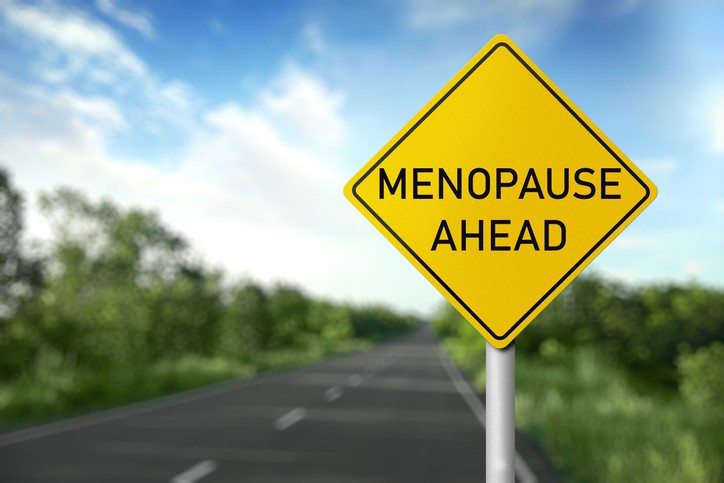
Why can perimenopause make migraines worse?
UC expert weighs in on the link

For women living with migraines, the transition to menopause known as perimenopause could be a rough ride, according to recent reporting for Everyday Health.
During perimenopause, which typically begins in a woman's mid-40s and lasts eight to 10 years, menstruation becomes erratic as the ovaries produce less and less of the hormone estrogen.
For a significant number of women with migraine headaches, their symptoms are linked to fluctuations in hormone levels, especially estrogen levels. Those can go up and down significantly during perimenopause.
But while many women with migraines will experience an increase in symptoms during perimenopause, many won’t. “It is very individualistic,” said Vincent T. Martin, MD, the director of the headache and facial pain center at the University of Cincinnati's Gardner Neuroscience Institute and professor of internal medicine in the College of Medicine.
He explained that for some women, a dip in estrogen levels is a migraine trigger — but for other women, estrogen itself is a migraine trigger, and they feel better with lower levels.
After menopause, defined as the time when a woman has gone 12 consecutive months without a period, hormone levels are much more stable. For many — but not all women — this means migraine symptoms cease.
Read about managing migraines during perimenopause with both non-drug interventions and medications.
Featured image at top: iStock/Liudmila Chernetska.
Related Stories
UC co-op helps build career pathways at AtriCure
July 28, 2026
AtriCure, a global medical device company in Mason, Ohio, is UC’s largest biomedical engineering co-op employer, turning University of Cincinnati co-op students into full-time innovators.
CCM welcomes new musical theatre faculty member Avery Bargassé
July 28, 2026
UC College-Conservatory of Music Dean Pete Jutras has announced the appointment of Avery Bargassé as CCM's new Assistant Professor Educator of Musical Theatre Voice. His faculty appointment officially begins on Aug. 15, 2026. Bargassé is a versatile vocalist, recording artist and voice teacher whose career spans television, popular music and classical singing. He approaches teaching from a whole-person perspective, helping students develop healthy, flexible technique that supports expressive communication across styles.
UC doctoral student shares his journey with Spectrum News
July 27, 2026

UC doctoral student Amota Ataneka spoke with Spectrum News about his educational journey. Ataneka, a native of the Pacific island nation of Kiribati, is one of 35 emerging scholars across the United States to win the National Academy of Education/Spencer Dissertation Fellowship.