Making sense of the U.S. Supreme Court’s rulings during its final week in session
UC Law’s Anne Lofaso shares her analysis with WXVU

The U.S. Supreme Court gave President Donald Trump a wave of victories in the final week of its session. The high court sided with the president to limit universal injunctions issued by federal court.
WVXU spoke with Anne Lofaso, professor at the University of Cincinnati College of Law, about what the court’s decisions will mean for birthright citizenship, LGBTQ+ books in public schools and more a segment of Cincinnati Edition.
The Supreme Court in a June 27 ruling granted the administration’s request to partially stop nationwide injunction blocking an executive order ending birthright citizenship for certain people born in the United States.
Writing for the majority, Justice Amy Coney Barrett said “universal injunctions” issued by district judges “likely exceed the equitable authority that Congress has given to federal courts.”
“It didn’t rule on the merits, which means it did not talk about whether the President’s executive orders were actually constitutional,” Lofaso told WVXU. “It only ruled on whether or not an individual district court judge could actually issue a universal or what’s called a nationwide injunction. So the court said this is almost certainly not within the power of a district court and therefore it gave the president a limited victory.”
The Supreme Court also ruled that school systems are required to offer parents an ‘opt-out’ provision that allows their children to be excused from class if course material conflicts with religious beliefs. The case arose when a group of parents in Montgomery County, Maryland sued the school board seeking an opt out for elementary students when reading material included books on LGBTQ characters.
Lofaso, a former attorney for the National Labor Review Board, teaches constitutional law, employment law and labor law.
Listen to the WVXU segment on Supreme Court rulings online.
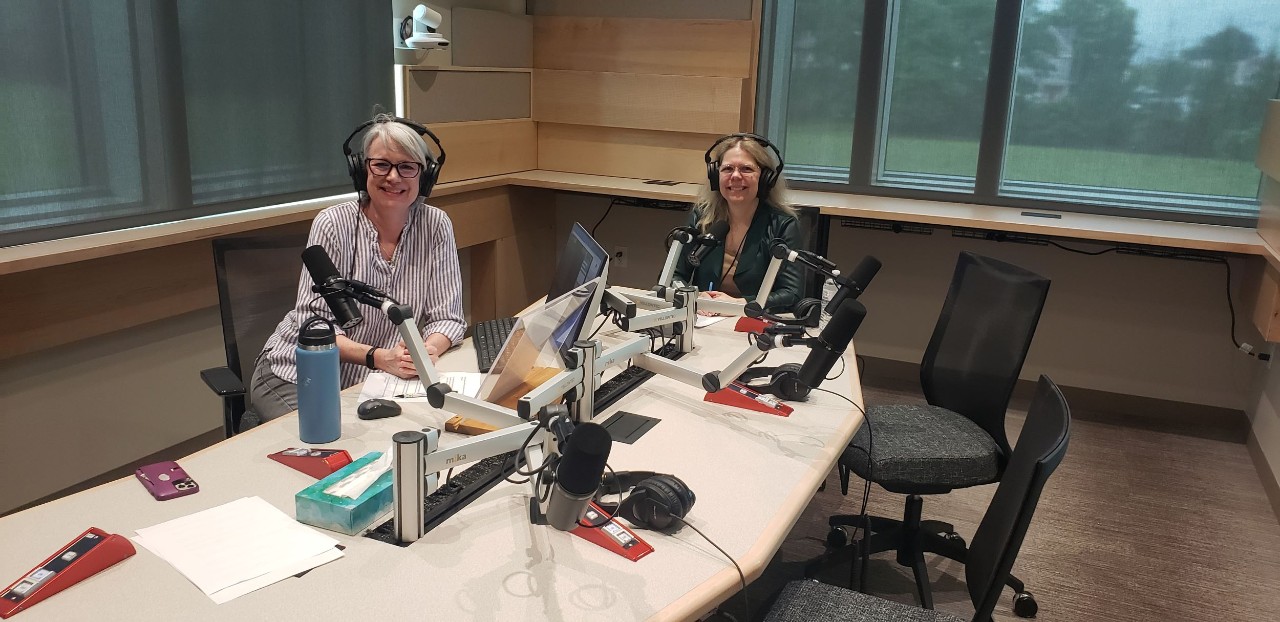
Featured top image of WVXU Journalist Lucy May and UC Law's Anne Lofaso in studio. Photo provided.
Related Stories
Her book drive is changing literacy in Cincinnati
August 31, 2026

WCPO highlights a nonprofit dedicated to childhood literacy that has offers co-op positions to UC students.
Heavy social media use linked to depression
August 31, 2026

U.S. News and World Report, Yahoo! News, MSN, USA Today and other national media highlight a new study by the University of Cincinnati and Northwestern University that found a correlation between heavy social media use and depression in adults.
These teeny spiders are social media stars
August 28, 2026

The New York Times turned to a University of Cincinnati professor to explain the appeal of jumping spiders on social media.