Geologist explains connection between earthquakes and tsunamis
Geosciences professor talks to 700-WLW about evacuations in Hawaii

A University of Cincinnati geologist helped explain to 700-WLW listeners how earthquakes can create tsunamis that threaten people and property around the world.
UC College of Arts and Sciences Professor Craig Dietsch was invited on the Eddie & Rocky Show to talk about the 8.8-magnitude quake that rattled Russia's Kamchatka Peninsula on July 29, prompting tsunami warnings in coastal areas as far away as Japan, Hawaii and California.
“This one was way up the scale. The amount of energy released is incredible,“ said Dietsch, head of UC's Department of Geosciences.
Dietsch studies tectonics, among other topics, as head of UC's Department of Geosciences. He leads student field trips to study landscape evolution and other geological features across North America.
“The earthquake happened along a gigantic fault on the boundary of the Pacific Plate,“ Dietsch told 700-WLW. “When the plates get stuck, stresses build up and get suddenly released and you have an earthquake.“
Japan and other Pacific countries called for evacuations as a precaution, but the resulting tsunami was not as powerful as feared, Dietsch said.
Listen to 700-WLW's Eddie & Rocky.
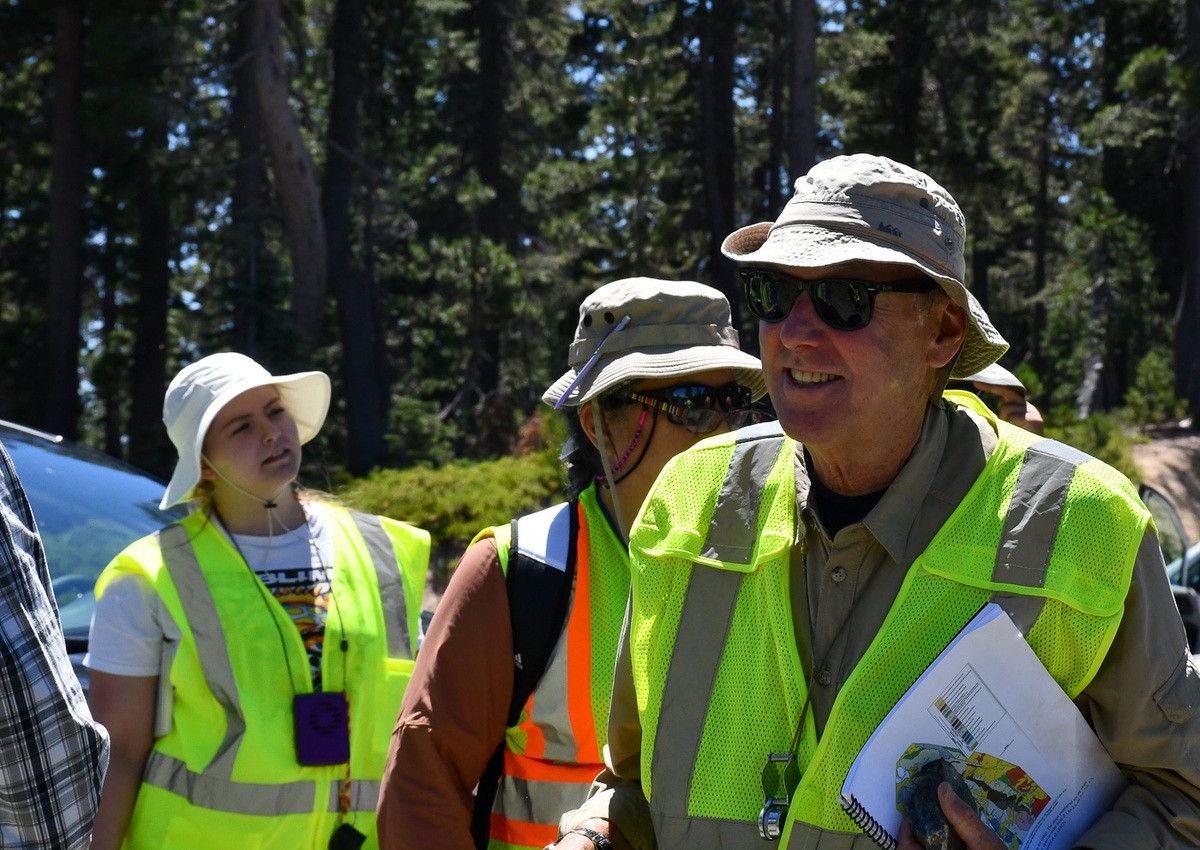
Featured image at top: UC geosciences Professor Craig Dietsch leads students on a field trip in California. Photo/Michael Miller

UC geosciences students examine vertical layers of sedimentary rock lifted up by plate tectonics in California. Photo/Michael Miller
Related Stories
UC climbs to No. 3 in the nation for co-ops and internships in 2027 U.S. News rankings
September 22, 2026
In U.S. News & World Report’s 2027 Best Colleges rankings, the University of Cincinnati rises to No. 3 in the nation for co-ops and internships — No. 1 among public institutions — and posts gains in undergraduate business, computer science and psychology.
AI is going to change all our lives
September 21, 2026

UC College of Arts and Sciences Assistant Professor Kelly Merrill Jr. tells the Columbus Dispatch that AI is becoming engrained in every aspect of health care.
President Pinto’s 2nd glow party brings first-year Bearcats together
September 20, 2026
UC President Neville Pinto and team hosted the second annual Bright Beginnings glow party for first-year students