
Invasive moose in Colorado? Not so fast, expert says
UC paleoecologist finds long history of moose in southern Rockies

A University of Cincinnati researcher found evidence that moose have inhabited Colorado's southern Rockies for at least the last 165 years.
UC College of Arts and Sciences Associate Professor Joshua Miller and his research partners penned an article in the Conversation that examined historical accounts of moose in Rocky Mountain National Park.
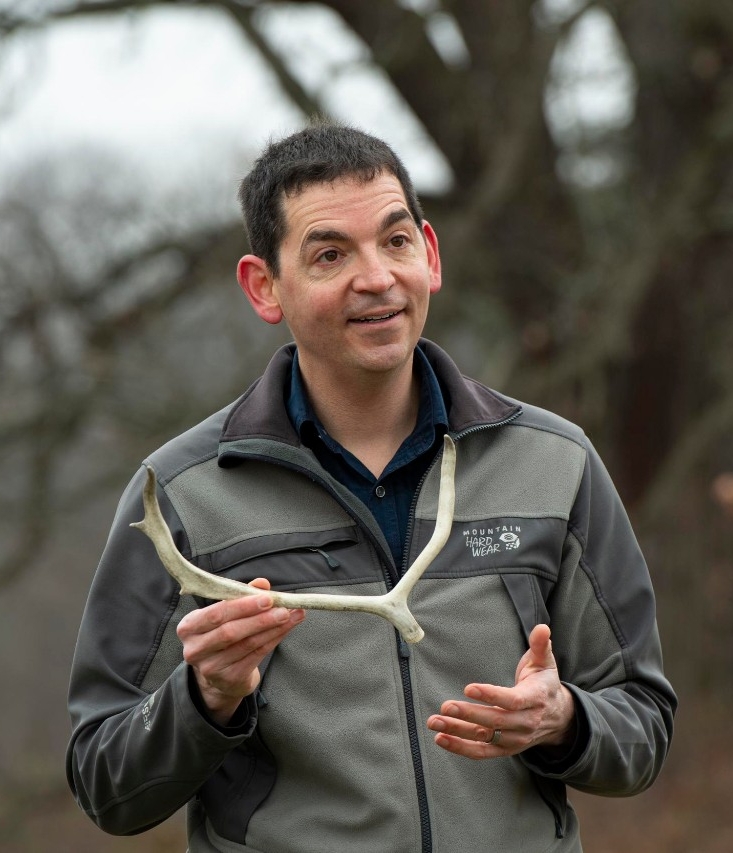
UC Associate Professor Joshua Miller holds a shed caribou antler from the Arctic National Wildlife Refuge. Miller uses strontium analysis to study the movements and diet of elusive, far-ranging or extinct animals. Photo/Colleen Kelley/UC Marketing + Brand
The National Park Service raised questions about whether North America's largest deer is native to the southern Rockies or is an invasive species. The distinction is important because it could make it easier for wildlife managers to justify culling or eradicating moose altogether to protect habitat for elk and other animals.
More than 3,000 moose live in and around the park.
According to wildlife managers, the growing population of moose in the park are degrading wetland habitat critical for other species. Moose can be aggressive and dangerous. And vehicle collisions with the enormous deer can lead to severe injuries or fatalities.
The agency cited a 2015 unpublished report to conclude that moose were transient visitors to the park with no historical established populations.
But Miller and his research partners refuted the agency's conclusions. They found historical evidence in travel diaries, newspaper stories and photo archives that moose have inhabited the southern Rockies for at least the last 165 years.
Milton Estes, son of Estes Park's namesake Joel Estes, wrote about shooting a moose in the park in 1863. Miller and his research partners also found documented examples of moose stories, hunts and songs by local Native Americans including the Ute, Shoshone and Arapaho.
Miller has used strontium analysis to track the movements of wide-ranging animals such as caribou and even extinct ones such as mastodons across landscapes.
He partnered with William Taylor from the University of Colorado Boulder and John Wendt from Oklahoma State University. All three have studied ancient animals of the Rockies.
Featured image at top: The National Park Service says moose are degrading wetland habitat in Rocky Mountain National Park. Photo/Shivam Kumar
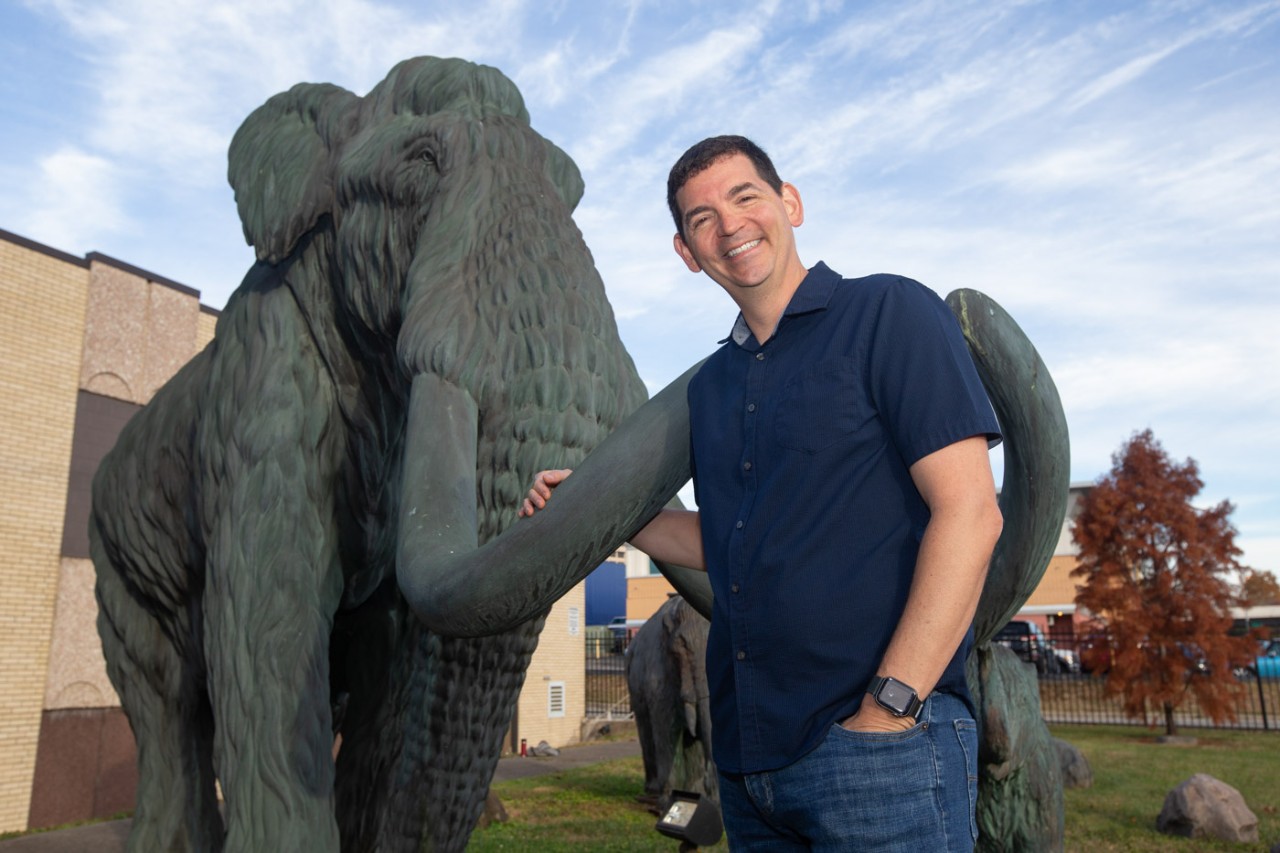
UC Associate Professor Joshua Miller stands in front of a bronze mammoth statue outside the Cincinnati Museum Center's Geier Research Center. Photo/Andrew Higley/UC Marketing + Brand
Related Stories
From hobbyist photographer to professional educator
October 9, 2026

DAAP alum and photographer HATSUE studied communication design after a pivot in high school from a track toward veterinary school. Today, they teach photography at 1001 Colors white working as an artist and curator in Cincinnati.
UC researcher to launch national study with $2.5 million NIH grant
October 9, 2026

A University of Cincinnati researcher has received a $2.5 million National Institutes of Health grant to conduct research during the next five years. Natalie Kreitzer, MD, a University of Cincinnati College of Medicine physician-researcher, received an R01 independent research grant from the NIH's Eunice Kennedy Shriver National Institute of Child Health and Human Development. The funding will support a test program for caregivers of patients with traumatic brain injury, as reported by the Cincinnati Business Courier.
Simple ways to find a deeper sense of happiness and well being
October 8, 2026

UC assistant professor Suzie White, featured in an AARP story on practical ways to live a happier, healthier life, shared research-backed strategies for increasing well-being through gratitude and service to others. White teaches Happiness in Action, a course that helps students apply the science of happiness in everyday life.