
Biomedical engineering students get to heart of cardiovascular disease
UC professor looks for ways to reverse hardening of arteries

In Associate Professor LaShan Hendrix’s biomedical engineering lab, students at the University of Cincinnati are studying what causes arteries to harden, leading to heart attacks and strokes.
“For so long it was treated as a given of aging,” Hendrix said. “But we’re learning it’s not just something that happens over time with age. The cells play a role. And that’s why we’re trying to reverse it at the cellular level.”

Associate Professor LaShan Hendrix.
At UC’s Bioscience Center, Hendrix and her students in the College of Engineering and Applied Science are exploring the cellular signaling pathways that lead to calcification of the arteries.
Hendrix came to UC in 2024 from Mississippi State University, where she began her investigations into vascular calcification, smooth muscle cells and gene therapy. Her work has been supported by the National Science Foundation and the National Institutes of Health.
Heart disease remains the leading cause of death in the United States, killing one in three adults.
“Everyone knows someone who’s had a stent or bypass,” she said.
And while arterial calcification is treatable, it’s not reversible, she said.
“There’s this thought in the research community that we solved vascular calcification because we have stents and atherectomies, where they go in with a diamond blade to cut out the calcification,” she said. “These procedures work temporarily to reopen the artery. But that’s living tissue they’re cutting out and the body heals and in healing the calcification can come back.
“There are no medicines to prevent or reverse it. And that’s what we’re working on in our lab,” she said.
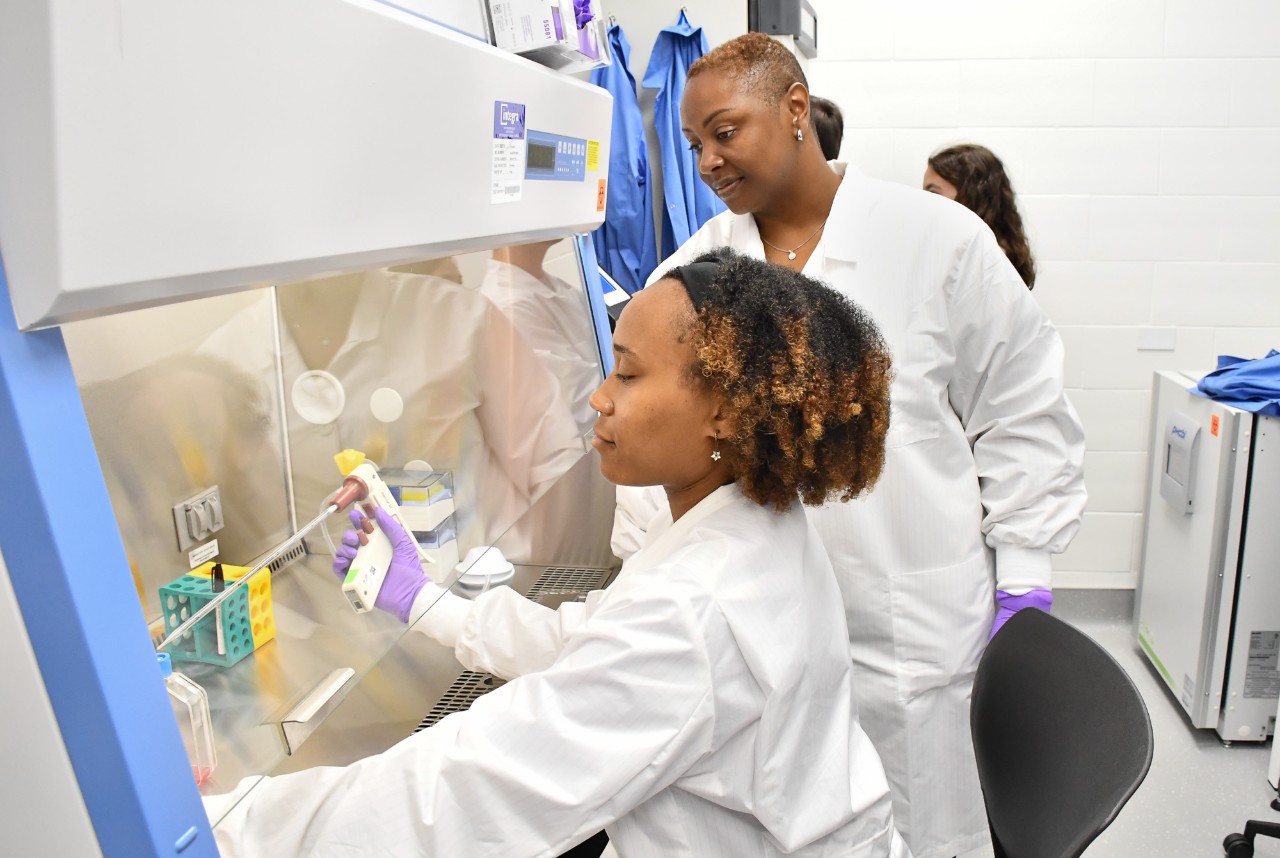
UC Associate Professor LaShan Hendrix supervises UC doctoral student Jherni Fisher in Hendrix's biomedical engineering lab. Hendrix and her students are studying the causes of cardiovascular disease at the cellular level. Photo/Michael Miller
Hendrix and her students culture cells to recreate the calcification that takes place in the arteries.
“We can study the genes that are changing during that process; the proteins that are expressed,” she said. “And we can look at what is turning those genes on and how we can go about fixing or reversing it.”
Hendrix said heart disease disproportionately affects people who don’t have ready access to fresh fruits and vegetables and turn to cheaper processed foods instead.
“The typical American diet today has a lot of processed food that contains a lot of phosphate, which gets deposited in your arteries,” she said. “And that causes cells to produce more calcification.”
For doctoral student Zack Lorton, the investigation is personal. His childhood best friend had a heart attack at 19. His grandfather suffered from kidney and heart disease.
“By working in cardiovascular research, I try to honor them and advance treatment options for those with cardiovascular complications,” Lorton said.
Lorton said he came to Hendrix’s lab in part because of her reputation for supporting early-career researchers. Hendrix was recognized this year with the Mentor Award from the American Association for the Advancement of Science for helping students complete their doctoral degrees in STEM.
“On a personal level, she’s someone who will be in your corner. And that’s someone I want around me,” Lorton said.
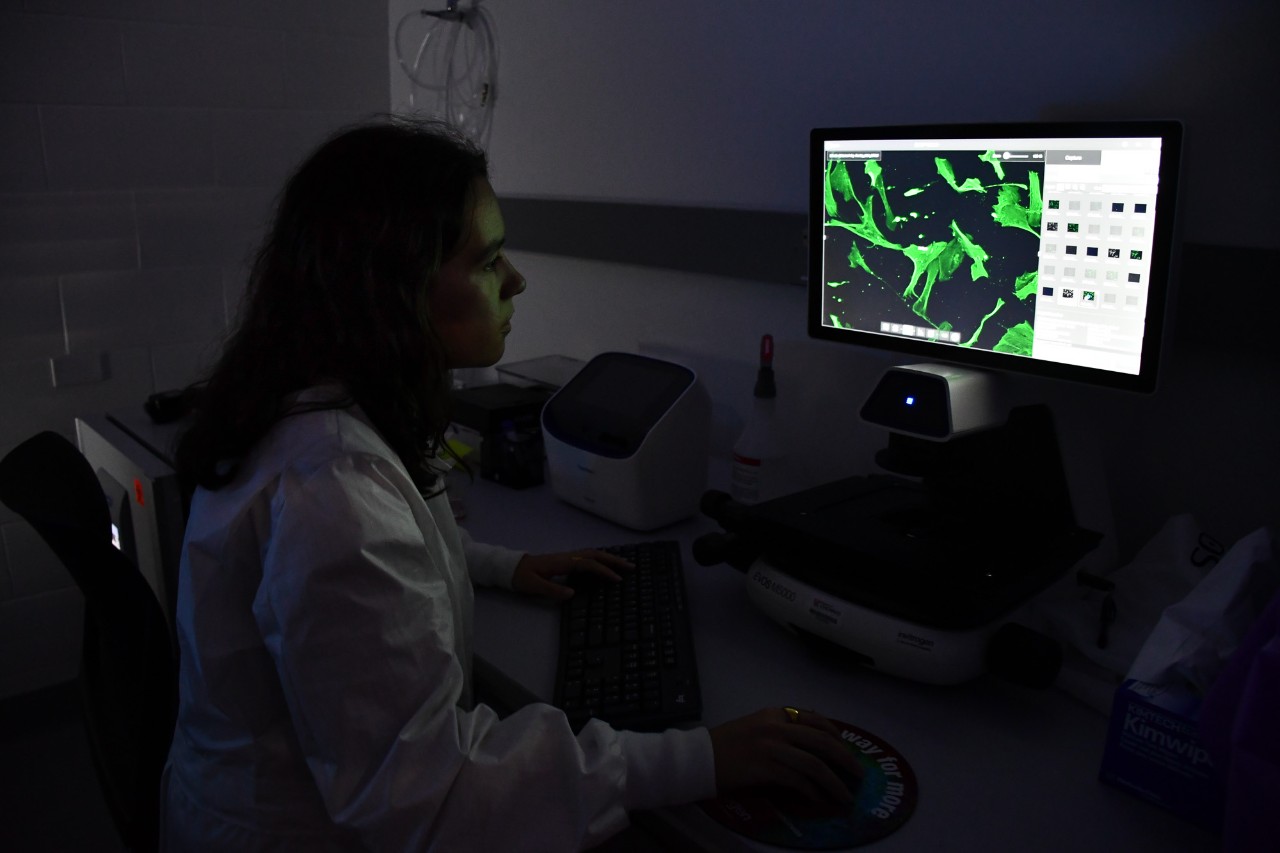
UC biomedical engineering student Lucia Garcia examines heart cells in the lab. Photo/Michael Miller
Lucia Garcia came to UC from Spain to study in Hendrix’s lab after they first worked together at Mississippi State. Garcia said heart disease is a major health concern in Europe as well.
“It’s pretty similar across developed countries. Luckily, I haven’t had any direct experience with my family, but you hear stories from your friends’ families,” she said.
UC student Jherni Fisher said she chose to study biomedical engineering because of the many research and career opportunities it provides.
“It’s not just one vertical pathway. You can pursue a variety of different tracks,” she said.
Fisher said she is optimistic that the questions she and Hendrix are asking will lead to improved treatments.
“I sure hope so. As with all of our research, they’re stepping stones,” she said.
Featured image at top: UC Associate Professor LaShan Hendrix talks to students Zack Lorton, Lucia Garcia and Jherni Fisher in Hendrix's biomedical engineering lab. Photo/Michael Miller

UC College of Engineering and Applied Science Associate Professor LaShan Hendrix is studying the causes of heart disease at a cellular level in her lab. Hendrix was recognized this year with the Mentor Award from the American Association for the Advancement of Science for helping students pursue careers in STEM. Photo/Michael Miller
The next groundbreaking discovery
UC is a powerhouse of discovery and impact as a Carnegie 1 research institution. From pioneering medical research to transformative engineering and social innovation, our faculty and students drive progress that reaches across the world.
Related Stories
UC Foundation celebrates 2026 philanthropy winners
October 23, 2026
The University of Cincinnati Foundation recognized its Outstanding Philanthropic Volunteer Award honorees at the George Rieveschl Recognition Dinner on October 22, 2026.
AI breast cancer survival model from Cancer Center could improve accuracy and personalize care
October 23, 2026
UC Cancer Center researchers, including lead author Wedad Alatebi, developed a deep learning survival model for breast cancer that combines detailed clinical and genetic information, potentially offering physicians a more accurate tool to guide treatment decisions.
UC expert explains potential impact of Pennsylvania’s new vape product law
October 22, 2026

UC professor Ashley Merianos speaks to the Pittsburgh Post-Gazette about Pennsylvania’s new vape law, youth vaping prevention, enforcement challenges and possible unintended consequences.