Are gel manicures safe?
UC expert featured in TIME article

The University of Cincinnati's Kelly Dobos was featured in a TIME article discussing the safety of gel manicures after the European Union prohibited the use of a chemical ingredient called trimethylbenzoyl diphenylphosphine oxide (TPO) used in some gel nail polishes.
Dobos said people who get gel manicures do not need to immediately panic, as most of the research into TPO's health effects has focused on feeding it to rodents or injecting it under the skin.
"That’s not really how we’re exposed to it in a nail gel,” said Dobos, a cosmetic chemist and adjunct instructor at UC's James L. Winkle College of Pharmacy. "Your systemic exposure is very low, because it’s also reacted away when you’re exposing it to that light in the nail lamp.”
However, if someone wants to avoid TPO altogether, there are nail polishes that use a different ingredient as a photoinitiator, such as TPO-L, a modified form of TPO which remains approved in the E.U. Dobos suggested asking the salon to show you the packaging of the products being used.
“If you're concerned about what they're using, ask, because that’s generally not right in front of you at the nail salon,” she said.
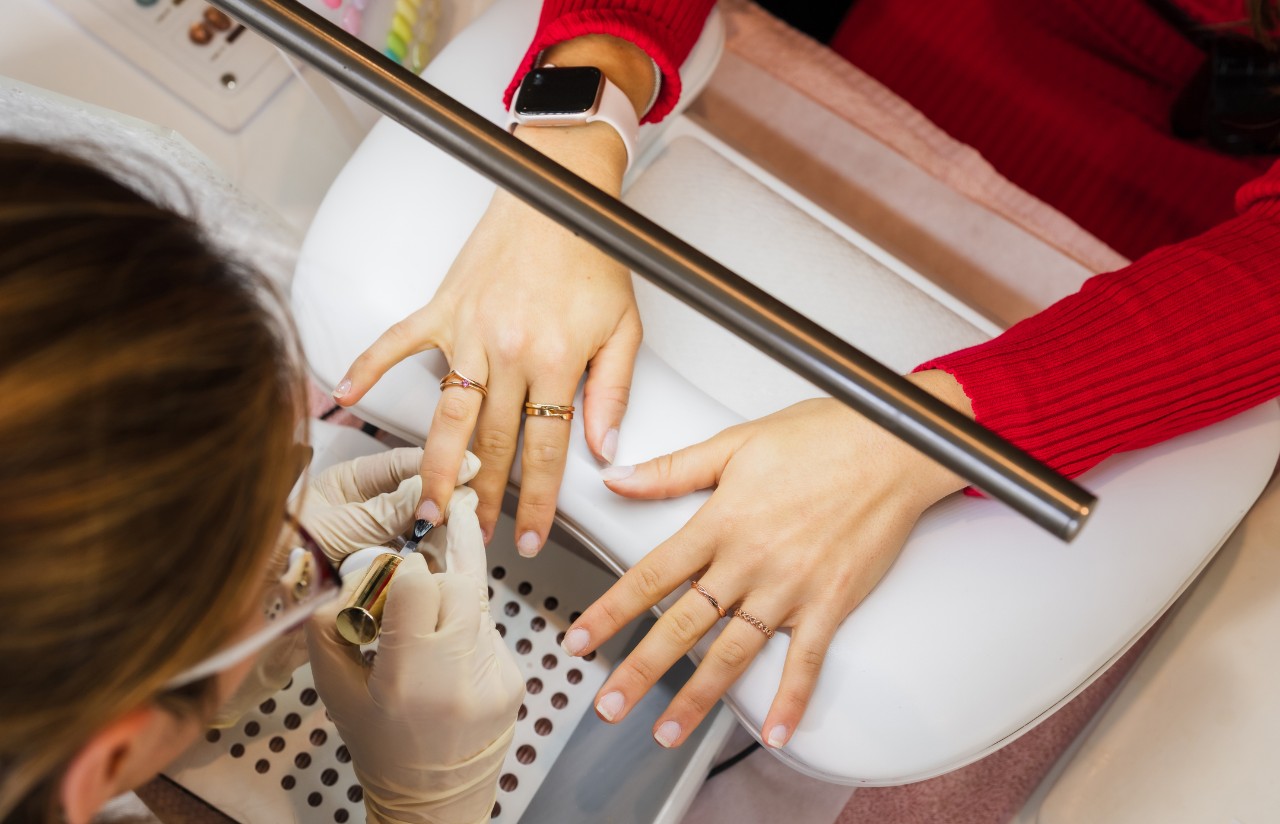
Featured photo at top of a person getting a manicure. Photo/nazar_ab/iStock Photo.
Related Stories
UC hematology researcher to study bone complications in sickle cell disease
September 25, 2026
University of Cincinnati hematology researcher Jahnavi Gollamudi, MD, has received new grant funding to study how inflammation predicts bone complications in people with sickle cell disease, offering new hope for treatment.
UC partners join communitywide effort to improve outcomes for children and families
September 24, 2026

WLWT Channel 5 covered a signing agreement ceremony for the newly formed Hamilton County Child & Family Systems Partner Collaborative dedicated to working more efficiently together to reduce barriers for families, connect them with support early on and improve delivery of services. UC Corrections Institute and the Donald P. Klekamp College of Law are among the organizations part of the collaborative.
More young adults are having strokes than three decades ago
September 23, 2026
A University of Cincinnati-led study published in the journal Neurology found that strokes among adults ages 20 to 54 nearly doubled over almost three decades, even as short-term survival after stroke improved.