
How well does 'collar' work to protect athletes?
UC biomedical engineering researchers study ways to prevent sports concussions

The Washington Post talked to a University of Cincinnati biomedical engineering professor about a sports neck collar designed to protect the brain.
UC College of Engineering and Applied Science Professor Tom Talavage was a consultant for Q30 Innovations, maker of the Q-collar that many athletes wear to prevent brain injuries from tackles, collisions or blows to the head.
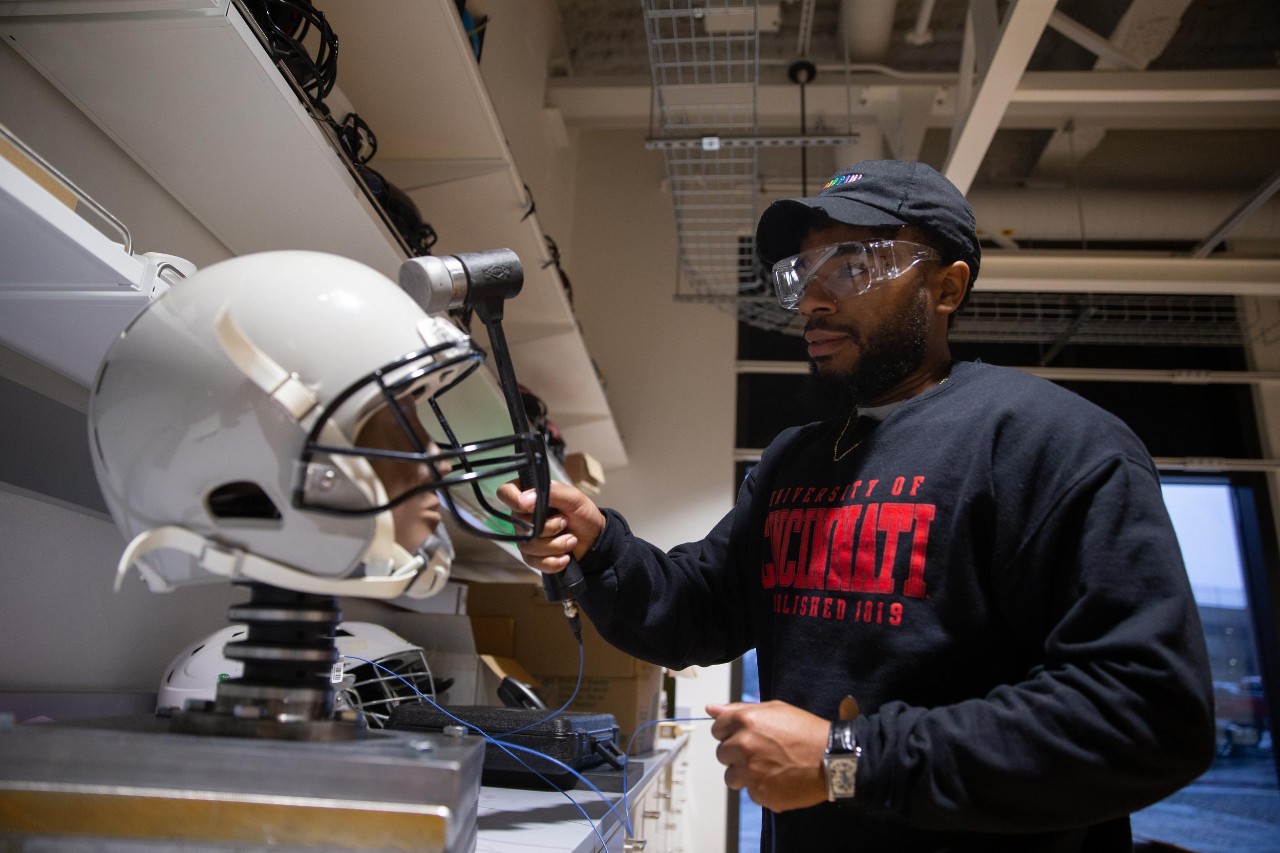
Biomedical engineering students put helmets to the test at UC's Bioscience Center. Photo/Andrew Higley/UC
Reviewers with the U.S. Food and Drug Administration examined whether the collar's springy metal can prevent concussions by applying pressure to the jugular vein to restrict the flow of blood in the skull. The company added language to its manual stating that it does not prevent concussions or long-term cognitive problems, the Post said.
More than 280,000 children are treated for sports-related concussions in U.S. emergency rooms each year. But federal health officials say children sustain as many as 3.8 million concussions from sports each year.
Talavage said he is interested in exploring injuries that can occur from smaller, repetitive blows along with the catastrophic head blows that lead to visits to the emergency room.
Talavage and his research partners are looking for ways to improve sports equipment, including helmets, to prevent traumatic brain injuries.
Talavage, who heads UC's Department of Biomedical Engineering, told the Post that he believes the Q-collar does provide some preventive benefits. But he added that the company might be overstating the conclusions of researchers.
“We can’t make the argument that the collar prevents concussion, but it might take longer or be less likely if you use it,” he said.
Talavage studies the brains of high school football players who are subjected to repeated subconcussive blows from blocks, tackles and hitting the ground. Talavage said athletes who wore the Q-collar showed meaningfully less evidence of inflammation from taking these smaller but repetitive blows.
“I think the collar is doing something, and it’s probably doing something that is good,” Talavage told the Post. ”But I would not say it is proven to protect the brain from injury.”
Read the Washington Post story.
Featured image at top: UC Professor Tom Talavage talks to Local 12 reporters at UC's Bioscience Center. Photo/Michael Miller
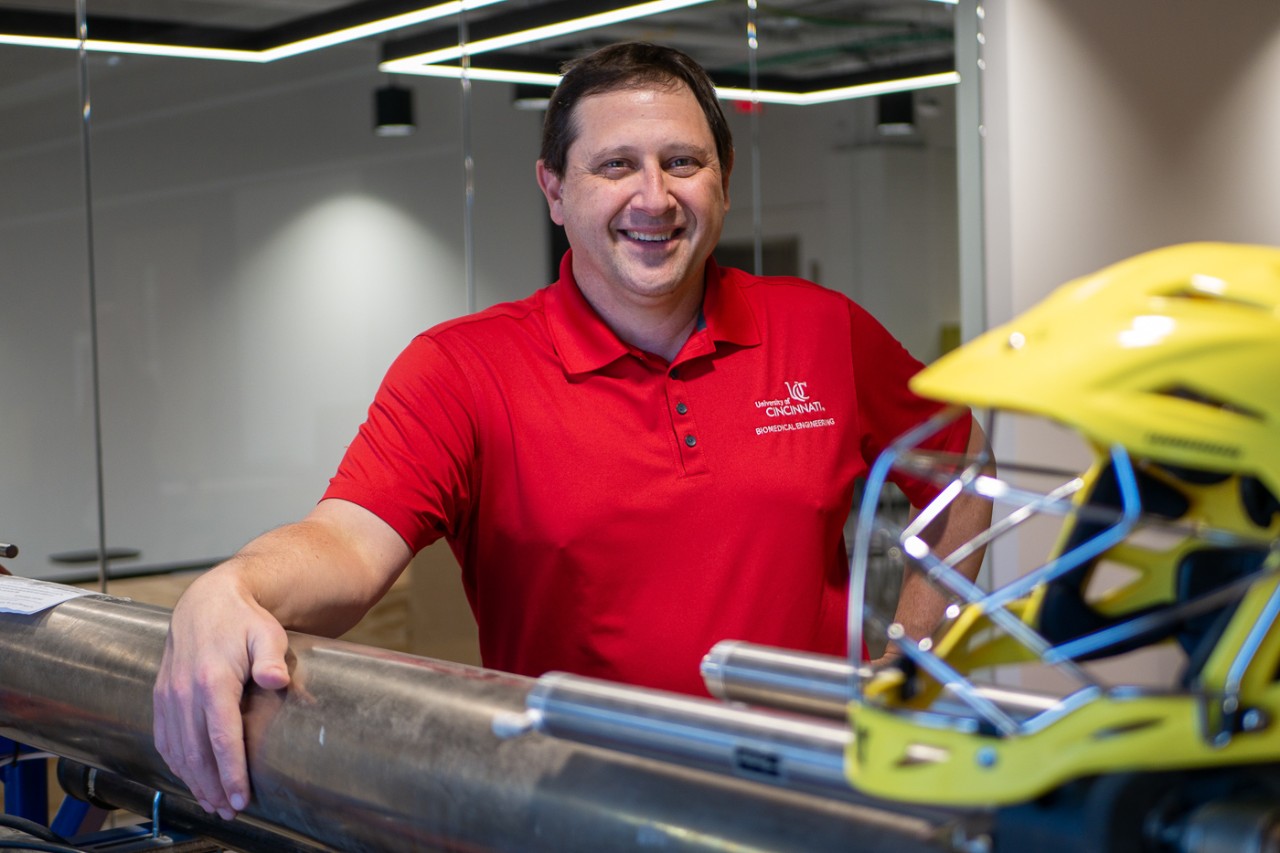
UC Professor Tom Talavage is studying ways to prevent concussions in sports. Photo/Andrew Higley/UC
Related Stories
AI breast cancer survival model from Cancer Center could improve accuracy and personalize care
October 23, 2026
UC Cancer Center researchers, including lead author Wedad Alatebi, developed a deep learning survival model for breast cancer that combines detailed clinical and genetic information, potentially offering physicians a more accurate tool to guide treatment decisions.
UC expert explains potential impact of Pennsylvania’s new vape product law
October 22, 2026

UC professor Ashley Merianos speaks to the Pittsburgh Post-Gazette about Pennsylvania’s new vape law, youth vaping prevention, enforcement challenges and possible unintended consequences.
UC Biomedical Engineering student launches mobile healthcare platform
October 22, 2026
As a fifth-year biomedical engineering student at the University of Cincinnati College of Engineering and Applied Science, Amelia Wares has been a trailblazer in nearly every area imaginable — and this is only the beginning of her journey.