
Why do female caribou have antlers?
Study finds caribou moms depend on antlers for nutrition

Biologists have long wondered why caribou are the only deer in the world in which females, like males, have antlers.
A new study of shed antlers collected from calving grounds in the Arctic National Wildlife Refuge provides a new answer.
Calving grounds are areas where migratory females give birth every year and also where they shed their antlers. Researchers at the University of Cincinnati found evidence that caribou, particularly moms with newborns, gnaw on antlers shed years earlier to supplement their diets with crucial minerals.
The study was published in the journal Ecology and Evolution.
Associate Professor Joshua Miller and doctoral graduate Madison Gaetano at the University of Cincinnati studied antlers collected from the Arctic National Wildlife Refuge of Alaska, home to the Porcupine caribou herd, which is famous for its epic 1,500-mile round-trip migration.
Antlers are made of bone that grows from the top of the skull The antlers of male caribou can stretch four feet and weigh as much as 20 pounds each, although a female’s are far smaller.
In the cold and dry climate of the Arctic tundra, shed antlers can sit undisturbed for hundreds of years, providing a ready source of minerals such as calcium and phosphorus for grazing caribou at a key endpoint of their epic migration.

UC Associate Professor Joshua Miller, left, U.S. Fish and Wildlife Service employee Maria Berkeland and UC doctoral graduate Madison Gaetano spent time in the Arctic National Wildlife Refuge to study caribou. Photo/Provided
Miller collected antlers and bones during scientific expeditions to the Arctic Refuge between 2010 and 2018. He used a rigid inflatable raft, setting up camps with a portable electric fence to ward off curious bears. During the expeditions, it was clear that most of the antlers had been chewed on, but which animals were doing the chewing?
Back in Miller’s lab at UC, researchers examined the tooth marks left on the antlers and bones to identify the culprits. When carnivores such as bears and wolves chew on bones, they leave distinct patterns of damage compared to animals such as lemming or caribou.
My jaw dropped when our results started to become clear.
Joshua Miller, UC Professor
UC researchers found that caribou are the prime culprits, chewing antlers they find a little at a time starting at the narrowest tips of the tines.
The study found that 86% of the 1,567 antlers they examined showed signs of gnawing and 99% of the gnaw marks were left by caribou.
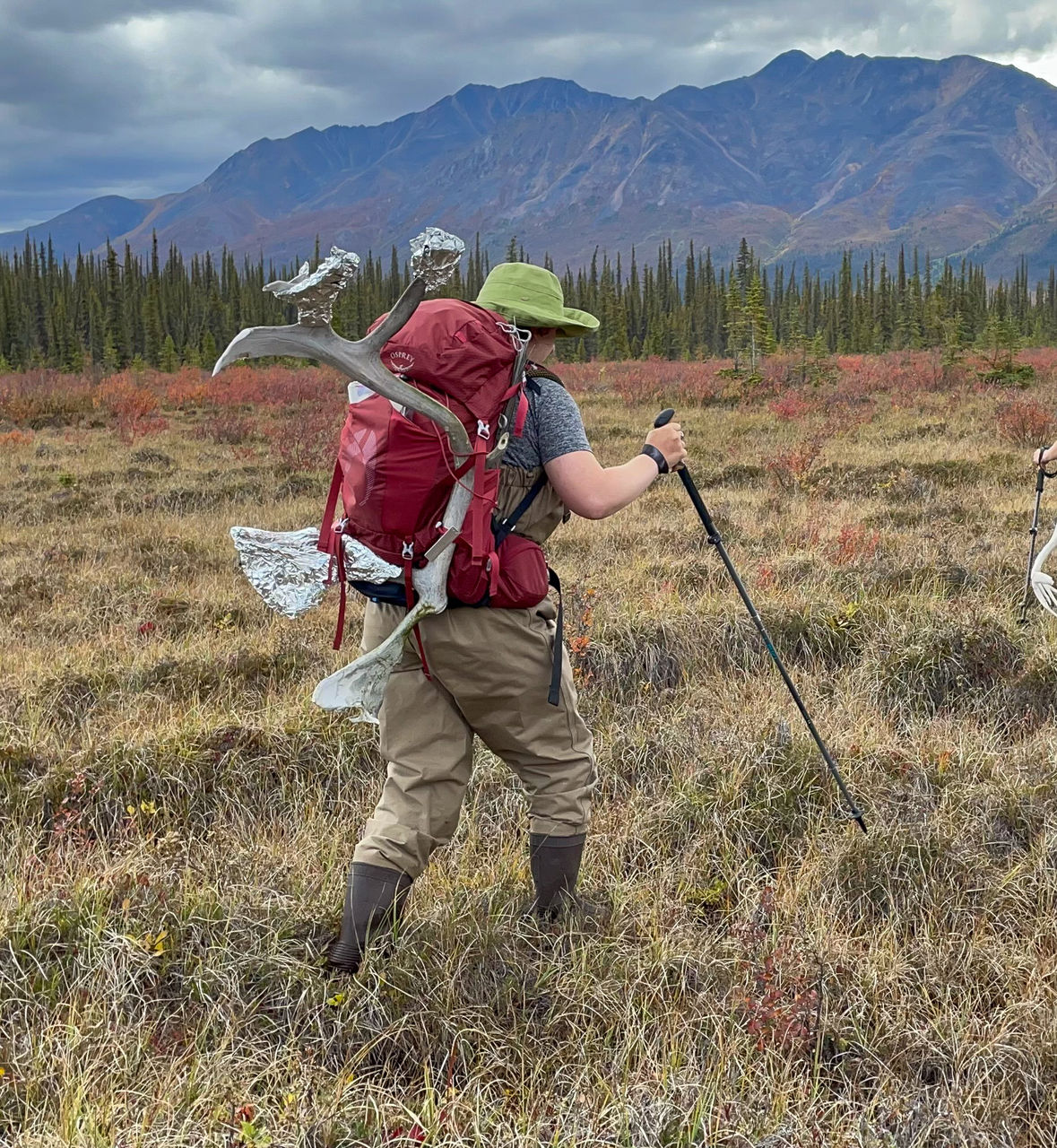
UC graduate Madison Gaetano carries a shed caribou antler on her backpack in the Arctic National Wildlife Refuge. Photo/Provided
“We knew that animals gnawed on these antlers, but everyone assumed they were mostly rodents. Now we know it’s really caribou. My jaw dropped when our results started to become clear,” he said.
Researchers observed marks from rodent teeth on less than 4% of gnawed antlers. And they found no evidence of carnivore gnaw marks on antlers in the study.
Researchers also collected 224 skeletal bones from caribou, moose and musk ox in the study area. And unlike the antlers, many of the gnaw marks on these bones were from predators such as wolves and bears. Caribou gnaw marks were observed on about 12% of the sample bones while just 1% of gnaw marks were from rodents.
Patrick Druckenmiller, a professor from the University of Alaska Fairbanks and Director of the University of Alaska Museum of the North, and National Park Service program manager Eric Wald also contributed to the project. The research was supported with grants from the U.S. Fish and Wildlife Service, the National Geographic Society, the National Science Foundation, the UC Office of Research and the Animal Welfare Institute.
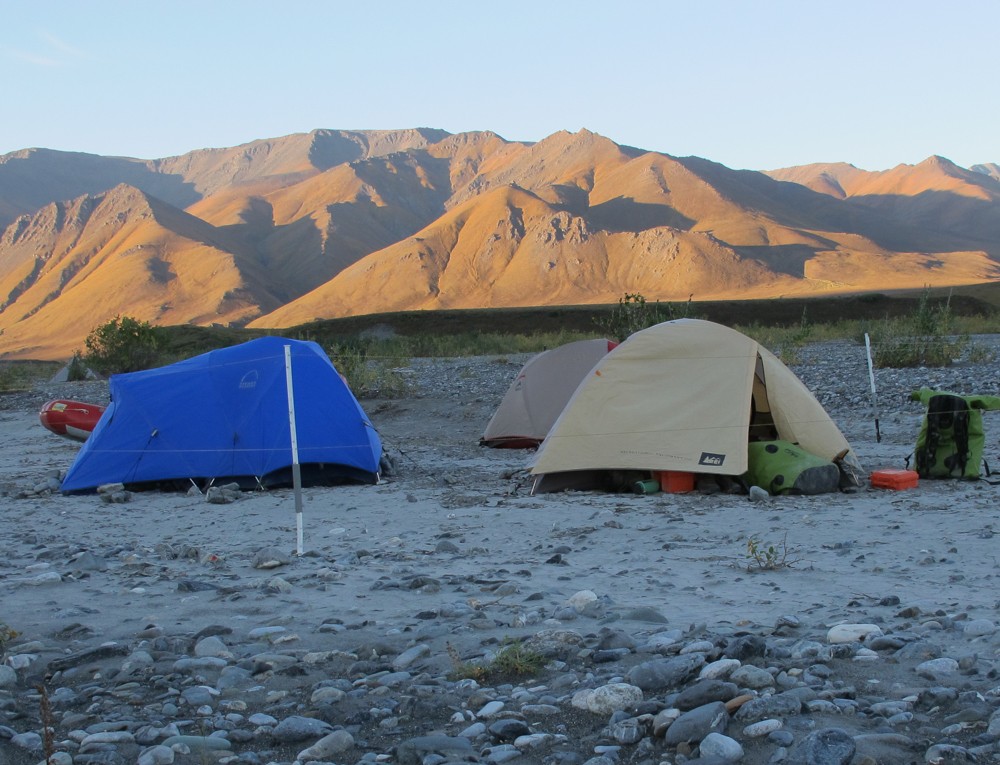
UC Associate Professor Joshua Miller collected shed caribou antlers in the Arctic National Wildlife Refuge, camping with an electric fence to ward off bears. Photo/Provided
How do antlers benefit female caribou?
Biologists often point to antlers as a tool for females to defend the choicest grazing spots from other caribou or to ward off predators. But Miller said the role shed antlers play in supplementing a caribou’s diet is an overlooked benefit.
Migrating females collectively drop their antlers within days of giving birth. In this way, females carry their own nutritional supplement that becomes available where and when they need it most.
“These antlers last for centuries or longer and they are a source of nutrients that get revisited again and again. Given the results of our study, this is probably an important clue to a way that antlers benefit female caribou that has gone underappreciated,” he said.
Gaetano said antlers certainly could provide more than one benefit to female caribou. But female caribou are more likely to use their hooves against predators. Reindeer herders she spoke to said its go-to defense is to trample and kick.
Meanwhile, their antlers can be very small, she said, making them unlikely weapons.
“I think it's reasonable to question how helpful they would be in fighting off a predator,” she said.
“Female caribou shed their antlers right around when they give birth,” Gaetano said. “That means they are antlerless when it would be most crucial to have antlers to defend a young calf if they were a defense mechanism.”
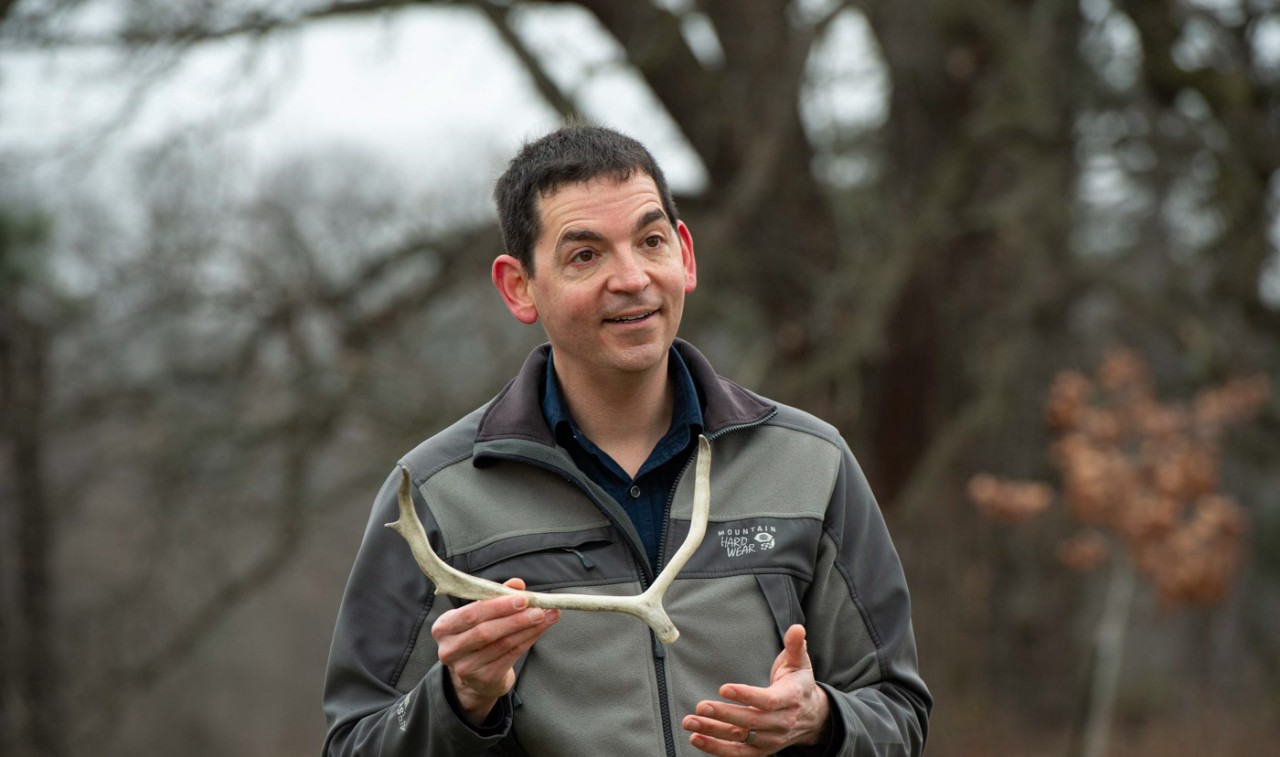
UC Associate Professor Joshua Miller holds up a shed caribou antler he collected from the Arctic National Wildlife Refuge. He and his research partners say the reason female caribou have antlers could be the important nutrition the shed antlers provide during calving season. Photo/Colleen Kelley/UC Marketing + Brand
Eventually, over the span of centuries, the minerals from the shed antlers return to the soil where the nutrients help support sedges, grasses and lichens the caribou eat.
“They’re engineering this habitat, seeding the landscape with these super-important minerals that can be quite hard for animals to get enough of,” he said. “Phosphorus in particular is very important for new mothers trying to produce high-quality milk for feeding their young. Caribou bring literally tons of phosphorus to the caribou calving grounds every year.”
Miller said many mammals are known to supplement their diet by gnawing bones, eating clay and salt or drinking from mineral-rich pools.
“It is fairly ubiquitous. I’ll never forget watching a kangaroo eat a dead bird in Australia,” he said. “Herbivores look for nutrients in all kinds of interesting ways.”
Featured image at top: Female caribou shed their antlers during calving season in the Arctic National Wildlife Refuge. Researchers found evidence that caribou supplement their diet with minerals they derive from eating shed antlers. Photo/Ian Hromada/iStockPhoto
The next groundbreaking discovery
UC is a powerhouse of discovery and impact as a Carnegie 1 research institution. From pioneering medical research to transformative engineering and social innovation, our faculty and students drive progress that reaches across the world.
Related Stories
Lonely Jupiter-like planet 900 light years away tells us more about gas giants
May 8, 2026
UC astrophysicist Paul Smith is part of an international team that is studying five distant gas giants — Jupiter-like exoplanets light years away that could shed light on the formation of our own solar system.
UC launches pioneering study of 'forever chemicals' in drinking water
May 2, 2024
UC is launching a new investigation to examine excess nutrients and contaminants in groundwater that provides drinking water for 2 million Ohioans.
How to track animal of legend? Look to the poop
July 18, 2023
A team of researchers led by the University of Cincinnati applied isotopic analysis to jaguar scat to investigate the habitat needs of the big cats in the Mountain Pine Ridge Forest Preserve of Belize in Central America. The study demonstrates a novel and noninvasive technique for identifying the landscape use and conservation needs of elusive wildlife.