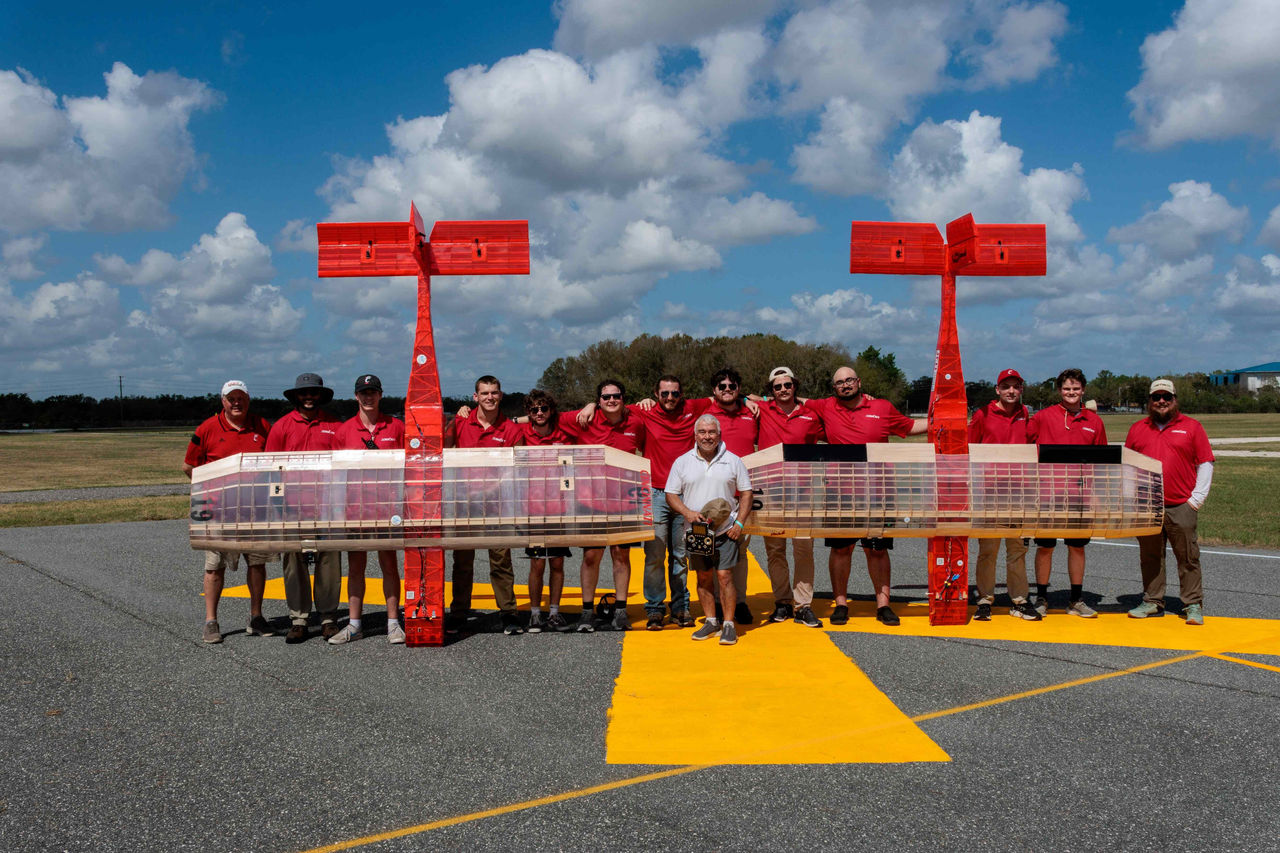
UC Aerocats soar to new heights in elite flight competition
Built on Bearcat ingenuity at the 1819 Makerspace

The University of Cincinnati Aerocats have propelled their way to the top at a prestigious aviation competition.
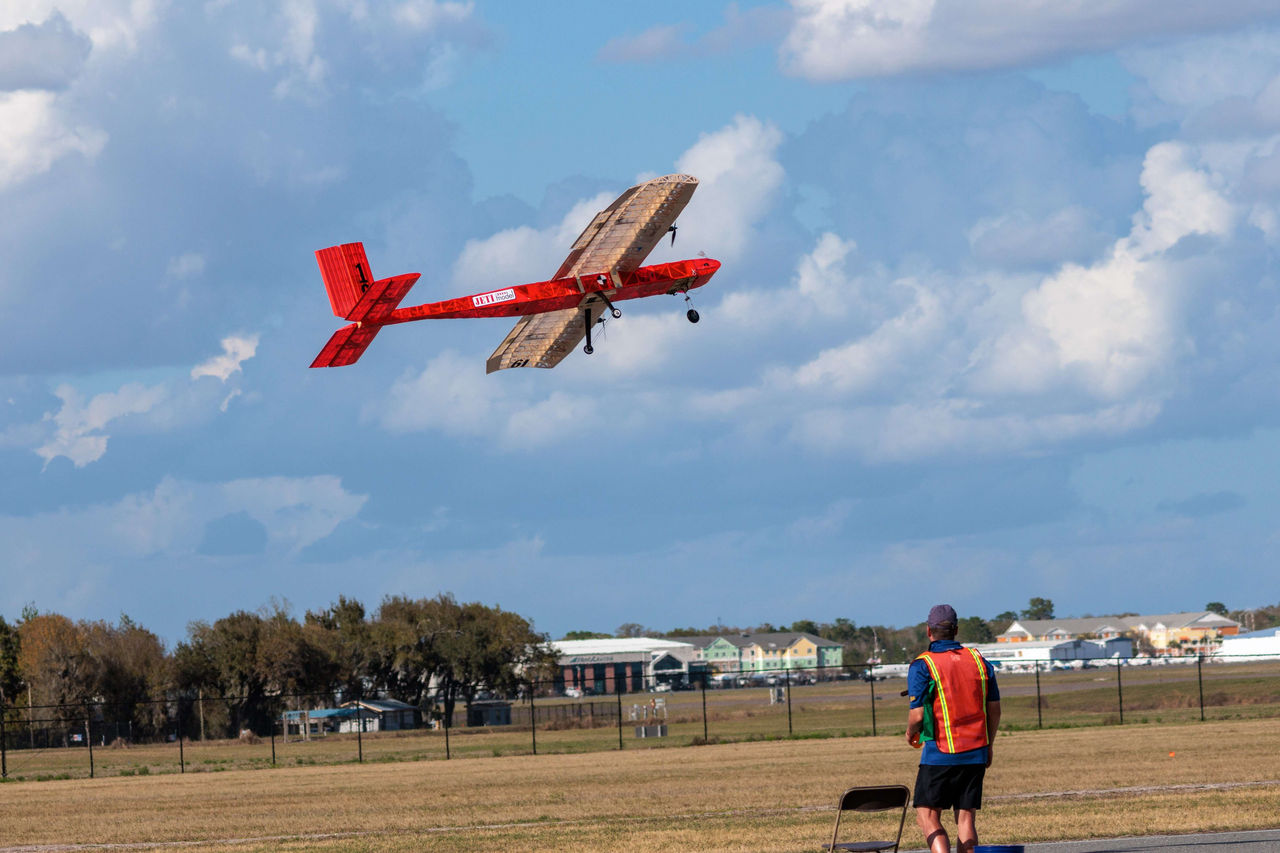
UC Aerocats' plane soaring during SAE Aero Design East. Photo/UC Aerocats
The Aerocats, UC's flight club, spent months refining and testing its aircraft construction in the 1819 Ground Floor Makerspace. Using laser cutters and woodworking equipment to bring a concept to life, the team was runway-ready as it headed to the SAE Aero Design East Competition in early March to put its engineering skills to practice.
Up against 34 teams in a test of design, build and flight, the UC Aerocats’ plane took to the skies, climbing to a fourth-place finish in the regular class and a first-place ranking among advanced teams.
“We were walking in, shooting for top five,” says Dylan Lawrence, an aerospace engineering student serving as Aerocats’ 2025 regular team lead. “This placement overall … this was something we were really proud of.”
From makerspace to runway
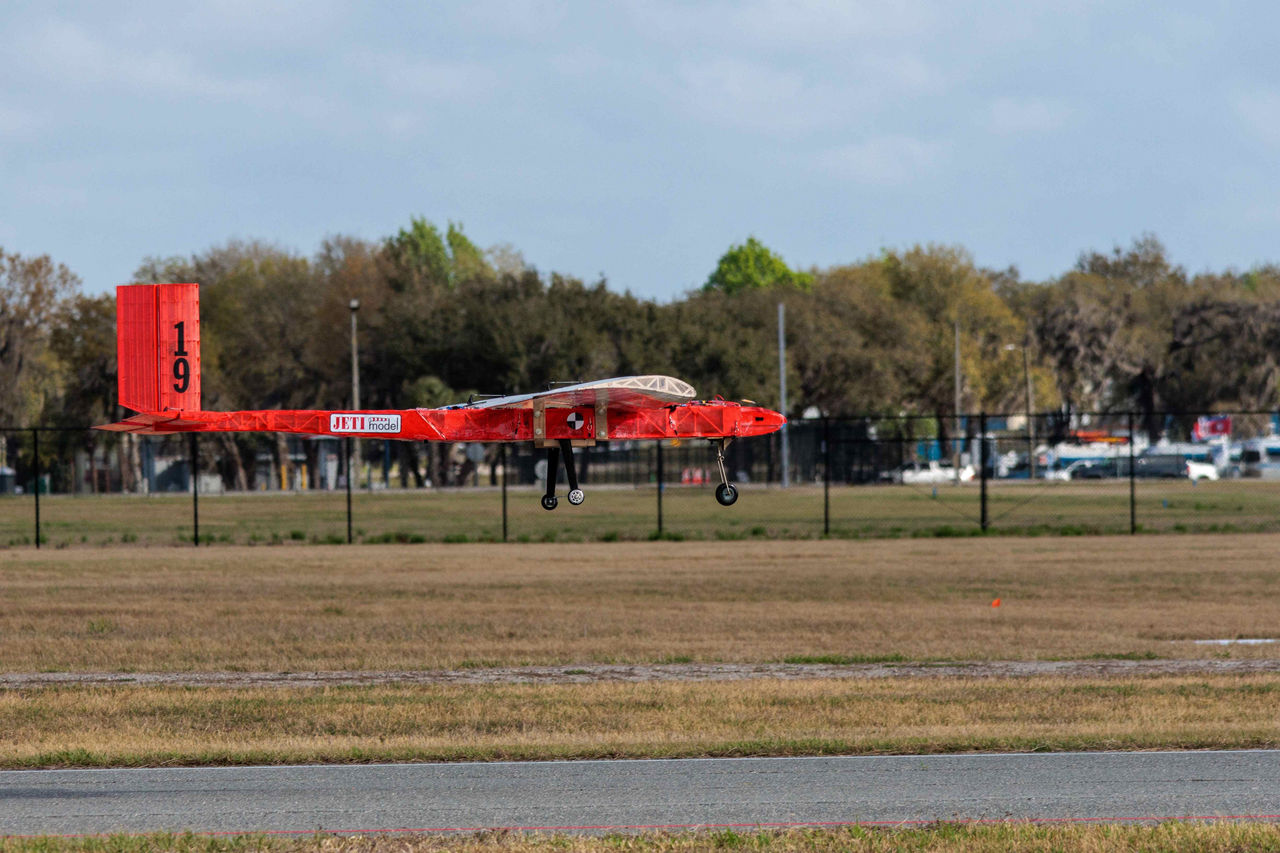
UC Aerocats' plane taking off. Photo/UC Aerocats
The UC Aerocats make it look easy to build a high-flying radio-controlled, or RC, plane from scratch, but the actual process involves plenty of “failing forward.” In other words, it closely resembles the real-world engineering mindset of using failure as a learning opportunity to make progress, emphasized through programs in UC’s College of Engineering and Applied Science.
Lawrence, who joined Aerocats as part of his senior capstone project, saw iterative growth during the plane-design process as a key attraction to the group. “I joined Aerocats because I wanted to have a more robust engineering process,” he says, “and then, to be able to actually compete and see something physical fly.”
According to Lawrence, many of the Aerocats’ most critical moments happen far away from takeoff day in Florida, both in time and distance:
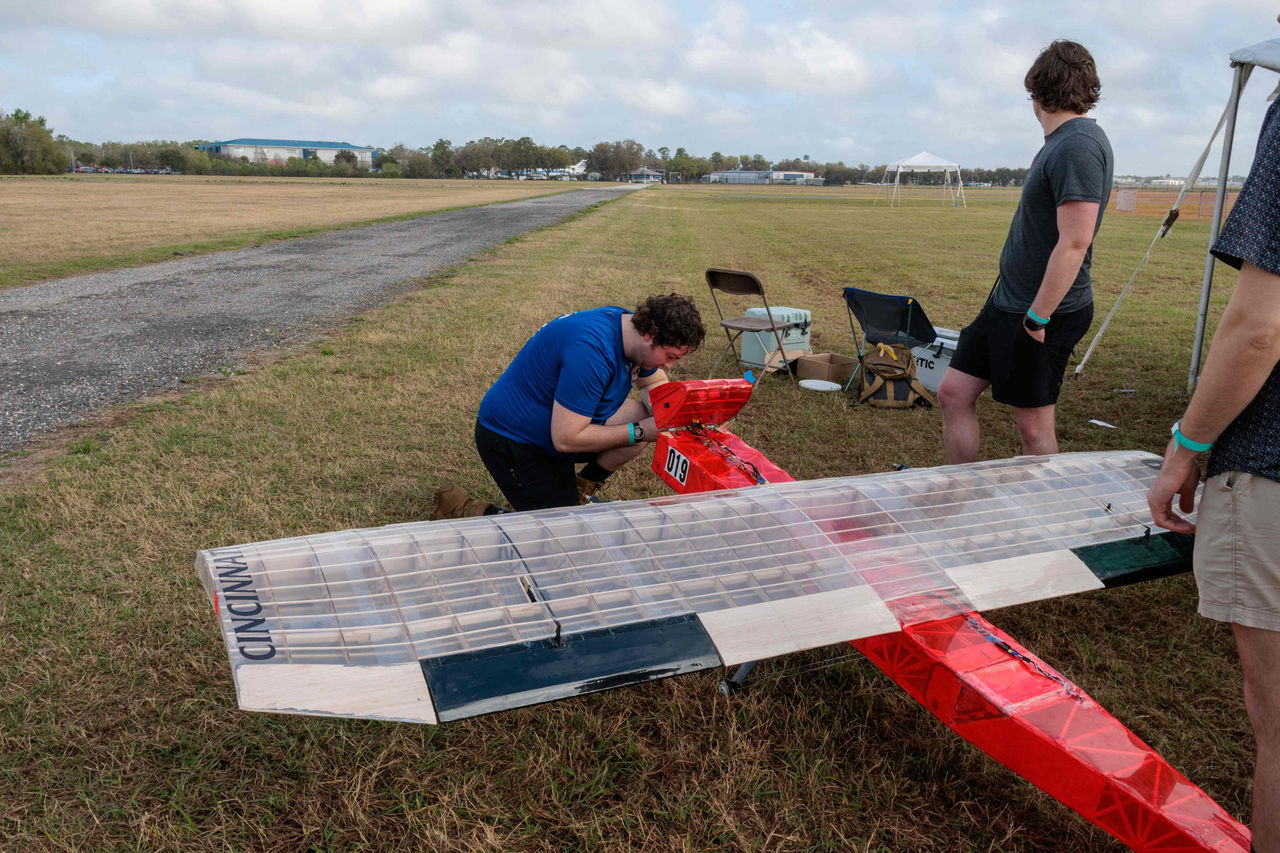
Aerocats preparing their plane for takeoff. Photo/UC Aerocats
- Conceptualization and design: This is the ideation stage, where team members develop first concepts grounded in engineering fundamentals and SAE design rules and specifications.
- Building first prototypes: After brainstorming initial ideas, the Aerocats choose early prototypes to design as a team, construct with laser cutters and woodworking equipment at the 1819 Innovation Hub makerspace and then assemble into a test-ready airplane.
- Breaking them: Once a prototype’s been built, time is scheduled for a preliminary liftoff. The Aerocats take their airplane to a testing facility in Dayton, home of the Wright Brothers, to see if and how the model soars and identify where it could face a bumpy ride.
- Recording key insights: Sure, test flying days are fun. More than that, though, they’re a valuable rehearsal of what could go right and wrong during the SAE competition. The Aerocats log their findings of what to keep and what to scrap in the next iteration.
- Repeat: The cycle continues until a final, perfected model is selected in winter.
Only at 1819
One of Lawrence’s key takeaways from his Aerocats experience is “understanding execution.” According to him, in engineering, “Everything being put on paper is a lot simpler than what you’re actually going through doing … so manufacturing is half, if not more than half, of the process.”
Having a reliable place to manufacture greatly matters to the Aerocats for this reason. The 12,000-square-foot 1819 Ground Floor Makerspace, Greater Cincinnati’s largest facility of its kind, provides the equipment, mentorship and certifications the team needs to succeed.
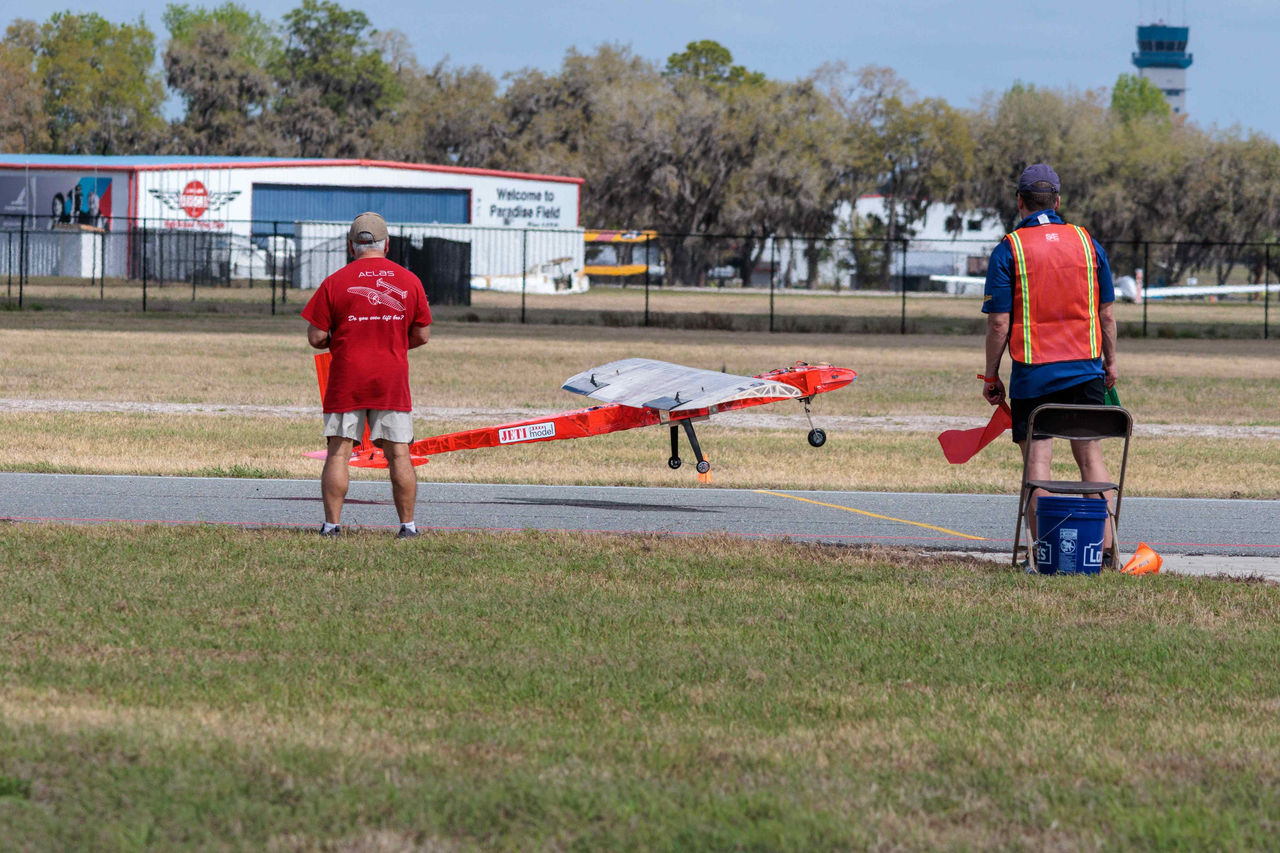
The Aerocats' plane was able to take off because of work done in the 1819 Makerspace. Photo/UC Aerocats
The Aerocats found the makerspace’s specialized laser cutters and woodworking tools especially useful to craft parts with deep precision. Even minimal flaws could be disastrous to an aircraft design under the wrong circumstances, so 1819’s top-grade equipment was essential.
“If we had not had access to the [1819] Makerspace, the overall evolving of our planes wouldn’t have been up to the level that it was,” Lawrence notes, “and I don’t think we could’ve been as competitive as we were.”
Hearts racing, spirits soaring
And suddenly the Aerocats were cleared for takeoff.
After countless hours in the Ground Floor Makerspace, trial moments on the runway in Dayton and a sleepless 16-hour drive to Central Florida, the Aerocats were ready to pounce on the competition.
Being there on the day of the competition – especially before anybody's flown – is very exciting, but very nerve-wracking.
Dylan Lawrence, UC Aerocats team lead
The team’s emotions hit a fever pitch leading into the final flight, according to Lawrence.
“Being there on the day of the competition — especially before anybody’s flown — is very exciting, but very nerve-wracking,” he said.
While it’s exhilarating talking to 34 teams from other colleges and seeing novel designs, that adds to the competition's suspense: What if they’re onto something we’re not?
There’s no need to sweat, though, beyond the sweltering heat of Central Florida. The team knows what it’s doing. Now, the fate of the flight lies in the hands of the team’s pilot as he performs final flight checks and places the Aerocats’ pride and joy on the runway.
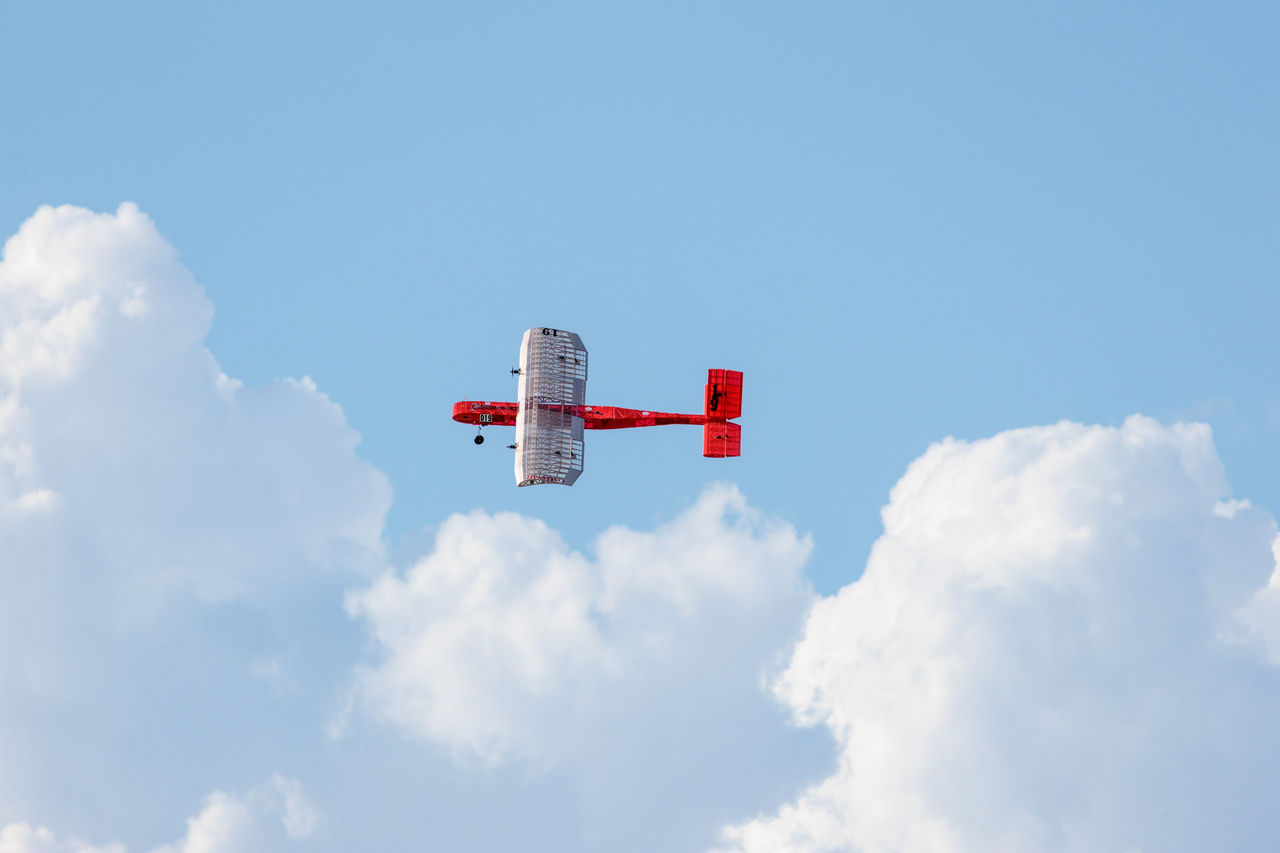
Aerocats' plane during the 2026 SAE Aero Design East competition. Photo/UC Aerocats
From there, the strategy is straightforward: “Be a good design and execute the best you can.” Check and recheck. As Bearcat engineers from the Birthplace of Aviation, the team had every reason to feel confident. UC’s plane lifted off flawlessly, thrilled the crowd and gently glided back onto the runway for a precision landing.
The Aerocats impressed both judges and attendees with its innovative RC aircraft, landing fourth out of 35 teams in the regular class and first in the advanced class during SAE Aero Design East 2026. The plane’s flightworthiness, ability to hold weight and overall aesthetics balanced each other seamlessly – a challenging task for any engineer.
Armed with Bearcat engineering expertise, expertly designed and constructed parts and a driven, ambitious team, the Aerocats soared to success in Florida. What’s next? Celebration … and maybe plans for an even stronger comeback next March.
If you’re ready to design, build and fly alongside the Aerocats, join the team and take flight with UC’s next generation of innovators. Contact the UC Aerocats.
Innovation Lives Here
The University of Cincinnati is leading public urban universities into a new era of innovation and impact. Our faculty, staff and students are saving lives, changing outcomes and bending the future in our city's direction. Next Lives Here.
Related Stories
UC students engineer cold-weather lifeline for Paralympians
April 23, 2026
Three University of Cincinnati students designed and built a residual limb warmer to protect Paralympic athletes competing in bobsled and skeleton from freezing temperatures between races.
Bearcats Racing speeds toward a victorious season
April 12, 2025
Bearcats Motorsports, Bearcats Baja and Bearcats EV are racing to build winning car models at UC’s 1819 Innovation Hub as competition season approaches.
A picture-perfect finish for innovation at CEAS EXPO 2026
April 9, 2026
The CEAS EXPO 2026 brought together UC’s brightest engineers to display their forward-thinking projects, with multispectral camera Kromico earning the 1819 Innovation Award.