
UC computer science student earns co-op medal
Nathan Nguyen earned the 2026 Herman Schneider Medal for excellence in co-op

University of Cincinnati student Nathan Nguyen has always been inspired by the idea of learning while doing. From early internships in high school to hands-on engineering projects at UC, real-world experience has been a top priority. When he discovered the cooperative education (co-op) program, it sealed the deal on his college choice.
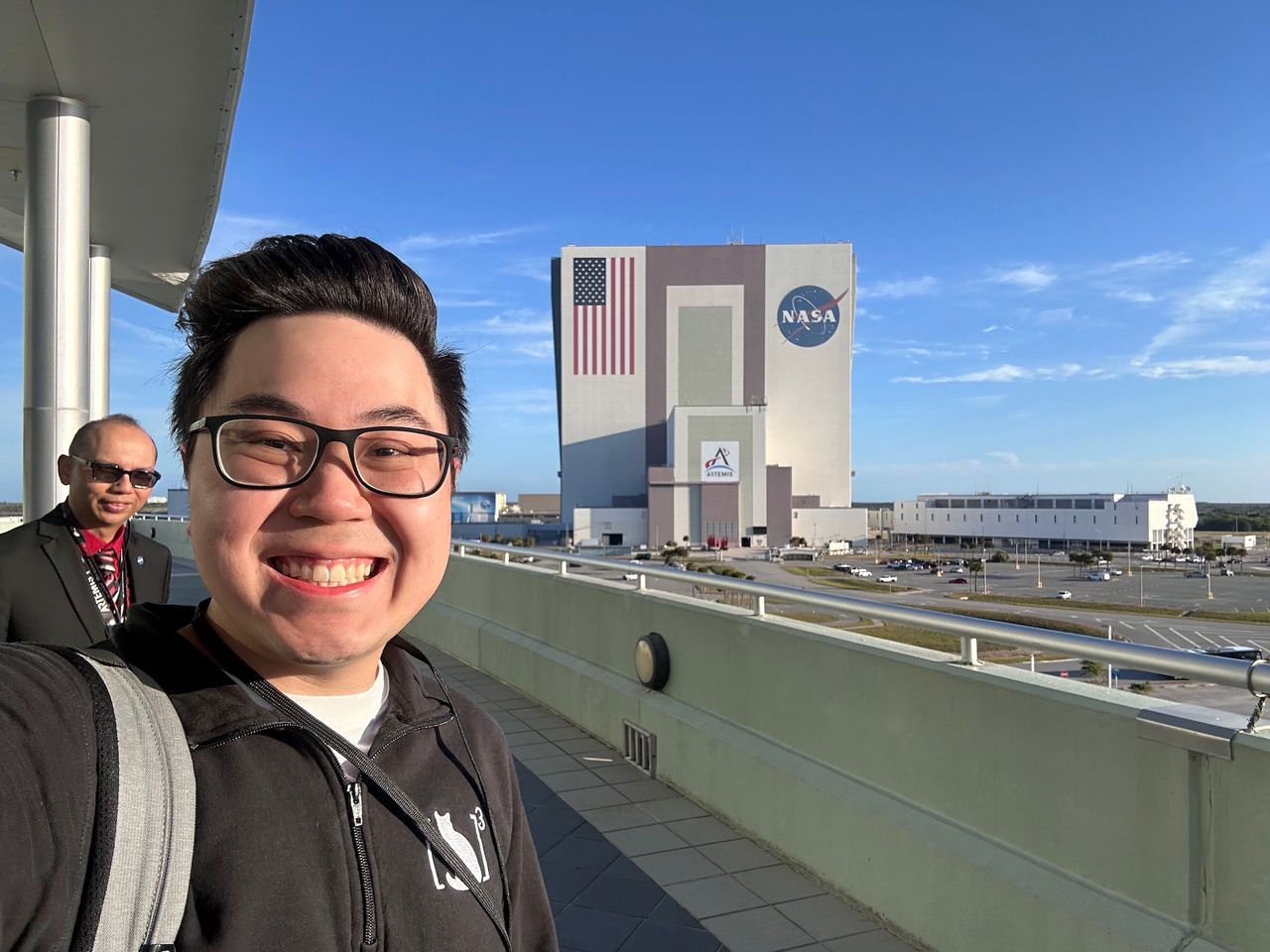
Nathan Nguyen was part of the historic UC CubeCats NASA satellite launch. Photo/Provided
Developing websites and web games began as a hobby for Nguyen, who enjoyed creating something out of nothing. As the interest grew, studying computer science felt like a natural choice.
"I can bring joy to people through the different programs I make. That's why I fell in love with computer science and engineering in general," he said.
Nguyen graduated with a bachelor's degree in computer science this spring on the heels of five impressive co-op jobs and receiving the 2026 Herman Schneider Co-op Medal from UC's College of Engineering and Applied Science. Named after Dean Herman Schneider, who invented co-op in 1906, this award is given to one graduating student each year who has demonstrated exceptional success on co-op.
Through co-op, UC engineering and applied science students alternate between semesters of classroom learning and paid, professional work experience, graduating with nearly a year and a half of full-time work experience.
The hands-on mindset of co-op also influenced Nguyen's involvement in student organizations, including CubeCats, UC's team that designs and builds CubeSats. The group's satellite — selected by NASA — recently launched on the NG-24 resupply mission to the International Space Station, becoming the first fully student-built satellite to do so.
During my first co-op I really learned to ask why and question everything. I'm a better coder now because of it.
Nathan Nguyen 2026 Herman Schneider Medalist
Whether in student organizations or in professional settings, Nguyen sought out opportunities to apply what he was learning — especially in his co-op roles.
Four of Nguyen's five co-op jobs were completed at 84.51, a subsidiary of Kroger, in Cincinnati. He worked in software engineering for all his co-op rotations, but his responsibilities and contributions evolved semester. His final co-op was at Capital One.
When he first arrived at 84.51, he was really focused on getting his footing and understanding what a computer scientist can do in the field.
"During my first co-op I really learned to ask why and question everything. It helped me learn the ropes and I'm a better coder now because of it," Nguyen said.
He shared that even during his first co-op, when everything was new, he was still able to make an impact through the work he was doing. Looking back, he shares that tasks which took him multiple days to complete as a new co-op would now take much less time. During his second co-op, he worked with a different team that focused on connecting and analyzing data and building solutions, marking his first foray into real coding.
"This was my first time doing a high-impact engineering project where someone had full trust in me to be able to make correct decisions, even if I didn't have that confidence in myself," he said.
Co-op's value comes from giving students responsibility for real, meaningful projects. After completing his first data science project as part of the team, Nguyen was entrusted with a bigger project. With each semester at 84.51, their trust in him continued to grow. During his third co-op, he was given the opportunity to complete a full project, end to end. The project was in their advertsing sector; an area Nguyen had no prior experience in as a computer scientist.
"Ad tech is very complex, and I felt like I had no idea what was going on, but it was something that I had to learn step by step," he said.

Nathan Nguyen completed four of his five co-ops at 84.51. Photo/Provided
84.51 has a tool that analyzes an advertisement to determine which audience of Kroger shoppers to target based on conversion patterns. While the tool provides valuable data, it can take nearly six hours to give an output. As a result, people would input an ad and not get their result until the next business day.
"I kept looking at the program and thinking it shouldn't take that long, unless I was missing something. So, I went to my supervisor and told them I thought I could make the approach better, and they let me go for it," he said.
It was a project that nobody had the time to take on so he offered. Over the course of his co-op, he was able to analyze the process, optimize it, and cut the time down significantly. Now, he said, someone can start the program, take their lunch break, and by the time they come back, their data is ready. He was able to take information from the initial development, ask questions, and slowly but surely chip away at the problem until he had created a better, more efficient version of the system.
"That was kind of the engineering marvel of my co-ops. I was able to combine all the things I've learned to create a better, more pristine version of the product," Nguyen said.
After his third semester at 84.51, he had gotten comfortable. He felt like he knew what he was doing and had a handle on things, so he wanted to pivot, diving into something he didn't know and embrace the discomfort of learning something new. With the rapid rise of artificial intelligence, Nguyen was innately curious about it — and AI became the focus of his fourth co-op at the company.
"This was right around the time that ChatGPT was booming," he said. "I was 50/50 on how I felt about AI, so I wanted to be put in the driver's seat and see firsthand what was going on with it."
His last semester at 84.51 focused on machine learning and supporting models to understand not only how they operate in the Kroger space, but in general as well. His job was to support the large language model used in advertising, ensuring it was working the way it was supposed to.
After the AI position, Nguyen felt that he had accomplished everything he set out to at 84.51. He moved to Capital One for his final co-op, where he worked as a software engineer optimizing code and making payment processing faster.
“During my time there, I finished an entire end-to-end project by myself, while leading two other interns as well,” he said. “I went from the mentee to the mentor for these other students and was able to help them be confident and learn through experiences.”
Featured image at top: Nathan Nguyen (second from left) received the 2026 Herman Schneider Medal. Photo/Provided
Related Stories
Engineering student embraces the Bearcat experience
April 22, 2026
The University of Cincinnati stood out to Thavishka Gamage because of the top-ranked cooperative education (co-op) program and the Cincinnati community. He earned his bachelor's degree in computer science and will graduate with his Master of Engineering degree in industrial and systems engineering this spring. He was part of student organizations across campus and connected with the College of Engineering and Applied Science community.
UC chess team has all the right moves
March 5, 2025
UC's chess team beat 46 other college teams in the PanAmerican Collegiate Tournament to capture the divisional championship.
UC student breaks world record in competitive speedcubing
December 19, 2025
UC computer science student Sujan Feist set a new world record in speedcubing at competition this month in Coshocton, Ohio. Feist is the reigning world champion in the 2x2 division.