
DAAP professor brings circus history to life through cabinet cards
The exhibition connects photography, circus history and disability studies through images and events

Faculty, students, and visitors walking past the DAAP library may have encountered an exhibition offering a glimpse into circus history through historical photographs. The display features Theresa Leininger-Miller’s research examining how circus performers are documented and remembered.
Theresa Leininger-Miller has spent her career studying art history, and her latest exhibition takes a closer look at the stories behind historical photographs. A professor at the University of Cincinnati’s College of Design, Architecture, Art, and Planning (DAAP), Leininger-Miller teaches 19th- through 21st-century American and European art history, including the history of photography through World War II.
Visitors to the University of Cincinnati may have already encountered her work without realizing it. Her exhibition, Dare to Stare: 19th-Century Circus and Sideshow Portraits, is on view in the DAAP library, with rare images by such famous photographers as Mathew Brady, Charles Eisenmann, and Napoleon Sarony, and artists from the U.S., England, Ireland, France, and South Africa.


Featured are celebrated performers, including circus impresario P.T. Barnum, as well as bearded ladies, contortionists, clowns, snake charmers, fire eaters, giants, strong men, trapeze artists, and more, as well as animal acts with elephants, big cats, horses, bears, dogs, goats, and pigs.
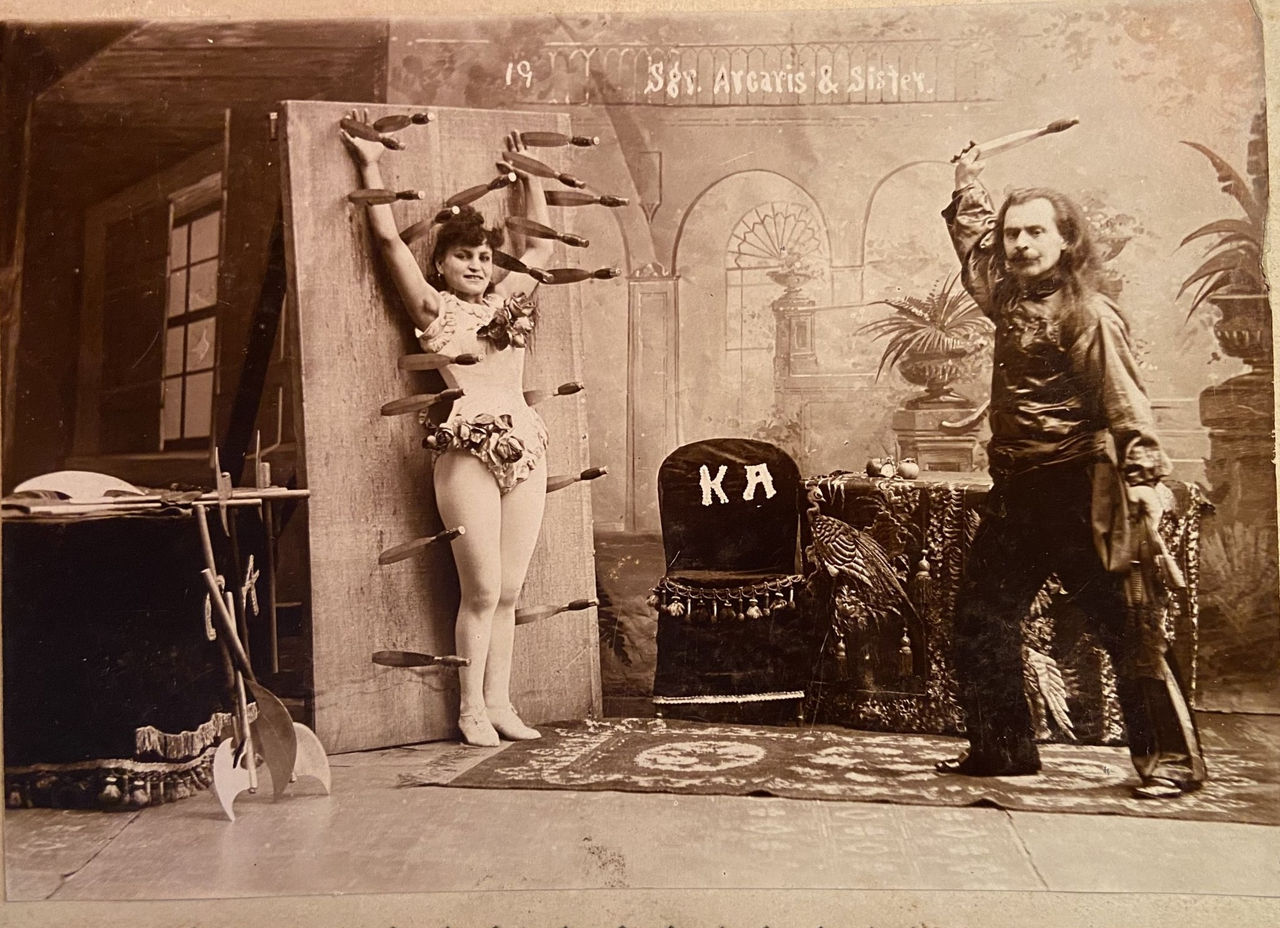
One of Theresa Leininger-Miller's cabinet cards in the exhibition.
Leininger-Miller’s interest in the exhibition developed through her work as an art historian and her encounters with private photography collections. In 2024, she participated in an event by FotoFocus, a Cincinnati-based organization that coordinates photography exhibitions across regional institutions every other year. That year’s theme, “The Backstory,” inspired her to examine the information and imagery found on the verso of albumen prints, displaying photographs turned around at Cincinnati Art Galleries downtown.
The bulk of the exhibition came from two private collections, that of Nannette Maciejunes, the former director of the Columbus Museum of Art in Ohio, and Nick Vaccaro, a retired photographer in Kansas. The collectors lent enough images for a second FotoFocus exhibition in 2024, Posteriors: Sitters’ Backs in 19th-Century Photography, at the DAAP Library. The experience of visiting both collectors helped Leininger-Miller gather material for Dare to Stare, which features 240+ images, including cabinet cards, cartes-de-visite, tintypes, and pitch books.
Preparing the exhibition also involved collaboration with a DAAP student. Sam Yeganeh, a doctoral candidate in architecture, helped Leininger-Miller arrange the photographs and refine the display to make it more visually engaging.
The exhibition is part of the 2026 FotoFocus Biennial, whose theme, “The Long View,” explores how time and perception shape the way people understand photography and other lens-based media. The event brings together dozens of institutions and exhibitions throughout the region, giving artists opportunities to share their work with audiences beyond their own communities.
Leininger-Miller believes DAAP students can benefit from participating in FotoFocus by viewing a wide diversity of historical and contemporary photography, attending symposia, and connecting with photographers and scholars. FotoFocus pass holders receive free admission to participating venues.
Dare to Stare’s reach could extend beyond Cincinnati. The Ringling Museum in Sarasota, Florida, which includes both an art collection and a permanent circus display, has expressed interest in hosting an expanded version of Dare to Stare in 2029. Leininger-Miller also expects the project will lead to an exhibition catalogue or book, preserving the research and stories behind the photographs for future audiences.

[FotoFocus] offers wonderful ways to share scholarship with the public and network with other people who are also passionate about photography.
Theresa Leininger-Miller Art History professor
“FotoFocus’ reach now is to over several million people because of its online presence,” Leininger-Miller said. “It offers wonderful ways to share scholarship with the public and network with other people who are also passionate about photography.”
Through FotoFocus, Leininger-Miller’s research can reach audiences far beyond DAAP, connecting historical photographs with new viewers and fellow photography enthusiasts. With the possibility of an expanded exhibition at the Ringling Museum in 2029, Dare to Stare demonstrates how a local exhibition can grow into an opportunity for lasting, national recognition.
Cincinnati is our city
Cincinnati is our extended classroom, lab, career network and a place to explore, learn and serve. UC’s urban location gives students unmatched access to real-world learning, artistic inspiration and vibrant culture. Our research and community engagement continually benefit the city we call home.
Featured image at top of Theresa Leininger-Miller's exhbition "Dare to Stare." Photos/provided.
Additional Contacts
Related Stories
Bearcats at the zoo
October 31, 2022
University of Cincinnati students and faculty get a chance to work on global wildlife conservation projects with the Cincinnati Zoo & Botanical Garden, considered one of the best zoos in North America.
How to spot a fake
December 6, 2022
University of Cincinnati chemists, geologists and art historians are collaborating to help area art museums answer questions about masterpieces and detect fakes — and teaching students about their methods.
UC welcomes record-breaking student body
August 26, 2024
The University of Cincinnati anticipates record enrollment as classes begin Monday, Aug. 26, with a projected 52,000 students — a 2.1% increase over last year. Growth continues but is more strategic with the university attracting more online learners, a greater number of transfer and first-generation students along with a stronger student presence on regional campuses at Blue Ash and Clermont.