
Returning A&S student finds success, belonging through community science project at PEWS
At 29, AJ Kmetz started his education over in the Geosciences program.
AJ Kmetz decided at 29 to return to the university where he had earned a journalism degree a decade ago.
Kmetz earned a second bachelor's degree in geosciences in 2025 at the University of Cincinnati. Now he's pursuing a master's degree.
Kmetz says he wanted to go in a different direction with his life and he wanted to do that with help from the College of Arts & Sciences.
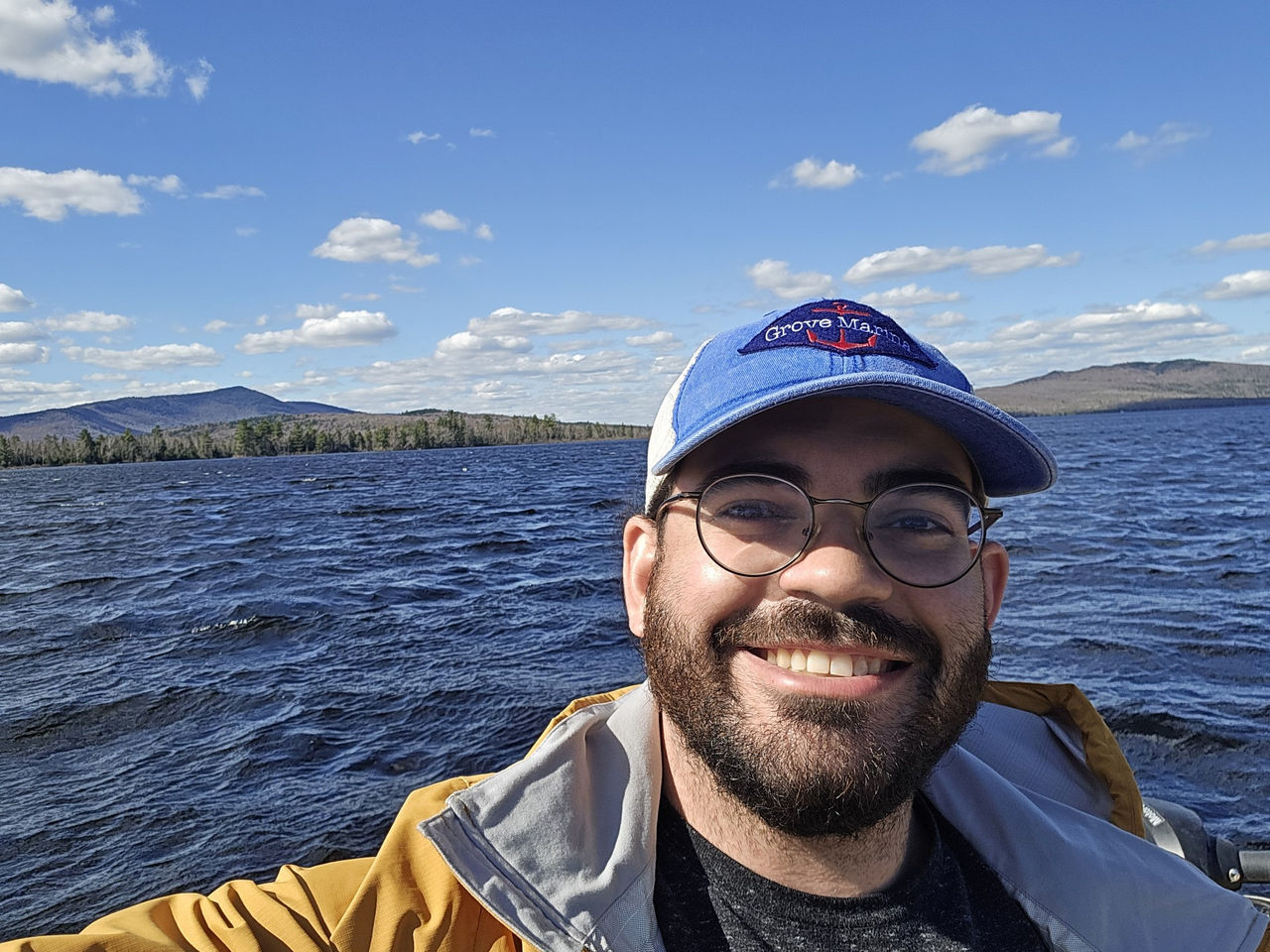
AJ Kmetz Photo/Provided
“I know it's a cliche, but the best time to do something is back when you had the first opportunity to do it, the second best time is now,” said Kmetz.
He's now working towards his master's degree. His thesis focuses on stable isotope ecology, which is looking at the tiny differences in chemistry that makes up different organisms. Kmetz chose to look closer at birds.
“We can tell how diet has changed over time or how they’ve migrated,” said Kmetz. “If you think about the different elements on the periodic table like carbon, nitrogen, hydrogen for example, there are teeny tiny variations in some of those atoms.”
He says he looks at the ratios of those elements, and a world of information becomes available. Kmetz can tell if a bird switched from wild nuts to feeder food. He can also tell if a bird has moved from a more northern area to southern. Specifically, he's looking at how wildfires in Canada have affected bird nesting areas, and the ripple effect of that.
“The songbirds do a lot of good up in the forests up there, they eat insects, they prevent pest infestations which can affect wood supplies and all kinds of things,” said Kmetz.
With the world as his oyster, when deciding to pursue his education a second time with the University of Cincinnati, Kmetz says he looked back to his childhood as inspiration for his degree path. He is a self proclaimed 'museum kid' and says he's had a love of dinosaurs since he was young.
“It got me interested in all these crazy questions that you can ask about living organisms or extinct organisms," said Kmetz, "You can look at fossils and ask these questions and get this crazy window into ecology that you can’t get from just looking at an animal, observing it.”

I know it's a cliche, but the best time to do something is back when you had the first opportunity to do it, the second best time is now,
AJ Kmetz, UC geosciences student
While on his current education journey, Kmetz found himself getting connected with the Center for Public Engagement with Science, or PEWS. PEWS works to expand and enrich the interface between science and the public. It's one of several centers housed in the College of Arts & Sciences. PEWS offers workshops, courses, internships, fellowships and affiliations for UC graduate and undergraduate students. Kmetz says he was drawn to PEWS because they have their own curriculum and theory for how to engage with the public and why it’s important.
“If that's the kind of thing you're looking for, and you're trying to figure out how to engage with the public and where you might fit, they're a great resource for that,” said Kmetz.
PEWS director Angela Potochnik says she was thrilled to hear how much the center has contributed to Kmetz' success and feeling of belonging.
“It's tremendously exciting and it comes as a surprise, I didn’t know we could make that much of an impact,” said Potochnik, “The big picture is really ambitious and important, because it’s not just about how can we make people see how great science is doing, it’s showing how public influence can shape science to make it more valuable for communities.”
One of the ways the center achieves that is through PEWS public outreach program called Science Harvest, which Kmetz leads. Every month, Kmetz takes science out into the community via the Northside Farmers Market. He said it's been a learning process, coming up with creative science projects that appeal to a wide age range of kids. In October, Kmetz taught community members how to make cork boats with foam and toothpick sails to learn about buoyancy and how ships work. He said the program has opened his eyes to how younger generations absorb and interact with science.


“I think it's vital, and I think especially because some kids will only get this kind of science conversation in school if they get it all," said Kmetz. "To what degree they get it in school really depends on the school they're going to, so having any other opportunity to see it at work, see somebody out there doing science or teaching them something, helps reinforce that it's important and that these are things that you can do with your life.”
Kmetz says Science Harvest makes the concept real and interesting. It also allows him to practice public speaking and interact with community members. He credits PEWS and his support in the Geosciences program for making the opportunity possible.
"There's a whole world out there of science that you can participate in," said Kmetz.
The next Science Harvest is 4 to 7 p.m. Nov. 18.
Featured image at top: Kitley Kern, left, a psychology doctoral student, Brian Pollock from the Cincinnati Museum Center and AJ Kmetz, a geosciences master's student. Photo/Provided

Related Stories
College of Arts & Sciences research centers uniting for impact
September 4, 2025
UC’s College of Arts and Sciences is home to 12 research centers, which are moving forward study of machine learning and AI, environmental sciences, cyber strategy, urban policy, civility in public discourse, and more. Each center has impact on our local communities and beyond. But what if they joined forces to expand their impact—locally, regionally and beyond? The new A&S Action Collaborative is setting out to answer that question.
Reporting on science in era of misinformation
October 17, 2024
UC invited journalists and scientists to discuss science reporting in an age of misinformation.
Can teaching more people about science increase public trust?
November 4, 2026

The Center for Public Engagement with Science talks to WVXU's Cincinnati Edition about ways the University of Cincinnati is working to improve science literacy and build public trust in science.