CEAS Welcomes NASA Award Winner, Kristin Yvonne Rozier

New faculty member, Kristin Yvonne Rozier, recently received the Group Achievement Award, as part of the Prognostics team at NASA.
While her work at NASA officially terminated December 31 in preparation to begin her career at the University of Cincinnati College of Engineering and Applied Science, she will continue to work in the same research areas and build off her completed work at NASA.
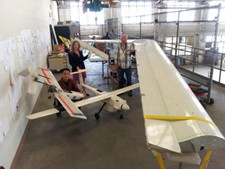
Roziers award was given in response to her tremendous work on the project titled, "Intelligent Hardware-Enabled Sensor and Software Safety and Health Management for Autonomous UAS."
NASAs website explains the gravity of the award by labeling it one of NASAs most prestigious honor awards. Individuals who have distinguished themselves by making
outstanding contributions to the Agency's mission are approved by the Administrator and recognized for their groundbreaking achievements at NASA.
Congratulations to Kristin Yvonne Rozier for her outstanding achievements at NASA. Rozier proves once again how the UC College of Engineering and Applied Science will greatly benefit as she begins her career at UC.
Related Stories
Engineering professor named KEEN Fellow
August 31, 2026
Dhuree Seth, assistant professor educator in the Department of Aerospace Engineering, is one of 30 engineering faculty members nationwide who were named 2026 KEEN Engineering Unleashed Fellows. The University of Cincinnati College of Engineering and Applied Science has been a partner of the Kern Entrepreneurial Engineering Network (KEEN) since 2024. Seth has been part of KEEN since she was a PhD student more than 10 years ago.
Major grant expands apprenticeship opportunities at UC
August 31, 2026
UC will expand registered apprenticeship opportunities in AI, semiconductor, and nuclear-energy infrastructure through a major U.S. Department of Labor grant partnership led by JFF.
Heavy social media use linked to depression
August 31, 2026

U.S. News and World Report, Yahoo! News, MSN, USA Today and other national media highlight a new study by the University of Cincinnati and Northwestern University that found a correlation between heavy social media use and depression in adults.