International Presentation Links the Power of Knowledge with the Fear of Libraries

In a world-designated city of literature, the University of Cincinnati will be represented in a forum that examines how contemporary literature is fueling imaginations and inspiring readers and writers for a better world.
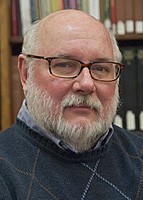
, head of the UC Archives and Rare Books Library and an adjunct assistant professor, will be one of five Americans to present at the international literary conference of
, which takes place March 23-25, at Jagiellonian University in Kraków, Poland.
Graces presentation, titled The Fear of Libraries and Reading in Dystopian and Post-Apocalyptic Culture, will examine how book jacket art, graphic novel illustrations and cinema and stage adaptations of dystopian and post-apocalyptic fiction can provide a visual impact on the reader that supports the storyline.
Graces presentation is derived from a
course that he teaches at UC, The Culture of Books and Reading. The talk will include examples of literature such as The Word Exchange, Dead Memory, Fahrenheit 451 and Glacial Period, to highlight how dystopian novels portray authoritarian or totalitarian government authorities fear of the power of knowledge. Grace says the storylines ultimately lead to governments targeting and attempting to eliminate books and libraries to suppress knowledge and freedom among the general population.
One of the thrusts of the paper is that that its impossible to deny people knowledge in present times because of social media, says Grace. The Arab Spring of 2011 was successful because of social media. When something like that happens, it causes governments to fear the power of people reading on their own, and this fear leads to attempts to quash or control that knowledge in some way and make it unavailable.

Image is of the book cover for Fahrenheit 451
Conversely, as we create surrogates of books in this self-publishing, digital age, we sometimes dismiss the ultimate value of the printed word as well as the value of the libraries, says Grace, and this can lead to a loss of context which leads to fearing what we do not know or remember.
He adds that much of the graphic representation of these stories reflects the visual representations depicted in the Twilight Zone TV series from the early-to-mid 1960s, which he includes in his presentation. There were certain episodes that reflected the fear of books and the suppression of knowledge, and the settings were very stark, but effective. What were seeing in the graphic representation of these contemporary novels is artwork that is stark, simple and very powerful and direct. Its not complicated art, but rather something that grabs you emotionally and intellectually at the same time.
The theme of the international conference is Utopias and Dystopias in Audiovisual Culture. The conference will feature talks from scholars of multimedia, literature, film, music and art.

Image is of the book cover for Dead Memory
Grace says that the theme of the conference is an exciting exploration of cross-cultural perspectives on books and reading. He says there has been an explosion of dystopian writing from eastern European countries following decades of oppression, as well as from the Middle East, Turkey and North Africa. Ultimately, this is about the future of libraries and repositories, how we collect and maintain the written word in various technologies, and who will have access to education and knowledge, says Grace.
Kraków, Poland, is one of nine cities worldwide that holds a United Nations Educational, Scientific and Cultural Organization (UNESCO) designation as a City of Literature. Grace is among five presenters representing the United States at the conference, which will feature a total of 35 presenters representing the U.S., Poland, Germany, United Kingdom, Brazil, Australia, Turkey, United Arab Emirates, Spain and Belarus.
Graces University Honors course, The Culture of Books and Reading, provides a cross-cultural study of books and reading in world societies and how ethnic, religious and national cultures have regarded the printed word now and in the past.
UCs Archives & Rare Books Library
has holdings ranging from the very beginnings of the printed word to contemporary research materials. The librarys rare book collection holds everything from cuneiform tablets to modern first editions. Its resources are available for both instruction and research.
Related Stories
Is Cincinnati building new homes fast enough?
September 22, 2026

Gary Painter, professor and academic director of the Real Estate Center at UC's Lindner College of Business, offers comments on affordability issues in Cincinnati.
UC climbs to No. 3 in the nation for co-ops and internships in 2027 U.S. News rankings
September 22, 2026
In U.S. News & World Report’s 2027 Best Colleges rankings, the University of Cincinnati rises to No. 3 in the nation for co-ops and internships — No. 1 among public institutions — and posts gains in undergraduate business, computer science and psychology.
'Discovery, mentorship, momentum': UC College of Medicine's graduate programs celebrate year of success
September 22, 2026
From new mentorship honors to a growing research pipeline, see how the University of Cincinnati College of Medicine's graduate programs made this a standout year.