Architecture Design Conference Brings Leading Digital Researchers to UC's DAAP

This fall, some of the leading digital design researchers working in architecture will gather in Cincinnati to investigate how their discipline can improve humanitys changing relationship with the Earth.
ACADIA 2015 COMPUTATIONAL ECOLOGIES: Design in the Anthropocene
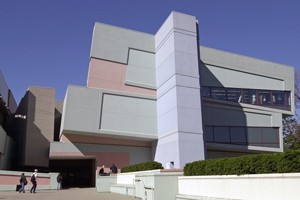
will take place Oct. 19-25 at the University of Cincinnati DAAP School of Architecture and Interior Design and the 21c Museum Hotel. The conference is the annual gathering of The Association for Computer Aided Design in Architecture (ACADIA) and in addition to several days of presenters, it will feature workshops Oct. 19-21 and an architectural hackathon Oct. 25.
In 2000, Nobel Prize-winning atmospheric chemist
proposed that the world had entered a new geological age. He termed it the Anthropocene, a period in which human activity had grown and was now a new geophysical force on Earth. With the emergence of the Anthropocene comes a fundamental shift in human consciousness as our social, psychic and philosophical space becomes infiltrated by nonhuman, digital entities. The result of this shift is a new period of environmental anxiety and existential uncertainty.
ACADIA 2015 will bring keynote speakers including
,
,
,
,
Cristina Diaz Moreno, and Efrén Garcia Grinda
together to question whether architecture should embark on establishing new affiliations beyond the human. Does the discipline need to be fundamentally redefined to address its significance beyond humanity? If the Anthropocene is instigating an existential threat to humanity, ACADIA 2015 will examine how architecture can create new material, formal and spacial aesthetics that take into account human and nonhuman uses.
Reduced-price,
for ACADIA 2015 is open until Sept. 13.
DETAILS
ACADIA 2015
COMPUTATIONAL ECOLOGIES: Design in the Anthropocene
Workshops: Oct. 19-21 at The University of Cincinnati College of Design, Architecture, Art, and Planning
Conference: Oct. 22-24, 8:30 a.m. 8:30 p.m., at the 21c Museum Hotel, 609 Walnut St., Cincinnati
CONTACT INFORMATION
William Williams
Stephen Slaughter
Ming Tang
Mara Marcu
http://2015.acadia.org/index.html
(513) 556-6426
ABOUT ACADIA
The Association for Computer Aided Design in Architecture
is an international network of digital design researchers and professionals. The group facilitates critical investigations into the role of computation in architecture, planning and building science, encouraging innovation in design creativity, sustainability and education.
ABOUT DAAP
The University of Cincinnati College of Design, Architecture, Art, and Planning
(DAAP) is a comprehensive research and design institution offering undergraduate majors in Architecture, Art History, Fashion Design, Fine Arts, Graphic Communication Design, Horticulture, Industrial Design, Interior Design, Urban Planning, and Urban Studies. DAAP also offers the following graduate degrees in Architecture, Art Education, Community Planning, Design, Fine Arts, and Regional Development Planning.
DAAPs primary mission is the creation of a better visual and design environment, which is achieved through excellence in educational programs, research, creative works, and service to the community, the faculty, the students, and administrative officers. DAAPs programs within the University of Cincinnati's College of Design, Architecture, Art, and Planning are, year-after-year, ranked among the very best in both a world and national class. Visit DAAP at
[6].
Related Stories
Developing the cities of tomorrow through pedestrian urbanism
August 27, 2026
Hyesun Jeong’s internationally recognized book explores how pedestrian-friendly design, culture and everyday urban life can create more sustainable cities, while her teaching and community-engaged design work bring those ideas from research into practice.
DAAP professor and artist turns grass clippings into biodegradable art
August 27, 2026
Through biodegradable bioplastic made from grass clippings, Supermrin shows how creativity can connect science, sustainability and everyday life.
Building what's next for Clifton Heights
August 27, 2026
A partnership between the University of Cincinnati, neighborhood leaders and local businesses is working to revitalize Clifton Heights through redevelopment projects aimed at strengthening the community for residents, students and visitors alike.