'Spirituality' Is Related to Depression Among Young Physicians

CINCINNATI - Despite recent restrictions placed on work hours for resident physicians, the prevalence of significant depressive symptoms among those new physicians has not decreased.
Now researchers from the University of Cincinnati suggest that religious and spiritual characteristics of residents may influence their risk for depressive symptoms.
Data collected through a survey suggested that the risk for significant depressive symptoms was greater among respondents who reported negative religious coping mechanisms, poorer spiritual well-being and the need for more spiritual support.
The study, which appears in the March-April 2006 edition of Ambulatory Pediatrics, found that 25 percent of 227 primary-care residents surveyed reported a number of symptoms associated with depression such as irritability, sense of isolation and hopelessness, and fear.
Research from the last two decades has shown the prevalence of significant depressive symptoms among residents to be in the range of 20 percent, said principal investigator Michael Yi, MD. We might have expected that number to fall after the Accreditation Council for Graduate Medical Education (ACGME) implemented work-hour restrictions in 2003, but our study found the level to be pretty consistent with earlier data.
Of the four residency programs evaluatedpediatrics, internal medicine, family medicine and the combined internal medicine/pediatrics programthe researchers found that residents in certain programs reported higher rates of significant depressive symptoms.
Mood or other psychological problems among primary-care residents, or any other health-care provider for that matter, could negatively affect patient care, said Dr. Yi. Our findings suggest that screening residents for depression and other mood problems may be warranted.
In addition, addressing the spiritual needs of residents at greater risk for mood problems may help them cope with the stresses associated with their training.
Coauthors include: Sara Luckhaupt, MD, Joseph Mrus, MD, Caroline Mueller, MD, Amy Peterman, PhD, Christina Puchalski, MD, and Joel Tsevat, MD.
The study was funded by the National Center for Complementary and Alternative Medicine of the National Institutes of Health.

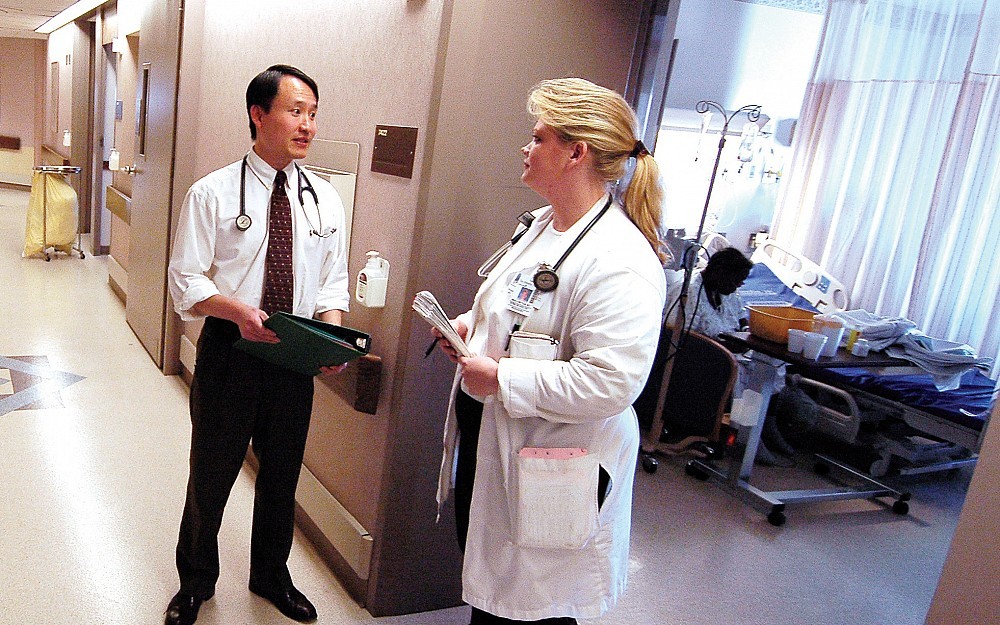
Michael Yi, MD, with medical resident Angela Brittsan, MD
Tags
Related Stories
Cancer Center plays key role in lab research, clinical trials for new pancreatic cancer drug
September 1, 2026

WLWT and WCPO highlighted the contributions of University of Cincinnati Cancer Center researchers that helped lead to the recent FDA approval of daraxonrasib, a new treatment for pancreatic cancer.
Cancer Center physician receives $150,000 New Investigator Research Grant to study treatment-resistant leukemia
September 1, 2026
The University of Cincinnati Cancer Center’s Sarah Skuli, MD, PhD, received a two‑year, $150,000 Leukemia Research Foundation New Investigator Grant to study TP53‑mutated leukemia, a treatment‑resistant subtype with very poor outcomes.
Heavy social media use linked to depression
August 31, 2026

U.S. News and World Report, Yahoo! News, MSN, USA Today and other national media highlight a new study by the University of Cincinnati and Northwestern University that found a correlation between heavy social media use and depression in adults.